Finland has unveiled a new Arctic security strategy aimed at outlining its expanding role in a region marked by overlapping territorial claims and competing interests.
The updated document, released on November 25, builds on the previous 2021 version created when Finland was not yet a NATO member. It carefully addresses Finland’s relations with the United States, particularly during the Trump administration, as a fellow Arctic nation.
“The U.S. increasingly approaches the Arctic from the perspective of global competition, guided by the ‘America First’ policy. This approach prioritizes national security, economic partnerships, and critical mineral resources, while reducing emphasis on climate action and sustainable development,” the strategy notes. It also references remarks from U.S. officials suggesting that Washington should exert greater influence over Greenland, which has prompted concerns for Finland.
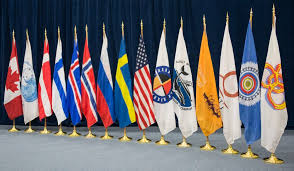
Approximately one-third of Finland’s territory lies above the Arctic Circle, in the Lapland region. Eight nations with territory in or north of the Arctic Circle—Canada, Denmark, Finland, Iceland, Norway, Russia, Sweden, and the United States—are members of the Arctic Council.
According to a recent report by Danish media outlet Politiken, the Trump administration reportedly attempted multiple times to hold high-level discussions with Greenlandic authorities without Denmark’s participation.
At the same time, Finland, Canada, and the United States are part of the Icebreaker Collaboration Effort (ICE Pact), a partnership focused on the joint development of icebreakers. Since signing a memorandum of understanding in 2024, the three countries have announced several new contracts under the initiative. In October, the U.S. launched a fleet renewal program that could see up to 11 icebreakers built with involvement from Canadian and Finnish shipyards.
On November 18, the ICE Pact partners signed a joint statement in Washington to enhance trilateral cooperation on icebreaker construction and capabilities through 2026.
Finland’s new Arctic security policy also emphasizes the strategic importance of the NATO Forward Land Force (FLF) unit, which was established in Northern Finland in October. In a crisis, this unit will manage planning, command, and control of land operations across the Arctic to strengthen NATO’s deterrence in the region.
A large portion of the strategy focuses on the Arctic Council, the primary intergovernmental body for Arctic cooperation. While the council does not handle security policy directly, Russia’s invasion of Ukraine in 2022 significantly affected collaboration. “Russia remains a member, but political-level meetings and gatherings of senior Arctic officials among Arctic states no longer occur. Expert and research cooperation continues through working groups,” the policy notes. Finland asserts that Arctic collaboration should continue within the council’s framework.
Additionally, several non-Arctic nations have applied, or are considering applying, for observer status in the Arctic Council, allowing them to participate in meetings, access documents, and contribute to working groups.