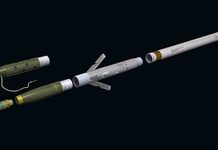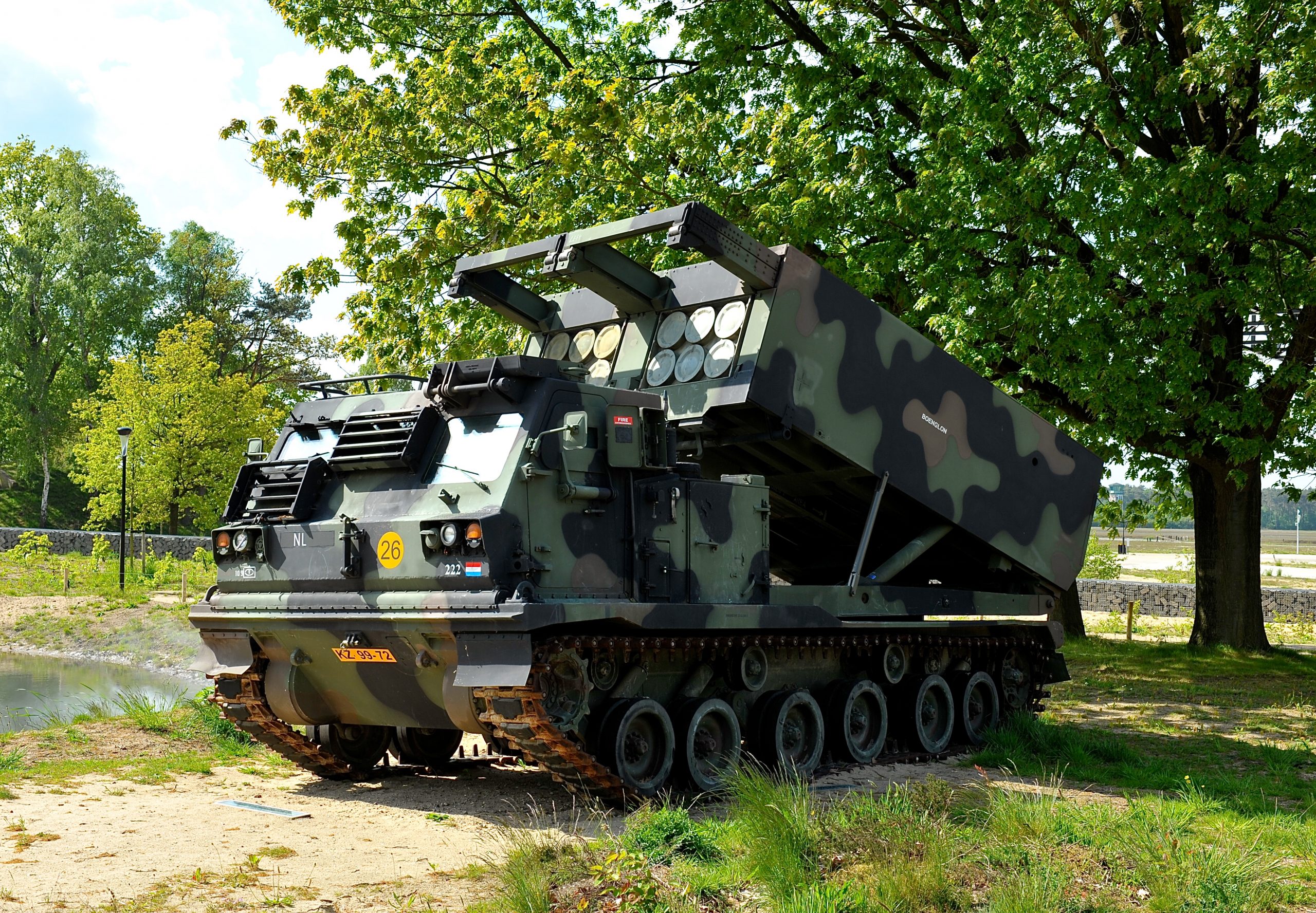
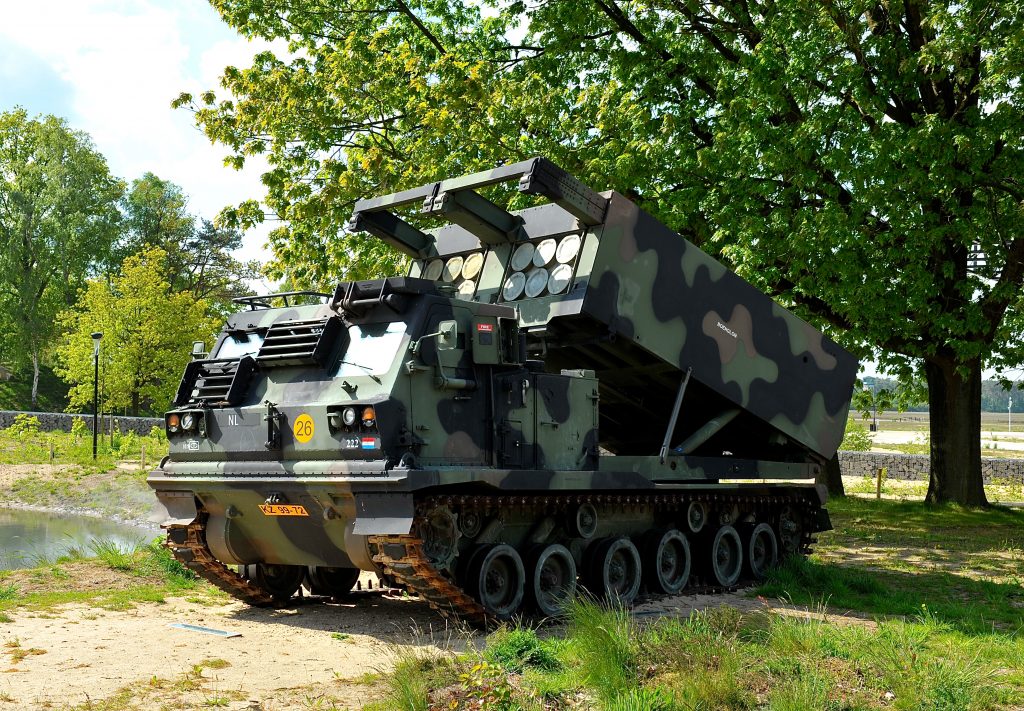
The above image is for representational purposes only.
France is edging toward a key decision on its next-generation rocket artillery capability. According to the head of the national armaments agency, the country is currently conducting trials of a domestically designed system this month, with a comparative evaluation against foreign alternatives expected in the coming weeks.
Patrick Pailloux, head of the Directorate General for Armament (DGA), told lawmakers on Wednesday that initial tests of a French-developed rocket artillery platform “went well” on Tuesday, with additional trials scheduled for the following week.
Two French industry groups are competing for the programme: one led by Safran and MBDA, and another by Thales and ArianeGroup. These are being benchmarked against systems already in service elsewhere in Europe, including South Korea’s Chunmoo (Hanwha Aerospace), Israel’s PULS (Elbit Systems), and the US-made HIMARS from Lockheed Martin.
Pailloux noted strong demand from the French Army, which views the capability as critical in the early phase of any high-intensity conflict. He emphasized that the military considers it essential for sustaining operations in the opening days of engagement, making cost, delivery timelines, and availability key decision factors.
France plans to procure 26 launch systems along with around 300 munitions, with the aim of fielding a full rocket artillery battalion by 2030. This effort is intended to replace the remaining nine units of the Lance-Roquettes Unitaire, a modified M270 system, which is expected to be phased out by 2027.
Pailloux acknowledged the difficult balancing act ahead, highlighting the trade-offs between strategic autonomy, affordability, and rapid delivery, stating that the final choice will likely be the “least disadvantageous” option available.
In parallel, France is developing a long-range ground-launched ballistic missile system with a range of about 2,500 km. The government has allocated €1 billion this year to begin work on the project. The missile concept includes a maneuverable hypersonic glide vehicle, which the DGA believes could offer strong cost-to-effectiveness advantages.
While the official target for deployment is 2035, Pailloux admitted this timeline is late and said efforts are underway to accelerate development toward 2030. One proposed approach involves initially fielding a simplified version without full electronic counter-countermeasures, with upgrades added later.
The DGA also plans over €6 billion in munitions procurement this year, including SCALP cruise missiles, AASM guided bombs, Exocet anti-ship missiles, MICA and Mistral air-defense systems, and Meteor air-to-air missiles. An additional €320 million is earmarked to support industrial production scaling where needed.
Pailloux stressed the need to prepare for a potential high-intensity conflict by 2030, warning that future warfare could become one of attrition where sustained ammunition supply becomes decisive.
Modernization efforts are also underway for France’s air combat fleet, with development beginning this year on the Rafale F5 standard. The programme, valued at €3.4 billion, includes a new Safran engine (T-REX) producing 9 tons of thrust—up from the current 7-ton M88 engine—along with upgrades to key sensors, particularly radar systems.
In parallel, the DGA is pushing ahead with missile enhancements, including accelerating MBDA’s Stratus RS supersonic air-to-ground weapon and developing a new long-range air-to-air missile, “Comet,” intended to surpass the Meteor’s range by 2030.
Pailloux described the approach to the new air-to-air missile as unusually fast-paced, with a highly simplified specification focused primarily on range and basic functionality. He called the 2030 target “very ambitious.”
Other initiatives include the development of the Chorus long-range one-way drone, capable of flying 3,000 km with a 500 kg payload. The goal is to have it operational by the end of the year. Produced by Renault, each unit is expected to cost around €120,000—described as expensive in absolute terms, but comparatively economical relative to other munitions systems.