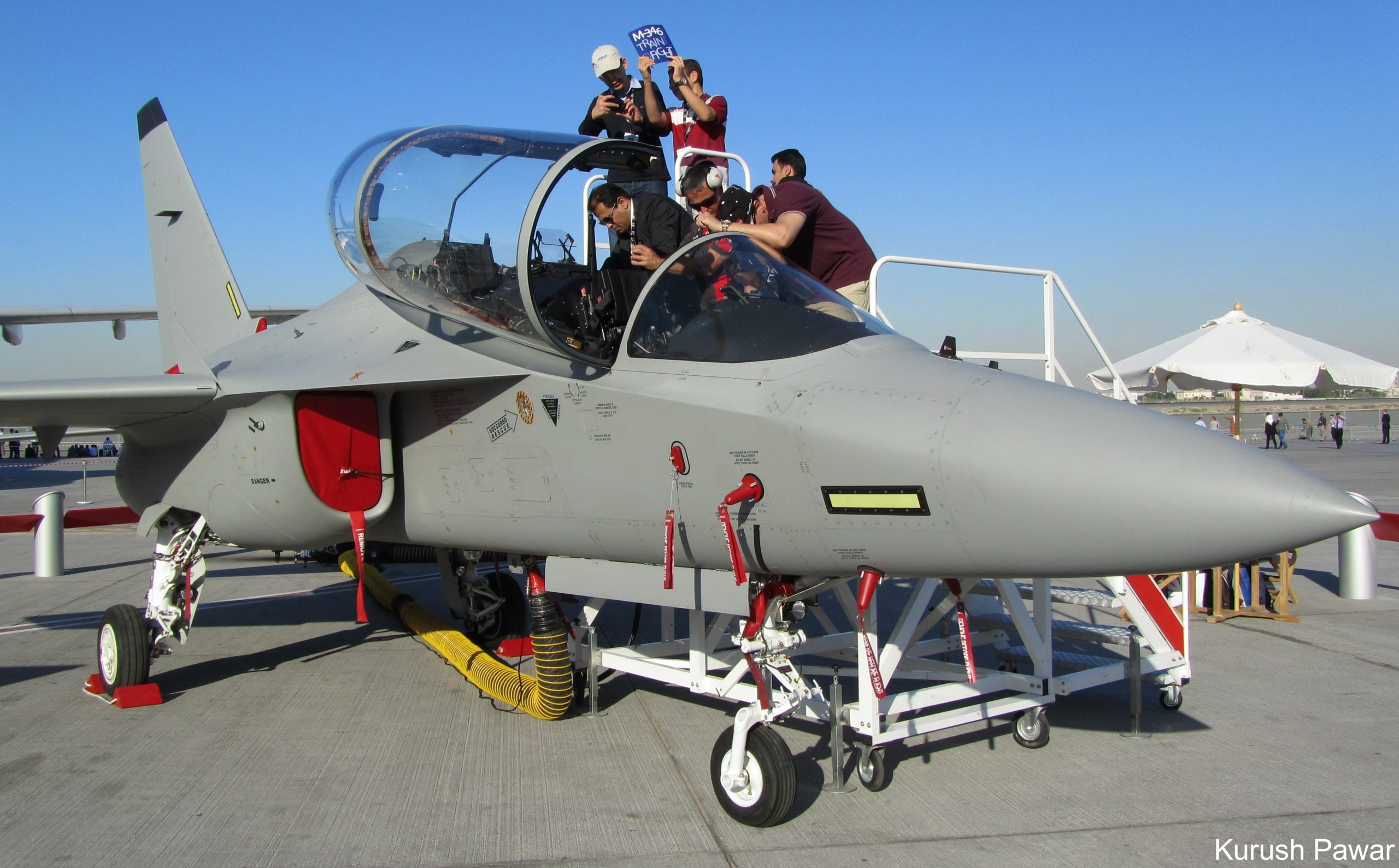
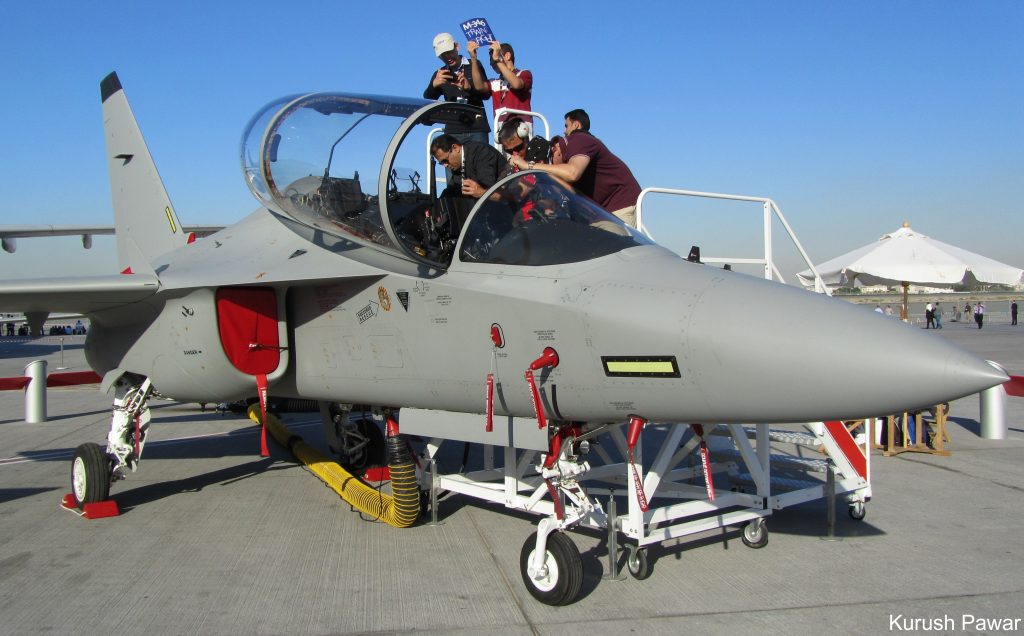
An Italian-built M-346 trainer aircraft has successfully directed a Baykar Kizilelma unmanned combat drone during a loyal wingman demonstration conducted in Turkey.
According to a statement from Leonardo, the M-346 operated alongside the Turkish-developed drone at Baykar’s flight test facility in Çorlu. The trial comes after a cooperation agreement signed last year between Leonardo and Baykar, which includes plans to manufacture Baykar drones in Italy equipped with Leonardo technologies.
The test campaign featured two M-346 aircraft: a Leonardo-owned Fighter Attack Variant serving as the primary test platform and an Italian Air Force M-346 acting as a chase aircraft, in addition to the Kizilelma drone.
After performing autonomous taxiing and takeoff procedures, the Kizilelma established a connection with the M-346 through an advanced radio-frequency data link that enabled both platforms to exchange and synchronize operational data.
During the mission, the crewed and uncrewed aircraft carried out a range of flight scenarios designed to evaluate algorithms, operational tactics, and procedures developed by Leonardo. The company noted that Kizilelma’s sophisticated autonomous functions streamlined integration efforts, allowing the system to be incorporated and deployed efficiently.
Leonardo described the exercise as a significant achievement in the advancement of Crewed/Uncrewed Teaming (CUC-T) and swarm-operation capabilities. The company stated that continued progress in artificial intelligence, collaborative algorithms, and operational procedures will gradually move unmanned systems from remote control toward higher levels of autonomy. This evolution is expected to reduce pilot workload, improve mission effectiveness, and preserve human oversight in critical decision-making.
Additional trials featuring more complex mission profiles and expanded capabilities are scheduled for the coming months.
Baykar supported the project by providing Smart Fleet Autonomy technologies, which were integrated into the crewed-uncrewed teaming framework using the company’s proprietary software and hardware systems.
As a participant in the Global Combat Air Programme (GCAP), Leonardo is working to strengthen its expertise in loyal wingman operations, a capability expected to play a central role in future combat aviation concepts.
A comparable European initiative was the Future Combat Air System, a joint French-German-Spanish project that aimed to pair next-generation manned fighters with collaborative unmanned aircraft known as remote carriers.
However, the FCAS Next Generation Fighter element was discontinued in June 2026 after France and Germany were unable to overcome industrial and program-management disputes, although other FCAS components, including the Combat Cloud network architecture, are expected to move forward.