U.S. President Donald Trump has indicated for the first time that Washington may allow Ukraine to manufacture Patriot air-defense missiles domestically, signaling a potential shift in American policy. During discussions with Ukrainian President Volodymyr Zelenskyy at the G7 summit in France, Trump reportedly expressed willingness to consider a longstanding Ukrainian request that dates back to the start of Russia’s full-scale invasion in 2022.
Weeks before Trump’s remarks, Ukrainian officials had already suggested that Kyiv’s growing defense partnerships were strengthening its position internationally. Speaking in Kyiv earlier this month, Kyrylo Budanov, a senior Ukrainian security official and former military intelligence chief, argued that Ukraine was no longer approaching negotiations solely as a recipient of aid.
“Ukraine is not merely asking for support,” Budanov said. “We are a partner capable of offering valuable contributions that are of interest to the United States.”
Since the war began, Ukraine has depended heavily on Western military assistance to defend itself. However, that dynamic is gradually evolving as Washington shows increasing interest in Ukrainian-developed interceptor drones, which could help address vulnerabilities in U.S. air-defense capabilities highlighted during the recent conflict involving Iran.
According to Zelenskyy, American officials have shown a positive attitude toward licensing Ukrainian missile production for the first time. He described the discussion with Trump in Évian as an encouraging development.
Meanwhile, Ukraine continues to expand defense cooperation with Europe. In Brussels, Ukraine’s defense minister recently signed an agreement with Germany aimed at jointly developing anti-ballistic missile technologies, marking another significant defense-industrial partnership with a major Western ally.
At the same time, discussions about a possible ceasefire continue to loom in the background. Zelenskyy has suggested that September could become a critical deadline for meaningful peace negotiations, which have largely stalled since February. Budanov believes Ukraine now enters any future talks with assets to offer rather than simply requests for assistance.
Not everyone agrees that Ukraine’s bargaining position has improved significantly. In March, Trump dismissed the idea that the United States needed Ukrainian expertise in drone defense, telling Fox News that America already possessed unmatched knowledge in the field.
Russian President Vladimir Putin has also projected confidence, declaring during Victory Day celebrations that the conflict was nearing its conclusion and that Russian success was inevitable.
Budanov rejected those claims, describing them as standard information warfare tactics. He argued that Russian leaders would continue projecting strength regardless of the realities on the ground.
He has also pushed back against narratives portraying Ukraine as entirely dependent on foreign support. During a recent briefing, Budanov emphasized that Ukraine’s future should not be viewed solely through the lens of what other nations choose to provide.
In his assessment, Moscow’s room for maneuver is narrowing. He contends that Russia is increasingly aware it cannot secure a decisive military victory, making negotiations the most realistic path forward.
Ukraine reinforced that message with a large-scale drone campaign targeting Moscow and critical Russian energy infrastructure. Last week, Ukrainian forces reportedly carried out their largest drone operation against the Russian capital to date, including repeated strikes on a major refinery. Budanov said such operations are intended in part to increase pressure on the Kremlin and encourage diplomatic engagement.
He further argued that both Russia and the United States understand that broader economic normalization remains difficult without resolving the conflict in Ukraine.
On the military front, Ukraine’s air-defense performance has improved significantly. Government figures indicate that Ukrainian forces intercepted approximately 92% of incoming Shahed drones and other attack UAVs in May, compared with about 80% in late 2024. When missiles are included, overall interception rates exceeded 88%.
Interceptor drones are playing an increasingly important role. According to Digital Transformation Minister Mykhailo Fedorov, their contribution to drone kills has doubled in recent months. Ukraine produced roughly 100,000 interceptor drones in 2025, and output reportedly doubled again during the first four months of 2026.
Despite growing cooperation, a formal U.S.-Ukraine agreement covering technology exchange remains unsigned. A memorandum drafted by American and Ukrainian officials was completed in May but still awaits Trump’s approval amid reported reservations within parts of the Pentagon and White House.
Analysts suggest that developments in Iran may have altered Washington’s calculations. The conflict highlighted the enormous demand for missile-defense systems and exposed shortages that Ukrainian innovations could help address.
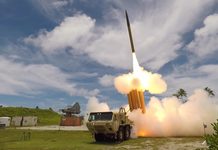
During the Iran conflict, the United States reportedly expended between 1,060 and 1,430 Patriot interceptors, each costing roughly $3.9 million. That figure exceeds the approximately 600 Patriot missiles Ukraine received from Western partners throughout four years of war.
Ukraine hopes to manufacture those missiles domestically. Zelenskyy has argued that current U.S. production rates—estimated at 60 to 65 Patriot interceptors per month—are insufficient to meet modern security demands. Expanding production through allied licensing agreements, he says, is essential.
In return, Ukraine offers expertise in another critical area of air defense. Its interceptor drones, designed to destroy low-cost Shahed drones, cost only about $1,000 to $2,500 each. Officials say new automation technologies now handle the vast majority of the interception process.
After years of relying on international military aid, Ukraine is increasingly positioning itself as both a contributor and a partner. At the same time, Kyiv continues to intensify pressure on Russia while betting that military and economic strains will eventually push Moscow back toward serious negotiations before the anticipated September deadline.
As Budanov put it, Russia has come to recognize that military victory is unlikely, leaving diplomacy as the only viable path forward.