According to Security analysts, Europe may not be fully prepared to independently deter or defeat Russia until the early 2030s, as several critical defense capabilities still require significant development. Key priorities such as integrated air and missile defense—identified by both NATO and the European Union—could take another five to ten years to mature. In contrast, Europe is in a stronger position in areas like strategic airlift and aerial refueling, where existing capacity is either sufficient or could be strengthened within a shorter timeframe.
At present, the United States supplies NATO with advanced military assets essential for high-intensity operations, including command and control (C2), satellite intelligence, and deep-strike systems. Many European nations either lack these capabilities or possess them in limited numbers. With trans-Atlantic relations under strain and uncertainty surrounding long-term U.S. security guarantees, European governments face a multi-year effort to reduce their reliance on Washington.
According to François Heisbourg of the Paris-based Foundation for Strategic Research, Europe’s capability gaps vary widely: in some domains, there is virtually no meaningful capacity; in others, systems exist but require replacement; and in certain areas, the issue is scale rather than quality.
Beyond transport and tanker fleets, experts believe Europe is closest to adequacy in military satellite communications, battlefield C2, unmanned intelligence, surveillance and reconnaissance (ISR), and long-range strike. A majority of the 16 specialists consulted estimate these could reach sufficient levels within five years.
Several analysts argue that credible long-range or deep-strike capability is central to deterrence. Intelligence services in the Netherlands have warned that, once the war in Ukraine concludes, Russia could potentially rebuild enough combat power within a year to conduct a limited regional operation—not necessarily to defeat NATO militarily, but to fracture alliance unity and extract political concessions. Estonia’s Foreign Intelligence Service has similarly assessed that Moscow is preparing for future conflict, even if it does not intend to attack a NATO member in the immediate term.
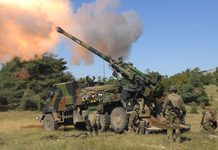
Guntram Wolff of Bruegel contends that defensive systems alone are insufficient against a power like Russia. Effective deterrence, he argues, also requires offensive reach—specifically the ability to strike deep into adversary territory. Countries such as Denmark and Norway have echoed this view, with Norway announcing the acquisition of South Korea’s Chunmoo rocket artillery system, capable of firing munitions with a range of up to 500 kilometers.
In February, France, Germany, Italy, Poland, Sweden, and the United Kingdom reported progress under the European Long-Range Strike Approach (ELSA), including development of an air-launched long-range system. Earlier, London and Berlin agreed to cooperate on a new strike capability exceeding 2,000 kilometers in range.
Chris Kremidas-Courtney of the European Policy Center notes that Europe currently possesses few systems capable of striking targets beyond 500 kilometers—roughly the distance from Latvia’s eastern border to central Moscow. Without such reach, he argues, Europe’s deterrent credibility remains limited. He also suggests Europe could develop intermediate-range ballistic missiles domestically, citing the technical expertise of French rocket manufacturer ArianeGroup, though he acknowledges the substantial financial cost involved.
Surveyed analysts expressed comparatively optimism about the timeline for long-range strike, with most estimating it could reach adequate levels within two to five years. By contrast, space-based ISR and fully integrated air and missile defense drew more cautious assessments, with half of respondents believing more than five years will be required.
Héloïse Fayet of the French Institute of International Relations emphasized that building comprehensive, continent-wide air and missile defense would be extraordinarily challenging. Questions also remain about whether a reduced U.S. military presence in Europe would entail withdrawing systems such as Aegis Ashore. While progress has been made on the Franco-Italian SAMP/T system, additional Patriot acquisitions would deepen reliance on American technology.
Frédéric Mauro of the French Institute for International and Strategic Affairs believes Europe could field adequate defenses against cruise missiles and hypersonic threats like Russia’s Kinzhal within two years. However, current Western systems are not capable of intercepting certain ballistic missiles, such as the Oreshnik. Since 2022, European states have sharply increased investment in short- and very-short-range air-defense systems, committing $18 billion—more than double the spending of the previous four-year period across all ground-based air defense categories.
Progress in space-based ISR appears more encouraging than a year ago. Investment has accelerated, particularly after the United States temporarily halted intelligence sharing with Ukraine in March 2025, highlighting Europe’s dependence on American satellite data. Poland, Portugal, the Netherlands, Finland, Germany, and France have all announced new satellite-intelligence initiatives, many focused on radar-based capabilities. Still, experts warn that Europe faces a shortage of trained personnel capable of processing and exploiting signals intelligence effectively.
Coordination remains another hurdle. Because space-based ISR is closely tied to national sovereignty, cooperation among European states is likely to remain fragmented, even if shared frameworks improve.
Battlefield command and control is also seen as a crucial vulnerability. Modern C2 integrates advanced digital systems to synchronize forces and fires across domains. Analysts note that Europe’s ability to compensate for diminished U.S. involvement would depend partly on whether NATO’s operational structures remain intact. While France and Germany possess capable systems, scaling them to large, multinational operations could prove challenging in the short term.
Opinions diverge on airborne C2 and early warning. NATO operates a fleet of 14 E-3A AWACS aircraft based in Germany, and additional platforms such as Saab’s GlobalEye are on order from Sweden and France. Some analysts consider this sufficient with incremental expansion; others estimate that building full capacity could take more than five years.
Suppression and destruction of enemy air defenses (SEAD/DEAD) is another area of concern. Some experts warn that Europe has effectively neglected this domain and may need years—possibly more than a decade—to rebuild the capability from scratch.
Missile early warning is similarly underdeveloped. France and Germany are collaborating on the Joint Early Warning for a European Lookout project, combining space-based sensors and ground radars to detect and track missile launches. Initial operational capability is envisioned for the early 2030s.
Despite the challenges, some observers are more sanguine. Nick Witney of the European Council on Foreign Relations argues that Europe can move quickly when necessary, citing Ukraine’s rapid wartime adaptation. While acknowledging major gaps in air defense, C2, and long-range strike, he believes these could reach adequate levels within two years if political will and funding align.
In summary, Europe’s ability to operate independently of the United States varies significantly across defense enablers. Strategic airlift and refueling are relatively robust. Long-range strike and certain ISR functions are progressing rapidly. However, integrated air and missile defense, missile early warning, and high-end command-and-control systems remain substantial undertakings likely to extend well into the next decade.