The conflict involving Iran has highlighted vulnerabilities in Britain’s armed forces, increasing pressure on Prime Minister Keir Starmer to follow through on commitments to boost defense spending. Military leaders have long cautioned that the U.K.’s capabilities have been steadily declining.
Early in the conflict in March, a British base in Cyprus was struck by a drone. It then took the U.K. three weeks to deploy a single warship to the eastern Mediterranean—despite once having the world’s largest navy at the start of World War II. In contrast, France, Greece, and Italy dispatched naval vessels within days.
The reduced strength of Britain’s military has not gone unnoticed internationally. U.S. President Donald Trump reportedly derided the country’s aircraft carriers as “toys,” while Defense Secretary Pete Hegseth criticized the Royal Navy. In response, Starmer defended his government’s record, stating that it has delivered the largest sustained rise in defense spending since the Cold War, after nearly two years in office.
Even so, the armed forces are now roughly half their Cold War size, and the army is at its smallest level since the early 1800s.
Royal Navy
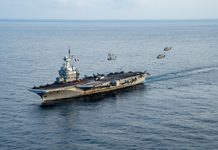
The Royal Navy currently has around 38,000 personnel, operating two aircraft carriers and a fleet of 13 destroyers and frigates. This marks a significant reduction from 1991, when it had about 62,000 personnel, three carriers, and roughly 50 surface combat ships.
The delayed deployment to Cyprus drew attention to the navy’s limited operational capacity. HMS Dragon, a Type 45 destroyer, reached the eastern Mediterranean on March 23. Meanwhile, upgrades are underway for RFA Lime Bay to enhance mine-hunting and autonomous capabilities.
This response contrasts sharply with the 1990–91 Gulf War, when Britain deployed 21 surface ships, two submarines, and 11 Royal Fleet Auxiliary vessels to the region.
The downsizing reflects decades of reduced defense spending, which has fallen from around 3.8% of GDP in the early 1990s to about 2.3% in 2024.
Britain had maintained a continuous naval presence in the Middle East until December 2025, when HMS Lancaster was decommissioned in Bahrain shortly before the Iran conflict began. At present, aging frigates are being retired before replacements arrive, while destroyers are undergoing maintenance. A new fleet of 13 Type 26 and Type 31 frigates is expected in the coming years.
The navy is also balancing commitments closer to home, including monitoring Russian submarine activity in the North Atlantic.
A significant portion of the defense budget—around 20%—is allocated to nuclear submarines, including the Trident deterrent system, which consists of four Vanguard-class submarines. Under the continuous at-sea deterrence policy, at least one submarine is always on patrol. These will be replaced by Dreadnought-class submarines in the early 2030s.
Royal Air Force
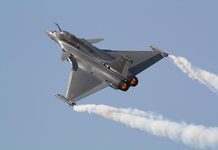
The RAF has more than 150 fighter jets, with about two-thirds being Eurofighter Typhoons and the rest F-35s, supported by around 31,000 personnel. In 1991, the force had roughly 700 fast jets and 88,000 personnel.
During the Gulf War, the RAF deployed 157 aircraft, including over 80 fighter jets. Ahead of the Iran conflict, Britain stationed six F-35s in Cyprus and four Typhoons in Qatar, later reinforcing them with four additional Typhoons.
Unlike in 1991, Britain is not directly engaged in combat operations in the current conflict. However, the government has authorized defensive missions aimed at protecting regional populations, including British nationals.
Army
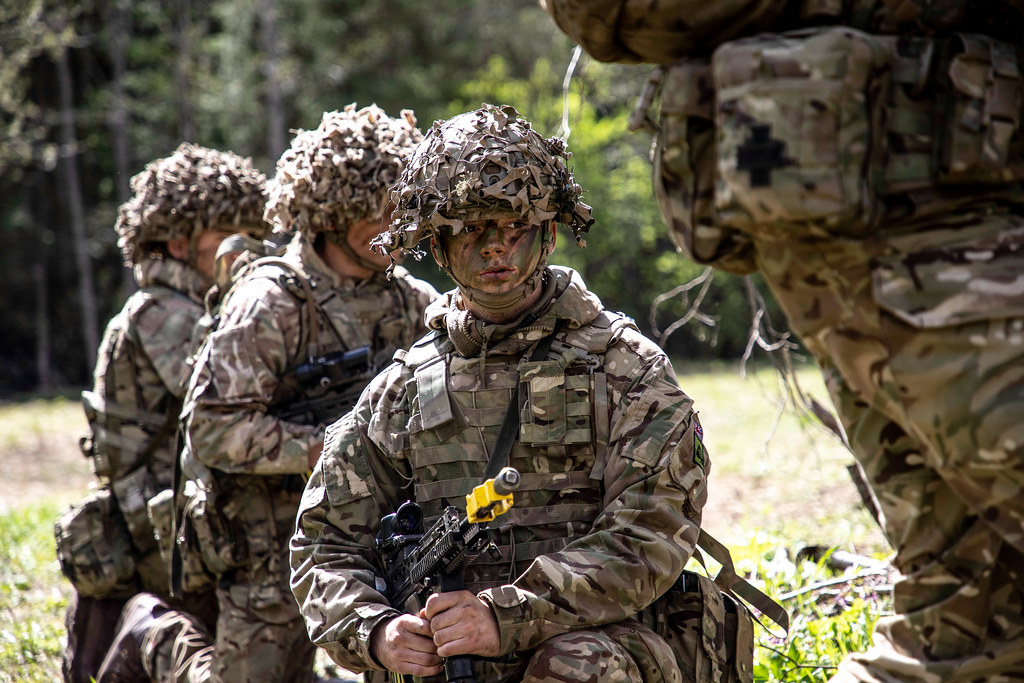
The British Army now has about 74,000 full-time personnel, down from 148,000 in 1991. Its fleet of main battle tanks has also declined sharply—from around 1,200 at the end of the Cold War to approximately 150 operational today.