Italy’s spending commitment to the tri-national Global Combat Air Programme (GCAP) has risen sharply over the past five years, climbing from €6 billion to €18.6 billion (approximately $21.8 billion), according to information presented to parliament by the country’s defense minister.
The revised cost estimate was included in a funding authorization request submitted to lawmakers, a move that immediately drew criticism from the opposition Five Star Movement.
In a statement, Five Star lawmakers described GCAP as the costliest project ever undertaken by the Italian armed forces, noting that it surpasses the F-35 program, under which Italy spent roughly €18 billion to acquire 90 aircraft.
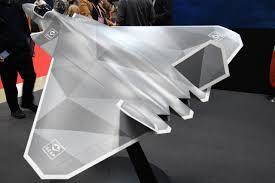
Italy is partnering with the United Kingdom and Japan on the sixth-generation fighter initiative, which is intended to deliver a next-generation combat aircraft by 2035.
Updated budget details outlining Italy’s share of the program were forwarded earlier this month to the defense committee of the Italian Senate. The panel is scheduled to debate the proposal on Tuesday, with a vote expected as early as next week.
A parallel review will also take place in the defense committee of the lower chamber of parliament. Approval is widely anticipated, given the governing coalition led by Prime Minister Giorgia Meloni holds a majority in both committees.
The latest submission replaces a 2021 document that projected a €6 billion contribution from Italy to cover the first two phases of GCAP: the initial concept and preliminary design stage, followed by full-scale development.
According to the updated assessment, that figure has been revised upward to €18.6 billion at 2025 price levels, reflecting higher-than-expected costs associated with technology maturation, testing, development, and design activities.
The document indicates that €2 billion has already been allocated, partially funding the first phase. An additional €16.6 billion will therefore be required to complete both phases.
Of that amount, parliamentary approval is being sought for €8.8 billion, to be distributed through annual installments extending to 2037. The remaining €7.8 billion would be financed at a later stage.
The Five Star Movement criticized the process, stating that while it recognizes the strategic importance of the program, it is unacceptable for parliamentary committees to approve multibillion-euro expenditures without receiving a comprehensive and transparent justification for such a dramatic escalation in costs.
Meanwhile, during a meeting in Tokyo on January 16, Italian Prime Minister Giorgia Meloni and Japanese Prime Minister Takaichi Sanae welcomed the progress made on GCAP and reaffirmed their shared commitment to meeting the 2035 target for the aircraft’s entry into service.