Huntington Ingalls Industries (HII) has significantly expanded its facility on England’s southern coast as the U.S.-based shipbuilder positions itself to support rising demand for unmanned underwater vehicles (UUVs) from the Royal Navy and other European maritime forces.
The Portchester site has now doubled in size, enabling assembly of HII’s Remus 620 medium-class modular UUV and allowing the company to accelerate training programs for allied naval customers. Speaking during a Jan. 12 media briefing, facility lead Nick Green said the expansion reflects growing confidence among navies in deploying unmanned systems at scale.
According to Green, advances in technology have led naval customers to move beyond small, experimental purchases toward orders of 10 to 15 vehicles at a time. Several European NATO countries—including the United Kingdom, the Netherlands, and Belgium—are transitioning away from crewed minehunting ships in favor of integrated fleets of unmanned platforms capable of locating and disposing of naval mines.
As sensor performance and overall system capability continue to improve, demand for UUVs is increasing, Green noted, opening up broader market opportunities. The Royal Navy first introduced Remus vehicles into service in 2001 for mine countermeasures and now operates multiple variants. The expanded Portchester facility will also support HII’s ongoing maintenance responsibilities for the Royal Navy fleet.
HII reports that Remus vehicles are currently operated by 30 nations, including 14 NATO members. In Europe, users include Germany, the Netherlands, Belgium, Norway, Sweden, Lithuania, and Estonia.
Interest in mine countermeasure systems remains strong, while higher defense spending and a growing emphasis on unmanned technologies are expected to boost overall sales, said Duane Fotheringham, president of unmanned systems within HII’s Mission Technologies division. Although competition in the UUV sector is increasing, Fotheringham emphasized that HII is well positioned due to the Remus platform’s open architecture and modular design, which allow customers and partners to integrate updated software, sensors, and payloads. He added that the company’s long track record has proven the durability and reliability of its vehicles.
While mine warfare remains the primary mission for most European customers, Green highlighted the growing relevance of long-endurance patrol missions, particularly in response to evolving seabed security requirements such as the protection of undersea infrastructure. He said current payload development is focused on ensuring adaptability to future operational needs.
HII intends to increase U.K.-based production where feasible, including launch and recovery systems for the Remus 620 and entry-level vehicle assembly. Green explained that incorporating more domestic content is becoming increasingly important for U.K. defense contracts and strengthens HII’s position as an experienced supplier of unmanned underwater and surface systems.
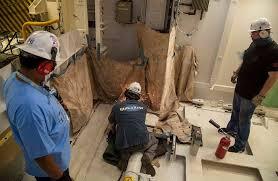
The company is also testing torpedo-tube launch and recovery for the Remus 620 and is collaborating with Babcock in the U.K. to adapt launch technologies already used aboard Royal Navy submarines. Most maintenance and repair work for British customers—and many European operators—is carried out at Portchester, reducing the need to transport equipment between Europe and the United States, Fotheringham said.
To date, HII has delivered more than 750 Remus UUVs worldwide, including a substantial number across Europe. The compact, two-person portable Remus 100 remains the company’s best-selling model, with over 400 units sold globally.
In addition to UUV support, the Portchester site will serve as a European hub for HII’s forthcoming Romulus family of unmanned surface vehicles (USVs). Fotheringham said the company has already tested intelligence, surveillance, and reconnaissance variants of Romulus in the U.S., along with a man-portable version. A larger 190-foot Romulus vessel is currently under construction and is expected to be operational and ready for delivery by the end of 2026.
Green added that HII plans to introduce the Romulus systems to European customers by conducting demonstrations for the Royal Navy and other regional naval forces.