Details such as how many missiles might be involved, the overall cost, and when deliveries might happen have not been disclosed. According to Reuters, sources familiar with the negotiations say this information remains unclear. Defense Express notes that acquiring these anti-ship missiles would be a notable boost to Iran’s ability to conduct naval strikes.
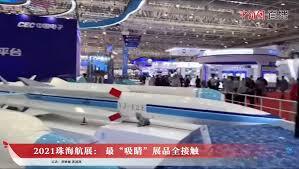
The CM-302 is the export model of China’s YJ-12 supersonic anti-ship missile, a design dating back to the 2000s. It is believed to cruise at speeds roughly between Mach 2.5 and Mach 4 (about 3,000–4,900 km/h). Its reach is estimated at around 250–290 km, and it carries a warhead in the neighborhood of 250 kg, likely with a high-explosive fragmentation design, though exact details aren’t publicly confirmed. For guidance, the missile uses a combination of satellite navigation and inertial systems, with an active radar seeker engaging during the final approach to the target. It also appears to support a data link for in-flight updates, and can be launched from both ships and ground launchers — platforms likely to be part of any future supply deal.
In terms of performance and structure, the CM-302 is often compared to Russia’s Kh-31 supersonic anti-ship missile. That system was previously operated by Venezuela in an effort to deter U.S. naval forces, though it ultimately did not alter U.S. operational behavior.
Similarly, even if Iran finalizes a contract for CM-302 missiles, they may not be decisive against a powerful U.S. fleet. American forces could choose to stay outside the missile’s effective range, and if they operate within it they would face strong electronic warfare measures deployed by U.S. aircraft and ships — systems designed to disrupt missile seekers — as well as layered air defenses and countermeasures aboard modern U.S. vessels. Instead, the main strategic effect of exporting CM-302 systems to Iran may be to assert control over extensive maritime areas such as the Persian Gulf and Gulf of Oman, where much commercial shipping — including oil tankers — transits. Such a capability could elevate risks for civilian shipping and potentially push up global energy prices, which could indirectly benefit other energy exporters.
It’s also important to note that even if an agreement is signed now, delivering and integrating these systems won’t be instantaneous. They must be transported to Iran, and personnel will need training — a process that takes time. Given Iran’s expressed concerns about an imminent threat of conflict, this timing could be too slow to meet current strategic pressures.
Finally, recent Iranian weapons procurement efforts — such as acquiring Verba man-portable air defense systems from Russia — have revealed actual costs but underscore that even new defensive gear is unlikely to neutralize advanced U.S. air power.