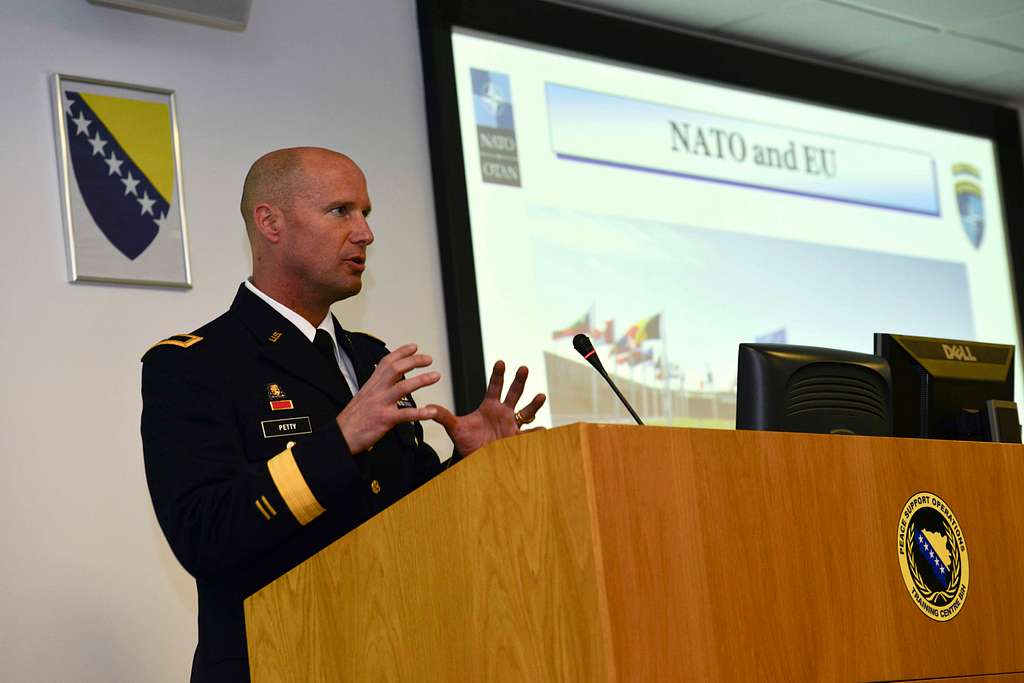
The above image is for representational purposes only.
The conflict in Ukraine is accelerating a transition toward high-intensity, rapidly evolving warfare that many Western forces are not yet equipped to handle, while Russia is adjusting quickly, said Adm. Pierre Vandier, NATO’s Supreme Allied Commander Transformation.
Speaking at the Paris Defense & Strategy Forum on March 25, Vandier warned that Europe’s current defense capabilities fall short of what is required, weakening deterrence. If Moscow perceives NATO or Europe as unable to respond effectively, it could embolden further aggression.
He stressed that safeguarding Europe over the next decade will require a significant boost in credible deterrence.
The war has triggered a technological arms race: Ukraine has innovated to offset its smaller military, while Russia has continuously adapted. The result is a battlefield unlike any NATO has previously encountered—marked by widespread drone use, heavy electronic warfare, persistent surveillance, and unmanned systems capable of destroying major assets like tanks and naval vessels.
Vandier described such moments as periods of disruption that force the creation of entirely new methods of warfare. Ukraine, facing severe constraints, has been compelled to rethink how wars are fought—and adversaries are doing the same.
He characterized the current global security environment as an “era of shocks,” yet noted that Europe remains largely focused on crisis response rather than long-term readiness. Limited stockpiles and slow production rates, he warned, are vulnerabilities that adversaries are well aware of.
A central challenge is the return of large-scale, mass warfare—something Western militaries are not structured for, especially given their reliance on systems that are difficult to produce in large numbers. Simply scaling up existing approaches will not solve the problem.
For example, Russia and Iran can manufacture hundreds of low-cost drones for every Western interceptor missile. Even significantly increasing production would not close this gap. Similarly, expanding air defense coverage with systems like Patriot batteries would take years due to long production timelines.
According to Vandier, the imbalance between the number of incoming threats and available defensive weapons demands entirely new solutions rather than incremental improvements.
He cautioned that increased defense spending alone will not address the issue, pointing to cases where heavily funded nations still struggled against relatively inexpensive drone and missile attacks. The real priorities, he said, are speed and making smarter strategic choices.
Adaptation speed remains a major concern. NATO projects often take years to define requirements due to competing national interests, while adversaries iterate rapidly—evidenced by multiple upgrades to drone systems in a short time.
Vandier emphasized the need for new, agile players in the defense industry who can innovate quickly, even as traditional manufacturers continue to produce major platforms like fighter jets and submarines. However, these platforms must evolve rapidly to survive modern threats.
He warned that without constant updates—such as improved electronic countermeasures—equipment like tanks or naval vessels could be destroyed within minutes in a modern conflict.
Some countries, he noted, plan to address emerging threats like drones years after acquiring traditional assets, a delay that could prove costly in wartime. Russia, having learned from its experiences in Ukraine, is already adapting and developing countermeasures, including reverse engineering Ukrainian naval drones.
While conventional platforms remain necessary for certain missions, such as deep-sea operations, they are increasingly vulnerable in contested environments closer to shore, where drone swarms can overwhelm defenses.
Vandier argued that NATO must focus on preparing for future conflicts rather than relying on past doctrines. He dismissed the idea that Ukraine’s experience is unique due to its lack of advanced air power, noting that the nature of the adversary itself has changed.
To strengthen deterrence, Europe must demonstrate both capability and readiness, leveraging its industrial base and technical expertise despite ongoing sanctions on Russia.
Although confident in Europe’s potential, Vandier stressed the urgency of immediate action rather than long-term planning.
As part of this effort, NATO is organizing a large-scale counter-drone exercise in Romania, involving multiple countries and companies. The exercise will focus on real-world performance, aiming to identify which systems deliver results under sustained conditions.
He also called for new performance metrics in defense procurement, such as cost per engagement, scalability, interoperability, and adaptability. Traditional models—especially those involving expensive, inflexible systems—are no longer viable.
Recalling a visit to a hidden drone production site in Kyiv, where thousands of drones are produced daily under highly adaptive conditions, Vandier highlighted the kind of innovation driving modern warfare.
Ultimately, he argued that NATO must outpace its adversaries by reimagining how wars are fought—forcing opponents like Russia into a position of uncertainty and deterrence.
The goal, he concluded, is to ensure that any potential aggressor hesitates, questioning the viability of action each day.