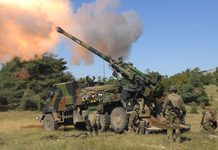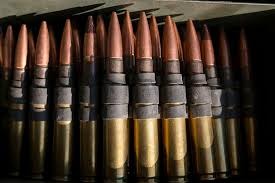
France intends to invest an additional €8.5 billion (about $9.8 billion) in munitions by 2030, reflecting the renewed demands of high-intensity conflicts in regions such as Ukraine and the Middle East, Prime Minister Sébastien Lecornu told lawmakers on Wednesday.
As part of this effort, the government plans to establish a centralized platform, France Munitions, which will act as a wholesale supplier of ammunition for the French military, allied nations, and export customers. The initiative aims to place large-scale orders with manufacturers to accelerate the expansion of industrial capacity and boost domestic ammunition production, supported by both public funding and private investment.
European nations have been closely monitoring the rapid consumption of munitions in recent conflicts, where the use of drones and missiles has far exceeded existing stockpiles and current manufacturing output. In response, France’s revised plan allocates four times more funding to ammunition than under previous legislation.
Lecornu emphasized that replenishing munitions is an urgent priority, with particular attention on ground-based air defense systems, early-warning drones, and counter-drone technologies. These include interceptor drones and loitering munitions, which he said must be produced at scale while keeping costs under control.
This increase forms part of a broader €36 billion defense budget expansion for 2026–2030 announced earlier by President Emmanuel Macron. It is in addition to the €16 billion already designated for munitions under the 2023 military spending program, according to Lecornu, who previously served as armed forces minister.
Given the evolving security landscape, the government is urging parliament to fast-track revisions to the military programming law. The updated proposal is set to be presented on April 8, with parliamentary discussions scheduled in May and June.
Lecornu also highlighted the need to rethink military strategies, noting the imbalance between relatively inexpensive drones and costly interceptor missiles—a dynamic seen in Middle Eastern conflicts. He argued that such developments require a fundamental reassessment of modern warfare concepts.
France is already seeing progress from domestic innovators capable of producing interceptor drones, and Lecornu announced plans to open a new manufacturing facility near Paris capable of producing thousands of drones each month, alongside Armed Forces Minister Catherine Vautrin.
He stressed that future defense efforts must balance scale and precision, cost-effectiveness and performance, as well as innovation and speed. Meeting these demands, he said, is not only a military priority but also an industrial and strategic sovereignty challenge.
In addition, France will launch a €300 million dual-use industrial program to bring critical component production back onshore, upgrade existing facilities, and encourage civilian industries to invest in defense capabilities. Lecornu also called for stronger collaboration across Europe’s defense sector.
To support faster responses, the government plans to introduce a “national security alert regime” designed to streamline decision-making, cut red tape, and accelerate key defense projects. Additional measures will focus on areas such as counter-drone operations and strategic stockpile management.
Lecornu concluded that bureaucratic delays must not hinder national security, warning that France cannot afford to impose restrictions on itself that its competitors do not follow, especially in the face of urgent threats.