Norway has become the ninth European nation to join France’s emerging nuclear deterrence initiative, a move driven by growing concerns over Russia’s security posture and increasing uncertainty about the long-term dependability of U.S. defense commitments.
The development was announced after Norwegian Prime Minister Jonas Gahr Støre visited Paris last week. Representatives from several other European countries participating in France’s new “forward deterrence” framework also attended the discussions. The initiative represents a significant evolution in France’s nuclear strategy, expanding the potential role of its nuclear arsenal in European security.
Støre emphasized that Norway will continue its policy of not hosting nuclear weapons during peacetime. However, under the revised French doctrine unveiled by President Emmanuel Macron in March aboard a French nuclear submarine, threats to European allies could be regarded as threats warranting a French nuclear response, even in situations where U.S. involvement is uncertain. While operational control and decision-making authority will remain exclusively with France, the country would effectively extend a nuclear security umbrella to participating European partners.
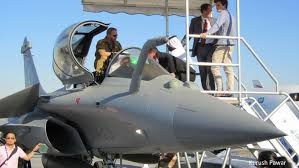
The practical implementation of the policy remains under discussion, and Norway is only beginning to explore what participation will involve. Other countries have progressed further in their consultations. In Poland, for example, discussions have included the possibility of deploying French Rafale fighter jets capable of carrying nuclear weapons.
Germany has emerged as one of the most advanced partners in developing this framework. Earlier this year, France and Germany established a joint steering group to coordinate cooperation, with both sides aiming to introduce initial measures before the end of 2026.
Berlin was represented at last week’s Paris meeting by Chancellor Friedrich Merz’s foreign and security policy adviser, according to reports from German publication Der Spiegel. Another steering group meeting is expected in the coming weeks before Europe’s summer recess.
Germany is expected to begin participating in French nuclear exercises as an observer as early as September. German officials will also gain access to French nuclear-related facilities and infrastructure for familiarization purposes. Future cooperation could involve a more active role for the Bundeswehr, although any involvement would reportedly remain limited to support functions without direct interaction with nuclear weapons.
Many details surrounding France’s offer to its European partners remain intentionally unclear. French officials and policy experts have openly described the doctrine as one of “strategic ambiguity,” preserving uncertainty about the exact circumstances under which France might employ its nuclear forces.
Unlike NATO’s existing nuclear-sharing arrangement—under which U.S. nuclear weapons are stationed in countries such as Belgium, Germany, Italy, the Netherlands, and Turkey, and allied aircraft can be tasked with delivering them during wartime—the French model appears less collaborative in operational terms.
Instead, France is broadening its nuclear doctrine to encompass a wider sphere of European security interests. Under this approach, the French president would retain sole authority to determine whether a particular threat warrants a nuclear response. Alongside Norway, countries participating in the initiative include Germany, Poland, Sweden, Denmark, Greece, the Netherlands, Belgium, and the United Kingdom. France is one of five states officially recognized under international agreements as nuclear-weapon powers and remains among the nine countries worldwide that possess nuclear arsenals. With approximately 290 nuclear warheads, France maintains the world’s fourth-largest stockpile, ranking behind Russia, the United States, and China, while exceeding the arsenal of the United Kingdom.