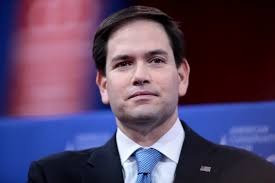
Secretary of State Marco Rubio has raised fresh questions about the value of the North Atlantic Treaty Organization to the United States after several allies declined to support Washington’s “Operation Epic Fury.”
Speaking to journalists after meeting foreign ministers in Sweden on Friday, Rubio argued that NATO’s core purpose comes into question when member nations refuse to grant the U.S. access to military facilities on their territory during wartime.
Rubio said he had long defended the alliance on the grounds that American bases across the region offered critical logistical advantages. However, he noted that if those facilities become unavailable during an active conflict involving the U.S., their strategic usefulness must be reconsidered.
Relations between Washington and NATO have grown increasingly tense since the conflict with Iran erupted on Feb. 28. President Donald Trump has reportedly been frustrated by what he sees as insufficient support from allied nations, particularly regarding efforts to reopen the Strait of Hormuz. Several NATO countries, however, maintain that the conflict — initiated by Trump and Israeli Prime Minister Benjamin Netanyahu without consulting them — should not automatically require their involvement.
Trump himself has openly criticized the alliance. In an April interview, he dismissed NATO as ineffective, saying he had never fully trusted the organization and viewed it as largely symbolic.
At the same time, the Trump administration has been reducing the U.S. military presence across Europe, though Rubio emphasized that the policy shift began before the recent disagreements over Iran.
Mixed signals have nevertheless emerged from Washington. On Thursday, Trump revealed plans to send 5,000 additional American troops to Poland — matching the number the Pentagon had earlier announced would be removed from Germany.
Polish Foreign Minister Radoslaw Sikorski praised the deployment decision, while Sweden’s Foreign Minister Maria Malmer Stenegard described the U.S. approach as difficult to interpret and at times inconsistent.
Rubio defended the broader strategy, explaining that the United States must balance military responsibilities across multiple regions, including the Indo-Pacific, the Middle East, and the Western Hemisphere. According to him, this reality requires ongoing adjustments to troop deployments worldwide.
He acknowledged that NATO members understand changes to the American military presence in Europe are underway, even if some allies may not welcome them. Rubio stressed that the restructuring should not be viewed as retaliation.
Still, he said Trump remains dissatisfied with NATO’s response to U.S. military actions in Iran and indicated the issue will likely dominate discussions at the alliance’s next leaders’ summit in Ankara, Turkey, this July. Rubio suggested the meeting could become one of the most significant gatherings in NATO’s history.