Greenland’s government and many residents have expressed relief following a new security agreement with the United States and Denmark, saying the pact could ease months of uncertainty surrounding U.S. President Donald Trump’s earlier threats to take control of the Arctic territory. At the same time, skepticism toward Washington remains among parts of the population.
The agreement, signed on September 22, 2026, provides for an expanded U.S. military presence in Greenland while keeping the territory within the Kingdom of Denmark. It allows the United States to establish military facilities at Narsarsuaq in southern Greenland and Mestersvig on the eastern coast, while also expanding its existing presence at Pituffik Space Base.
“I am incredibly relieved and think the outcome is very sensible. We can be satisfied,” Greenlandic lawmaker Naaja Nathanielsen, who sits in the Danish parliament, told Reuters.
Greenland’s parliament speaker Kim Kielsen encouraged residents to display the Greenlandic flag on Wednesday. Activist and influencer Orla Joelsen also called on people in Nuuk to gather at the airport to welcome Greenland’s prime minister and foreign minister following their return from New York, where the agreement was concluded.
Expanded US Military Presence
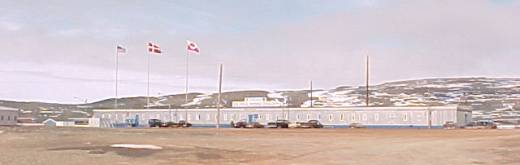
Under the agreement, Washington will be able to increase its military footprint in Greenland. The plans include restoring the former Cold War-era facility at Narsarsuaq and establishing a U.S. military presence at Mestersvig, an eastern Greenland outpost currently associated with Denmark’s Sirius Dog Sled Patrol.
The arrangement represents a significant expansion of the American military role on the island but does not transfer Greenlandic sovereignty to the United States. The agreement builds on the existing 1951 U.S.-Danish defense arrangement concerning Greenland.
“There has previously been a significant American presence in Greenland, so this is nothing new,” Nathanielsen said. “However, in light of the unrest over the past few years, there is likely greater scepticism in Greenland, and consequently, work needs to be done to reassure the local population.”
The United States established military facilities in Greenland during World War II and significantly expanded its presence during the Cold War. At that time, the U.S. operated 17 military installations and had more than 10,000 personnel on the island. Today, Pituffik Space Base is the only active U.S. base, with roughly 150 American military personnel.
Greenlanders Express Mixed Reactions
For some residents, the return of an expanded U.S. military presence represents a potential boost to Greenland’s security.
Pitanguaq Mikissen, 69, a retired ship assistant, said reopening some of the former American facilities could provide greater security for Greenland’s population of around 57,000.
Others remain deeply uneasy about the development.
“I think that Trump is really good at creating a lot of worry and a lot of fear,” said Jensia Dam-Davidsen, 40, a voice and choir teacher.
“It seems wrong in every way — especially now that Denmark has expanded their military presence here,” she added.
Denmark has also strengthened its military presence in Greenland since Trump’s threats intensified earlier in 2026. The country has deployed additional personnel, increased spending on Arctic defense, and conducted exercises involving allied forces.
Malene Vahl Rasmussen, mayor of the southern Greenland municipality of Kujalleq, where the Narsarsuaq facility is located, said any increase in U.S. military activity must take local traditions and livelihoods into account.
She emphasized that the agreement should respect Greenlandic society and protect activities such as hunting and fishing.
“You can’t simply say, ‘OK, we’ve signed this, so now we trust you again’. Trust really needs to be rebuilt within that partnership,” Rasmussen told Reuters.
Concerns Over Traditional Livelihoods
While the agreement is intended to strengthen Arctic security, some Greenlanders remain concerned about the potential local consequences of a larger military presence.
Increased aircraft movements, vessel traffic, and other military operations could affect hunting and fishing areas that many communities depend upon. The agreement stipulates that military activity should respect Greenlandic society and traditional ways of life, but rebuilding confidence among residents is likely to remain an important issue as the new arrangements take effect.
The pact therefore marks a new phase in U.S.-Greenland security relations: it expands America’s military role on the strategically important Arctic island while leaving questions about local trust, community concerns, and the practical impact of increased military activity to be addressed.