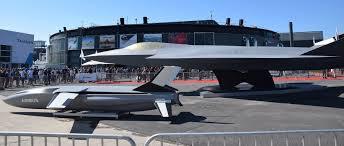
Airbus has signaled it could back a “dual-fighter approach” to resolve ongoing disagreements surrounding the Future Combat Air System (FCAS) being developed by France, Germany, and Spain, according to CEO Guillaume Faury. Progress on the program’s next-generation fighter (NGF) has slowed due to disputes between Airbus and Dassault Aviation.
Speaking at Airbus’s annual results briefing in Toulouse, Faury described FCAS as being at a critical turning point. He noted that while the fighter component faces challenges, other elements of the program—including the combat cloud, unmanned remote carriers, and propulsion systems—are advancing steadily.
Faury emphasized that problems in one segment should not derail Europe’s broader ambitions for advanced defense capabilities. He said Airbus would be prepared to support a two-aircraft strategy if customers request it and reaffirmed the company’s commitment to a cooperative European-led FCAS framework.
The sixth-generation air combat initiative, unveiled in 2017, has faced persistent delays caused by disagreements over responsibilities, leadership structure, and technology-sharing arrangements. Tensions have grown after France and Germany missed a self-imposed deadline to clarify the project’s direction by the end of 2025.
Faury also questioned whether the current governance structure can meet the varying requirements of participating nations, leaving final decisions to the program’s customers. German Chancellor Friedrich Merz recently stated that Germany does not require the same type of aircraft as France, which has insisted from the start on a carrier-capable fighter with nuclear strike capabilities to maintain strategic autonomy.
Merz warned that if these differing requirements cannot be reconciled, the program may not be sustainable. Belgian Defence Minister Theo Francken interpreted Merz’s remarks as signaling the end of FCAS, suggesting Belgium could reconsider its observer role.
Despite the uncertainty, Faury said Airbus still believes in the overall value of FCAS and urged partners not to undermine progress in other areas. He noted that decisions on the NGF pillar now rest with the participating governments.
When asked whether Airbus might pursue an independent fighter project, collaborate with Sweden, or join the UK-Italy-Japan Global Combat Air Programme, Faury cautioned against premature decisions, highlighting Airbus’s significant investment in FCAS. He added that a dual-fighter pathway could open opportunities for additional partners, though ultimate choices belong to the customers.
Faury stressed that Europe still needs an ambitious future air combat system and that a program of this scale requires multinational cooperation. He also discussed the broader debate over transitioning to unmanned aircraft, warning that abandoning crewed fighters too soon could create capability gaps. While autonomous systems are advancing rapidly, he believes piloted fighters will remain essential for the foreseeable future, with unmanned platforms gradually taking on a larger role over time.
Regarding the Eurodrone project, Faury said discussions are ongoing about its future direction, but he expects it to continue given continued support from most partners. France is reportedly negotiating with Germany, Italy, and Spain about withdrawing from the initiative.