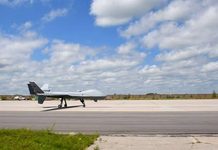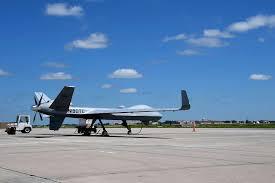
With a newly signed defense cooperation framework, Denmark and Canada could leverage their mutual acquisition of MQ-9B drones as a key platform for Arctic monitoring, analysts say. Denmark recently created Squadron 729 on Feb. 16, which will operate four long-range MQ-9B unmanned aircraft from Aalborg Air Base in northern Denmark beginning in 2028.
Canada, which has ordered 11 of the same General Atomics-built drones and expects delivery around the same timeframe, finalized its defense cooperation agreement with Denmark earlier this month during the Munich Security Conference. Canada plans to station its aircraft at multiple locations, including Nova Scotia on the east coast and British Columbia on the west coast.
The partnership links two Arctic nations that have been openly criticized by U.S. President Donald Trump since he began his second term in early 2025. Trump has expressed frustration with Canada over its independence and with Denmark over its refusal to transfer control of Greenland.
Experts believe the shared MQ-9B platform could help deepen technical and operational ties between Ottawa and Copenhagen, particularly since no formal arrangements currently exist for joint maintenance or data sharing.
Jens Marquard Sørensen, head of a Danish consulting firm, said establishing a shared logistics or maintenance hub would offer major strategic advantages. Arctic operations are costly, and pooling resources could improve efficiency and reduce expenses. However, he cautioned that both nations must first determine whether their operational requirements align.
Basing Denmark’s drones at Aalborg would place them near experienced maintenance teams, but the location is far from Greenland’s patrol zones. Sørensen noted that the distance could lead to longer flight times, increased wear on the aircraft, and fuel inefficiencies, while limiting rapid response capabilities. He suggested that an Arctic forward operating base would significantly improve mission flexibility.
For context, Aalborg is roughly 3,324 kilometers from Nuuk, with commercial flights typically taking four to five hours.
Rune Raunow, a defense advisor at Rethink Advisory in Copenhagen, said a Denmark-Canada arrangement involving the drones would be particularly useful for contingency planning, refueling, and emergency landings. He also highlighted the importance of sensor interoperability. Canada has selected L3 Harris Wescam MX-20D sensors for surveillance missions, while Denmark has not yet announced its choice. Using compatible communications and detection systems would simplify joint monitoring of threats in remote regions.
Canada’s MQ-9B acquisition is intended to strengthen Arctic surveillance and provide persistent intelligence capabilities, according to government statements. While its aircraft will be based in southern facilities that already have strong infrastructure, those sites remain far from the high Arctic areas where monitoring demands are growing.
Sørensen also proposed that a reopened Keflavík Air Base in Iceland—potentially as a shared NATO facility—could serve as an alternative base for the drones. He described it as a strategic location for monitoring areas around Greenland. Keflavík, closed in 2006, is now used periodically by NATO for air policing missions.
Iceland, though a NATO member, does not maintain its own military. Sørensen added that Keflavík’s position south of the Arctic Circle would reduce weather disruptions and logistical challenges. Shipping access year-round would make sustaining a base there more affordable compared with Greenland, where transport costs can reach $20 per kilogram.
Other potential basing options include northern Canada, which is geographically close to Greenland. However, defense analyst Hans Peter Michaelsen warned that many sites in the region lack the infrastructure needed to support permanent drone operations.