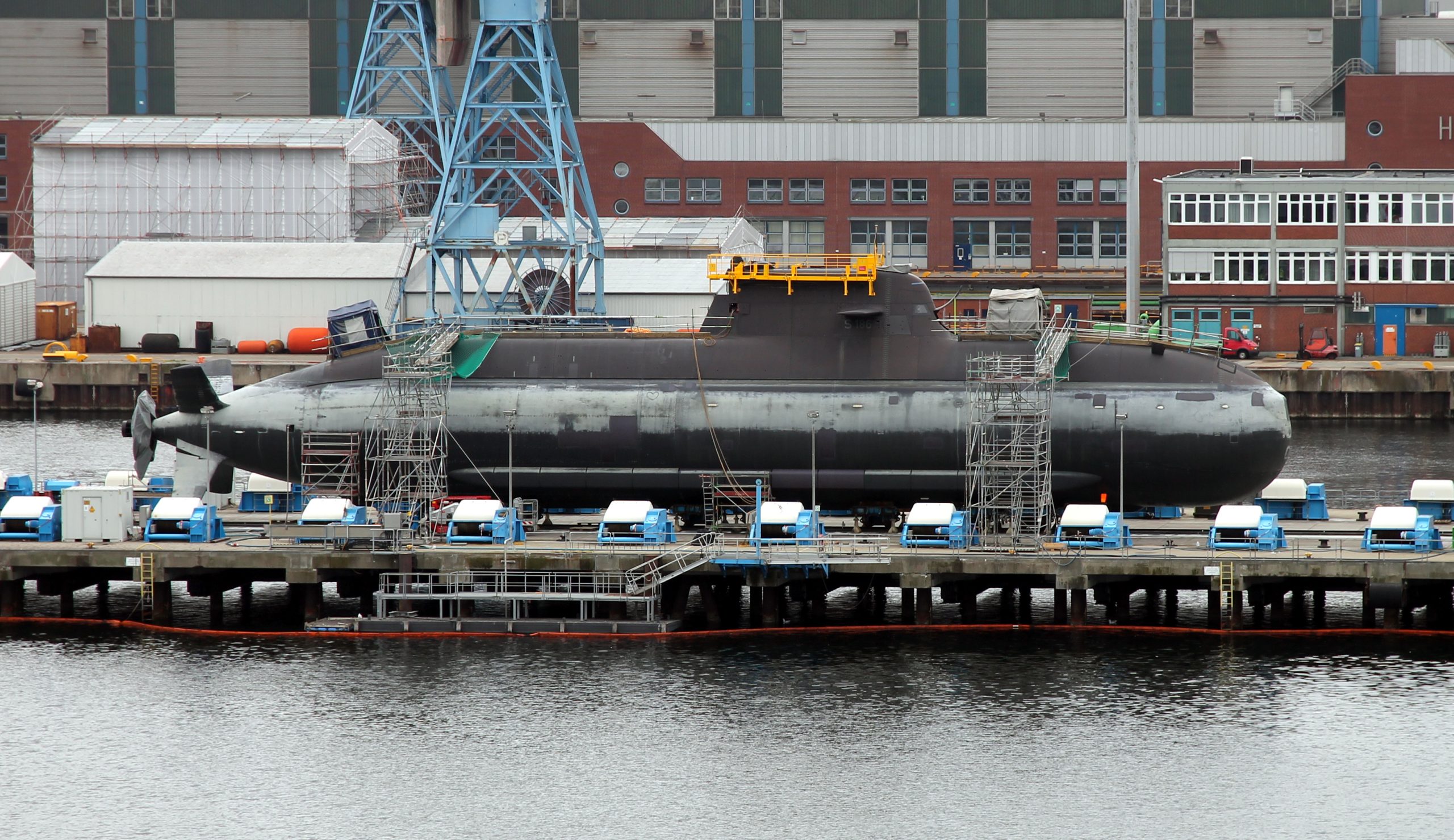
The above image is for representational purposes only.
German naval shipbuilder ThyssenKrupp Marine Systems (TKMS) has emerged as the preferred supplier for Canada’s next-generation submarine program, securing what is expected to become the country’s largest-ever defense acquisition. The company prevailed over South Korea’s Hanwha Ocean in the competition to build 12 submarines for the Royal Canadian Navy.
Canadian Prime Minister Mark Carney announced the decision on July 6, confirming that Canada intends to procure TKMS’s Type 212CD submarines, the same design currently being developed for the German and Norwegian navies.
Although the government has not released the contract’s exact value, Carney stated that the submarine program will represent the largest defense procurement in Canadian history. Estimates suggest the overall investment could reach approximately CAD 100 billion (around USD 70 billion) over the vessels’ operational lifespan, taking into account construction, infrastructure development, maintenance, weapons integration, and long-term support.
Formal negotiations with TKMS are expected to begin shortly, with the Canadian government aiming to finalize a contract before the end of the year. The German firm’s proposal was selected over Hanwha Ocean’s bid, which featured the KSS-III submarine.
Speaking in Halifax, Nova Scotia, Carney acknowledged the competitiveness of the selection process, describing it as a close contest between two highly capable suppliers. He noted that both TKMS and Hanwha Ocean presented platforms that met the Royal Canadian Navy’s demanding operational requirements while also offering substantial opportunities for Canadian industry and workforce participation.
According to Carney, the submarine acquisition will not only modernize Canada’s naval capabilities but also strengthen the country’s defense industrial base, reinforce partnerships with trusted allies, and create opportunities for Canadian companies to participate in European defense supply chains.
The new fleet will replace the Royal Canadian Navy’s aging Victoria-class submarines, which are scheduled to retire during the mid-2030s. Government officials indicated that the first replacement submarine is expected to enter service in 2033, followed by the delivery of three additional boats in 2034.
Carney emphasized that the final decision reflected a comprehensive assessment of Canada’s strategic, security, and economic priorities, with the chosen platform offering the strongest overall combination of capability and partnership.
The announcement came just before the NATO Summit in Turkey, underscoring Canada’s broader commitment to strengthening its defense capabilities and international alliances.
TKMS Chief Executive Officer Oliver Burkhard welcomed Canada’s decision, stating that the company is prepared to work closely with the Canadian government, domestic industry, and partners in Germany and Norway to deliver a world-class submarine capability. He said the project would enhance national security while generating long-term economic benefits and opportunities for future generations.
Hanwha Canada CEO Glenn Copeland expressed disappointment with the outcome but maintained that the competition successfully demonstrated the strength of South Korea’s defense industry. He said Hanwha remains committed to expanding its presence in Canada and highlighted South Korea’s growing position as one of the world’s leading defense exporters.
During the competition, Hanwha undertook an extensive public outreach and industrial engagement campaign to promote its proposal. One notable initiative involved deploying a Republic of Korea Navy KSS-III submarine to Victoria, British Columbia, in May, where it demonstrated its long-range operational capabilities and participated in joint activities with the Royal Canadian Navy.
South Korea also promoted the submarine program as an opportunity for Canada to strengthen strategic ties in the Indo-Pacific region. Addressing concerns that the unsuccessful bid might affect bilateral relations, Carney reaffirmed Canada’s commitment to its Indo-Pacific Strategy. He noted that Canada and South Korea continue to collaborate on a range of initiatives aimed at enhancing both economic resilience and regional security.
Stephen Fuhr, Canada’s Secretary of State for Defence Procurement, highlighted that the submarine competition was completed in less than a year, describing it as one of the fastest major defense procurement processes undertaken by the country. He acknowledged longstanding criticism that Canadian defense acquisitions often take too long and said the government intends to apply similar efficiencies to future procurement programs.
Canada’s existing fleet of Victoria-class submarines is expected to remain in service until the mid-2030s, after which the new Type 212CD submarines will gradually assume their role.