France plans to bolster its nuclear forces and adopt a new strategy of “advanced deterrence” that may involve positioning nuclear-capable assets on the soil of European allies, President Emmanuel Macron announced in a closely watched address outlining updates to the nation’s nuclear policy.
Speaking at the Île Longue naval base in Brittany—home to France’s fleet of nuclear-powered ballistic missile submarines—Macron described the move as a significant shift in the country’s deterrence approach. In addition to Germany and the United Kingdom, six more European nations are set to participate in discussions aimed at strengthening nuclear coordination.
Macron said France must reinforce its nuclear posture amid a complex and evolving threat landscape, emphasizing that deterrence should be viewed across the broader European continent while preserving full national sovereignty. He stressed that France would retain sole authority over any decision to use nuclear weapons, as mandated by the constitution, and would not extend a formal, binding nuclear guarantee to allies.
Interest in France’s nuclear umbrella has grown as Russia maintains an assertive stance near Europe’s borders and questions persist about the reliability of U.S. security commitments. While successive French leaders have acknowledged that France’s “vital interests” carry a European dimension, the term itself—first introduced by Charles de Gaulle—has never been precisely defined. That deliberate ambiguity remains central to French doctrine, designed to keep potential adversaries uncertain about what might trigger a nuclear response.
Macron argued that issuing a rigid guarantee could inadvertently lower the nuclear threshold and reduce strategic uncertainty. France, he said, reserves the option of delivering a nuclear “final warning” to signal a fundamental shift in a conflict as a last effort to reestablish deterrence. Ultimately, any decision to cross the nuclear threshold would be taken independently by France, though allied interests would be considered.
The advanced deterrence initiative will unfold gradually. Initial steps include inviting partner nations to observe or participate in deterrence exercises and signaling activities beyond French territory, potentially including conventional contributions from allies to French nuclear-related operations.
Over time, Macron suggested, France’s strategic assets could be deployed to allied countries. Such moves would allow the airborne component of France’s nuclear forces to operate across a broader European footprint, complicating adversaries’ calculations and adding strategic depth. He emphasized that this effort would complement NATO’s nuclear mission rather than replace it.
France’s airborne deterrent relies on nuclear-armed cruise missiles carried by Rafale fighter jets. The country dismantled its land-based intercontinental ballistic missiles in 1996. Macron said cooperation on advanced deterrence is being conducted transparently with the United States and in close coordination with the U.K. Germany is expected to play a central role, with Poland, the Netherlands, Belgium, Sweden, Portugal and Denmark also participating in discussions.
According to Macron, this growing alignment reflects deeper strategic convergence across Europe. Partner nations, he noted, could contribute by enhancing early-warning systems, strengthening air defenses and expanding long-range strike capabilities—measures he described as a balanced sharing of responsibilities.
Macron also revealed that he has ordered an increase in the number of French nuclear warheads and that Paris will stop publicly disclosing the size of its stockpile. France had previously indicated it maintained fewer than 300 warheads. Data from the Stockholm International Peace Research Institute estimates France has about 280 deployed warheads and roughly 10 in reserve.
France continues to adhere to its principle of “strict sufficiency,” maintaining its arsenal at the minimum level deemed necessary for the strategic environment. A nuclear power since 1960, France tested its first atomic bomb in the Sahara and later conducted its first hydrogen bomb test in 1968.
Macron argued that an expanded arsenal is necessary in light of improving missile defenses among rivals, the emergence of new regional powers, potential coordination between adversaries and proliferation risks. He maintained that France is not entering an arms race and that its nuclear weapons remain exclusively strategic.
The president underscored that effective deterrence does not require parity in numbers. What matters, he said, is ensuring that any adversary understands that attacking France would result in consequences from which it could not recover.
He cited Russia’s development of advanced systems—including hypersonic nuclear weapons, nuclear torpedoes and plans involving space-based capabilities—as well as China’s rapid military expansion. Macron warned that both the likelihood of nuclear escalation and the intensity of conflicts below the nuclear threshold are rising, pointing to what he described as increasingly casual nuclear rhetoric and the deployment of dual-capable missile systems near Europe.
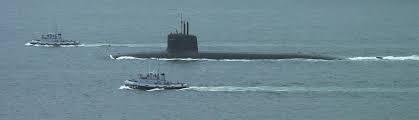
France’s sea-based deterrent consists of four Le Triomphant-class ballistic missile submarines, with at least one vessel on patrol at all times to ensure continuous at-sea deterrence. The country designs and produces its ballistic missiles domestically through ArianeGroup, while its air-launched nuclear cruise missiles are developed by MBDA. In contrast, the United Kingdom relies on U.S.-built Trident missiles for its submarine-based deterrent.
Paris is also advancing a comprehensive modernization program. A next-generation ballistic missile submarine is scheduled to begin entering service in 2035. France is developing the ASN4G hypersonic air-launched cruise missile to succeed the ASMPA and preparing an updated version of the M51 submarine-launched ballistic missile.
The latest M51 variant, introduced in October, features enhanced warheads and improved range, accuracy and penetration capabilities. Each operational submarine carries 16 of the solid-fueled, three-stage missiles. While the exact range remains classified, the newest M51.3 version is estimated to exceed 9,500 kilometers, extending the reach of France’s strategic forces.