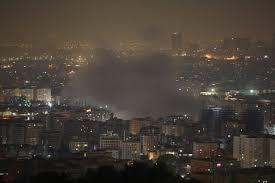
European governments convened urgent security discussions and moved quickly to safeguard their nationals in the Middle East following U.S. and Israeli airstrikes on Iran on Saturday, heightening fears of a wider regional confrontation.
Emmanuel Macron urged the United Nations to hold an emergency Security Council session in response to the attacks. Meanwhile, Germany and the United Kingdom scheduled crisis meetings of their own to assess developments. The European Union began relocating some personnel from the region as leaders prepared to align on next steps.
The diplomatic flurry followed a large-scale U.S.-Israeli offensive targeting sites across Iran. U.S. President Donald Trump went further, publicly encouraging Iranians to “take over your government,” a striking remark interpreted by some as signaling support for ending Iran’s theocratic rule after decades of strained relations.
For Washington’s democratic partners, the strikes pose a complicated balancing act. European leaders have consistently criticized Iran’s nuclear ambitions and the repression carried out by its clerical leadership. At the same time, they are wary of endorsing unilateral military measures that could contravene international law and spark a broader conflict. Similar unease surfaced after earlier U.S. military action against Iran and the detention of Venezuela’s president, Nicolás Maduro.
It remains unclear whether allies were notified in advance. Berlin said it received word only on Saturday morning, while a French defense official indicated Paris had anticipated developments but lacked specifics on timing.
Macron described the mounting tensions as dangerous for all parties and stressed the need to halt further escalation. France, which maintains a military footprint in countries including the United Arab Emirates, Qatar, and Jordan, signaled readiness to support regional partners. He also urged Tehran to return to negotiations over its nuclear and ballistic missile programs, adding that the Iranian people should have the opportunity to shape their own future.
In London, Prime Minister Keir Starmer chaired a meeting of the government’s emergency committee. A British spokesperson reiterated that the U.K. seeks to prevent the crisis from expanding into a wider regional war and continues to favor a diplomatic solution to Iran’s nuclear activities. Britain did not participate in the strikes. Germany’s crisis response team was also set to convene.
Fears of a broader war
The European Union’s foreign policy chief, Kaja Kallas, characterized the situation as highly perilous and said she was engaging Israeli and Arab counterparts to pursue dialogue. She emphasized concerns over Iran’s missile and nuclear capabilities, as well as its backing of armed groups, describing them as significant threats to international security.
Norway’s foreign minister, Espen Barth Eide, warned that the collapse of U.S.-Iran negotiations could open the door to a new and expansive war in the Middle East.
Spain’s Prime Minister, Pedro Sánchez, criticized what he called unilateral military action by the United States and Israel, arguing that it heightens instability and uncertainty in global affairs. He also condemned actions by Iran’s leadership.
In a joint appeal, European Commission President Ursula von der Leyen and European Council President António Costa called on all sides to show maximum restraint, safeguard civilians, and adhere fully to international law, while intensifying diplomatic engagement to protect nuclear safety.
Global criticism mounts
The International Campaign to Abolish Nuclear Weapons, a Nobel Peace Prize laureate, sharply denounced the strikes, warning they could accelerate nuclear proliferation and raise the risk of nuclear weapons use. Its executive director, Melissa Parke, described the attacks as deeply irresponsible.
Malaysian Prime Minister Anwar Ibrahim also condemned the Israeli and U.S. military actions, cautioning that the escalating confrontation has pushed the region toward the brink of catastrophe. Pakistan’s foreign minister, Ishaq Dar, similarly denounced what he termed unjustified attacks in a conversation with his Iranian counterpart, Abbas Araghchi.
Russia’s Foreign Ministry described the strikes as deliberate and unprovoked aggression against a sovereign U.N. member state, calling for an immediate cessation of hostilities and a return to diplomatic efforts. In a statement shared on Telegram, Moscow accused Washington and Tel Aviv of using nuclear concerns as a pretext for pursuing regime change.