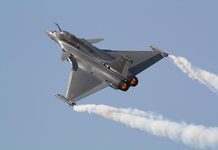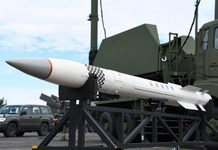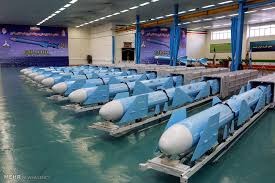
The above image is for illustrative purposes only.
Rising strain on global weapons supply networks caused by the recent U.S. military actions in the Middle East highlights the urgent need for Europe to quickly increase missile manufacturing, both for its own defence and to support Ukraine, the European Commissioner for Defence said on Friday.
Speaking in Poland at the start of what he called a “Missile Tour,” Andrius Kubilius warned that Ukraine’s demand for military equipment—especially air defence interceptors—greatly exceeds the current production capacity of Western defence industries.
He noted that Ukraine’s most pressing battlefield requirements include missiles, drones and long-range 155mm artillery ammunition. Among these, however, missile supplies remain the most difficult for allied countries to provide.
Kubilius said Ukraine endured close to 2,000 missile strikes in 2025, including roughly 900 ballistic missiles fired by Russia. These weapons are far more difficult to intercept and require sophisticated defence systems such as the Patriot missile system.
According to Kubilius, Ukraine required around 700 Patriot interceptor missiles during the four-month winter period alone. Because several interceptors are often needed to neutralize a single ballistic missile, demand is extremely high. Meanwhile, the manufacturer Lockheed Martin produced only about 600 PAC-3 missiles in 2025.
Kubilius warned that the United States may not be able to supply sufficient quantities of these missiles simultaneously to Gulf states, its own armed forces, and Ukraine. He described the situation as highly concerning and emphasized the need to accelerate missile production across Europe as quickly as possible.
European officials believe the tensions in the Middle East have further demonstrated the risks of relying heavily on external suppliers for defence equipment.
During a briefing on Thursday, Ukrainian President Volodymyr Zelenskyy said that more than 800 U.S.-made missiles had been used in just three days in the Middle East to intercept Iranian drones and missiles. He noted that Ukraine has never had access to such large numbers of interceptors to defend against attacks.
Zelenskyy frequently urges allied nations to provide additional PAC-2 and PAC-3 interceptor missiles, explaining that the systems are usually deployed and used within days of arriving in Ukraine.
Speaking alongside Kubilius, Poland’s defence minister Władysław Kosiniak‑Kamysz stressed that the situation highlights the importance of strengthening Europe’s own defence manufacturing capacity.
He said that achieving greater independence in weapons production and securing supply chains within Europe is becoming increasingly important, particularly as U.S. manufacturers may prioritise replenishing American and Gulf state stockpiles.
Poland has already signed major agreements to purchase American military equipment and is watching closely to see whether other global conflicts could delay those deliveries.
“If the conflict continues, then unfortunately that risk exists,” Kosiniak-Kamysz said.
Kubilius added that the European Commission is exploring financial measures to tackle the issue. One proposal involves a €90 billion loan package for Ukraine designed to support the country over the next two years. About two-thirds of the funding would be allocated to military spending, with priority given to purchases from Ukrainian and European defence companies.
However, the loan—which Ukraine hopes will begin arriving in April—is currently blocked by Hungary due to an ongoing energy dispute with Ukraine.
Another initiative is a €150 billion defence loan programme that 19 EU member states, including Poland, have requested access to.
After visiting Poland, Kubilius plans to continue his “Missile Tour” with stops in Italy, Germany, Belgium, Sweden and Finland.