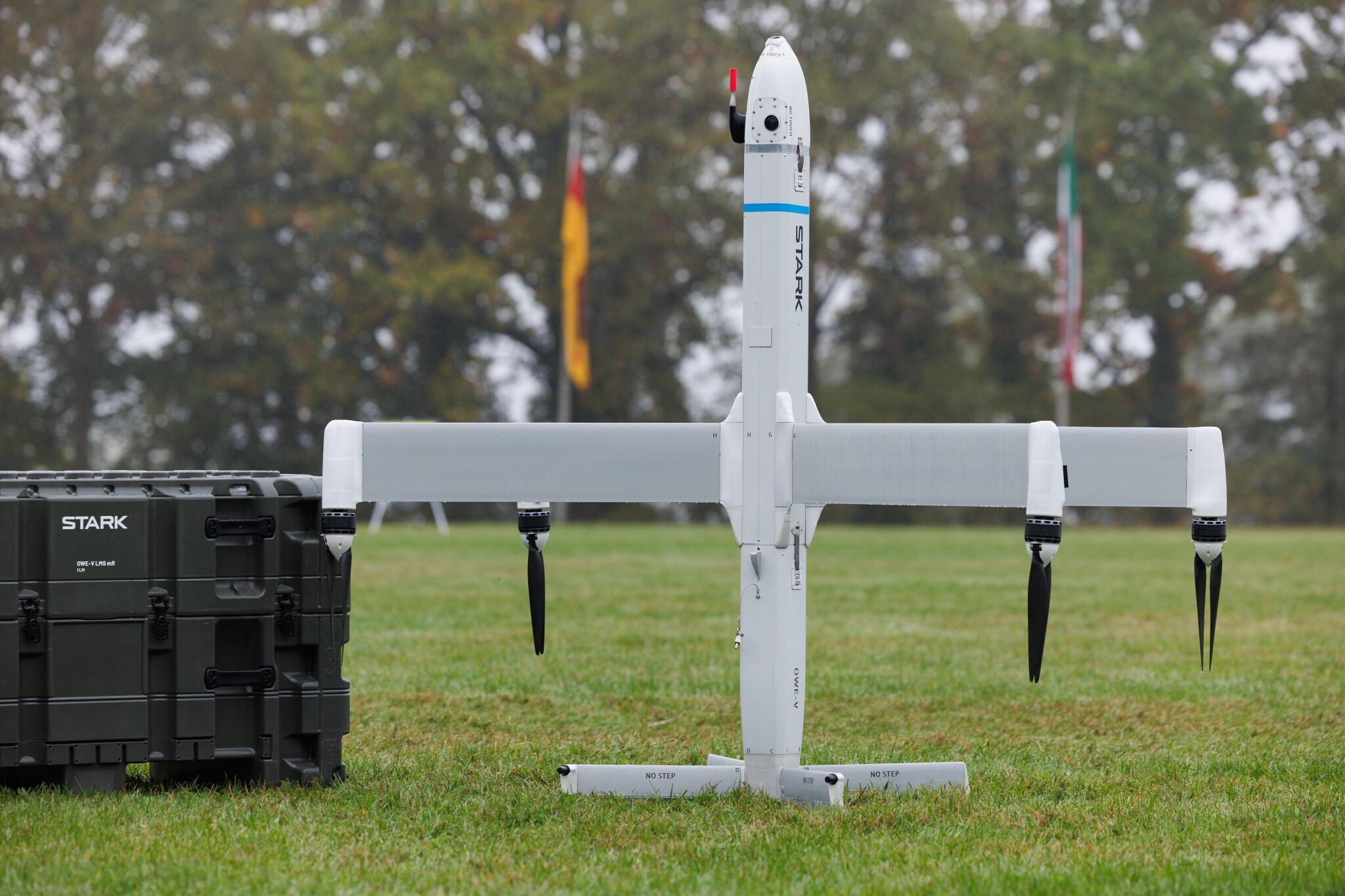
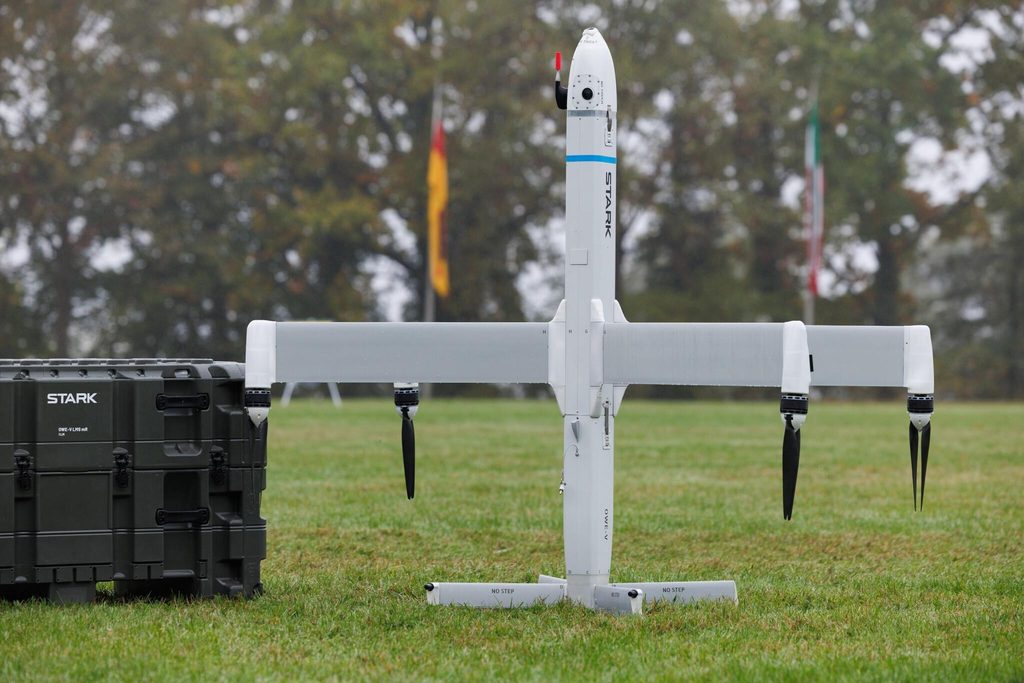
Germany’s loitering munitions programme has reached an important testing milestone, with two one-way attack drone systems passing live-fire trials conducted by the Bundeswehr. The systems, Stark’s Virtus and Helsing’s HX-2, have cleared a step towards initial deliveries and troop training before the end of the year.
The trials took place during the week of November 9. However, neither weapon has completed the full qualification process required before it can enter service with the German Armed Forces.
The German Army plans to begin equipping its armoured brigade stationed in Lithuania with the systems in 2027. The 45th Armored Brigade is expected to become the first major formation to receive them.
Germany’s Virtus and HX-2 loitering munitions pass live-fire tests
The testing assessed whether both systems could accurately engage designated targets and whether their warheads functioned as intended on impact. Key parts of the campaign were conducted at the Bundeswehr’s weapons and ammunition test centre in Meppen.
Germany’s military procurement office confirmed that both systems passed the trials. It did not, however, disclose the number of weapons fired or provide hit rates and other performance statistics.
Photographs released alongside the announcement showed Stark’s OWE-V Virtus and Helsing’s HX-2 approaching a tank shortly before impact.
The trials concentrated on the final stages of an engagement, including the weapons’ approach to their targets and the effects of their warheads. Passing this live-fire assessment does not amount to full certification or approval for operational use.
How loitering munitions operate
Both Virtus and HX-2 belong to the category of weapons known as loitering munitions. These systems can remain airborne over an area while searching for potential targets.
Unlike conventional missiles that are generally launched towards a known target, loitering munitions can spend time in the air before an engagement is authorised. A human operator decides whether to approve a strike.
The distinction is important because the weapons combine surveillance and target-engagement capabilities in a single system. Their operation has also raised concerns among arms-control researchers about the potential role of autonomous targeting.
The Bundeswehr said that the systems must undergo further testing to examine how their different components interact before loitering munitions can be used within the German Armed Forces.
German procurement process moves towards initial deliveries
The successful trials follow a procurement decision taken on February 25, when Germany’s parliamentary budget committee approved contracts worth €268 million for each of the two manufacturers, Stark and Helsing.
The agreements also include options that could increase the value of each deal by as much as €1 billion. Further purchases, however, depend on the systems demonstrating sufficient technological maturity and receiving additional parliamentary spending approval.
The procurement decision marked a change in Germany’s approach to acquiring armed drone capabilities. Debate over armed drones had previously encountered scepticism among German lawmakers, while concerns about autonomous targeting have continued among arms-control researchers.
The shift forms part of a wider reassessment of Germany’s military requirements following Russia’s full-scale invasion of Ukraine in 2022.
Parallel development and testing intended to accelerate delivery
Germany is attempting to reduce the time between signing defence contracts and making equipment available to military personnel. Its approach allows development, testing, qualification and preparations for operational use to proceed concurrently where possible.
The procurement office said soldiers were involved in the testing process at an early stage. Their feedback is intended to help manufacturers identify changes and improve the systems before they enter service.
The contracts also include safeguards. Lawmakers attached reporting requirements to the spending arrangements, while cancellation clauses give the government the option to withdraw if a system fails to meet qualification requirements.
This approach is intended to accelerate procurement without removing the requirement for the weapons to pass the necessary technical and operational assessments.
German Army plans Lithuania deployment from 2027
The procurement office expects initial deliveries of the Virtus and HX-2 before the end of the year, allowing German troops to begin training. It has not disclosed how many systems will be included in the first delivery.
The longer-term plan is to integrate the loitering munitions with the German Army’s reconnaissance and strike capabilities. This would connect the weapons with the wider systems used to identify, assess and engage targets.
The 45th Armored Brigade, Germany’s formation stationed in Lithuania, is scheduled to become the first major Army unit to receive the systems, with deployment planned to begin in 2027.
The live-fire results represent progress towards that objective, but further qualification and integration work remains. The systems must demonstrate that their individual components function reliably together before they can be approved for use by the Bundeswehr.