Iceye Makes €2 Billion Bid to Acquire Italian Rocket Maker Avio
Finnish satellite technology company Iceye has made a €2 billion ($2.2 billion) cash offer for Italian rocket manufacturer Avio, in a proposed acquisition that would bring together satellite-based intelligence, European space launch capabilities and missile propulsion technology.
The deal would also place Iceye at the centre of Avio’s plans to expand its presence in the United States missile market. It comes amid wider European efforts to strengthen domestic defence and space industries, reduce dependence on external suppliers and compete more effectively with the United States and China.
“Europe’s need for sovereign space and defense capabilities is growing. Building the industrial capacity to meet that demand takes years, which makes it critical to invest now,” Iceye said on Tuesday.
The Finnish company has proposed investing €1 billion in Avio’s Italian operations over five years. One objective would be to broaden the customer base for Avio’s Vega rocket programme.
Iceye Avio takeover bid receives Finnish government backing
The Finnish government has backed the proposed acquisition. Defence Minister Antti Häkkänen said the transaction could create a major international player in the space industry and strengthen Europe’s security of supply.
“If completed … a global space industry player will be created, through which the self-sufficient security of supply of Finland’s and all of Europe’s defense will rise to a new level,” Häkkänen said.
Avio confirmed on Tuesday that it was examining the proposal. Its board held an initial meeting and began assessing the offer, but had not announced a decision.
Leonardo, the Italian state-controlled defence group that holds an 18% stake in Avio, also indicated that it would consider the proposal. Leonardo’s chief executive described himself as “pleasantly surprised” by the bid.
Iceye has offered €41 per Avio share through Iris 2, its wholly owned Italian subsidiary. The offer represents a 21.3% premium over Avio’s closing share price on Monday and a 34.8% premium over its three-month volume-weighted average price.
Iceye’s stated objective is to take Avio private and delist it from the stock market. Avio shares rose by more than 15% following the announcement, reaching approximately €39.50.
Avio’s rocket and missile propulsion business
Avio operates in both the European space launch sector and the defence industry. It is a major supplier of solid rocket motors used in missile systems, alongside its work on launch vehicles.
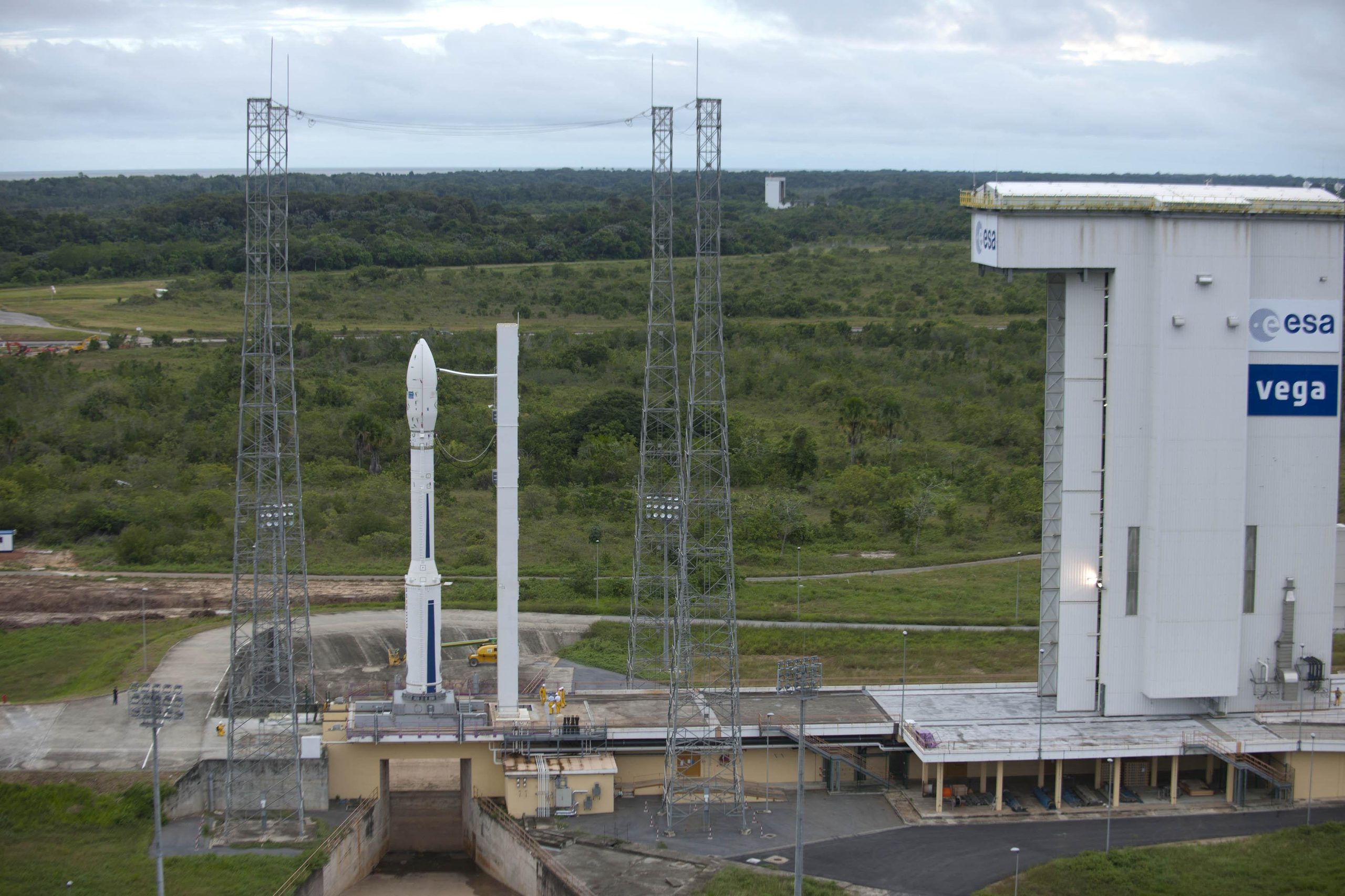
The company is involved in the Vega rocket programme, including the Vega C and Vega E launchers. Iceye’s proposed investment would support efforts to expand the customer base for these launch systems and strengthen Avio’s industrial capacity in Italy.
Avio is also pursuing growth in the United States, where demand for additional missile production capacity has created opportunities for international suppliers.
In September, the company broke ground on a new facility in Hurt, Virginia. The site is intended to support increased production of rocket motors for US missile programmes.
Partnerships with Raytheon and Lockheed Martin
Avio already has an established presence in the US defence supply chain. It has partnered with Raytheon on production of the Mk 104 dual-thrust rocket motor.
The Italian manufacturer has also joined forces with Lockheed Martin to produce rocket motors at its Virginia facility for two US Army programmes: the Extended Range Guided Multiple Launch Rocket System (ER GMLRS) and the Precision Strike Missile (PrSM).
These partnerships form an important part of Avio’s expansion strategy in the United States. A takeover by Iceye would therefore give the Finnish company a route into an established American missile-production network, although the proposed transaction would remain subject to government scrutiny.
An Avio spokesperson told Defense News that any acquisition would require approval from both the US and Italian governments.
Defence orders account for half of Avio’s recent intake
Avio reported an order intake of €237 million for the first nine months of the year. Approximately half of that amount came from defence-related business, while most of the remainder was associated with its Vega C and Vega E launchers.
The figures underline the importance of both defence propulsion and commercial space launch activity to the company’s business.
For Iceye, the proposed acquisition would combine Avio’s manufacturing and propulsion capabilities with its own satellite technology and operational experience in space-based intelligence.
Iceye expands its role in European and Ukrainian security
Iceye has supplied Ukraine with satellite radar imagery since 2022. Its synthetic aperture radar (SAR) satellites can collect imagery independently of daylight and cloud cover, making the technology useful for monitoring activity on the ground.
Last month, Iceye signed a letter of intent with Nokia and Ukraine’s Defence Ministry to explore cooperation in space-related capabilities, including sovereign satellite communications.
The proposed acquisition of Avio would represent a further expansion of Iceye’s role in the European security and defence sector, extending its activities beyond satellite data and into launch systems and missile propulsion.
Transaction could take several months to complete
Iceye chief executive Rafal Modrzewski said the company had consulted the relevant parties, including governments, before announcing its offer. Speaking at an event in Helsinki, he said the transaction could take a few more months to complete.
“It’s a phenomenal combination of capabilities … bringing a full vertical integration, following quite clear industry trends,” Modrzewski said, adding that he believed the deal would benefit both companies.
However, the offer remains under assessment by Avio, and the required regulatory approvals will be an important part of any potential transaction. The proposed acquisition is not yet complete.
If approved, the deal would bring together a Finnish satellite technology company and an Italian manufacturer with established European launch and US missile-production activities. It would also give the combined business a broader industrial footprint at a time when European governments are placing greater emphasis on sovereign space and defence capabilities.