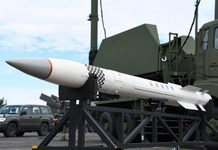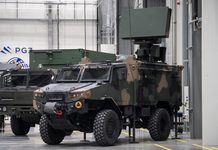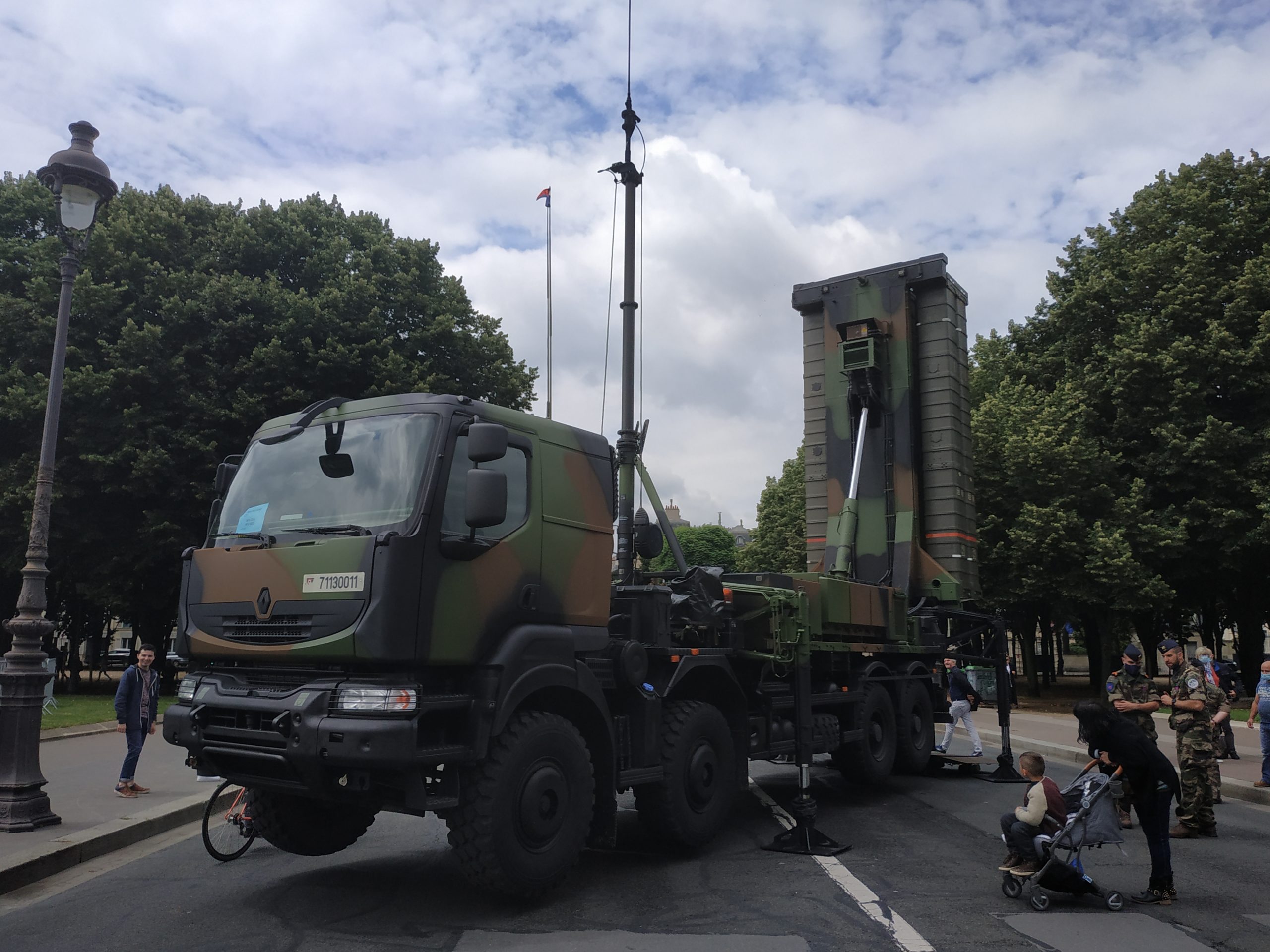
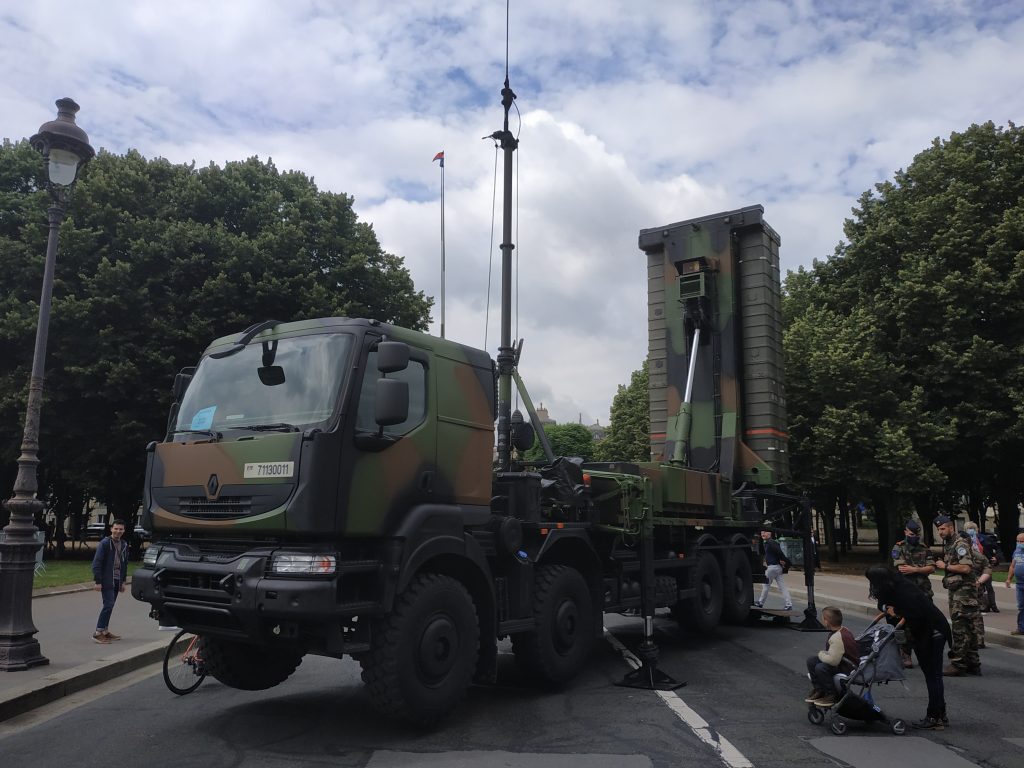
German Defense Minister Boris Pistorius has confirmed that Berlin will evaluate French President Emmanuel Macron’s proposal for Germany to participate in the development and production of the Franco-Italian SAMP/T air defense system. The statement, made on Tuesday, marks Germany’s first official response to Macron’s offer, which was presented during the Franco-German ministerial summit on July 17.
The proposal envisions Germany joining France and Italy in the next-generation SAMP/T program, Europe’s only indigenous long-range air defense system and the continent’s principal alternative to the U.S.-built Patriot missile defense system.
Speaking to journalists during a visit to the KNDS armored vehicle manufacturing facility in Kassel, Pistorius welcomed the proposal in principle, describing it as a positive step toward strengthening European defense cooperation. However, he also pointed out that Germany currently relies on the Patriot system for long-range air defense, making the simultaneous operation of two comparable systems a complex prospect.
During a joint press conference with German Chancellor Friedrich Merz, President Macron emphasized Europe’s ambition to strengthen its strategic autonomy in air defense. He reiterated France’s commitment to advancing the next-generation SAMP/T program and expressed a clear willingness to jointly manufacture the system with Germany and Italy.
Pistorius indicated that the discussions could extend well beyond industrial participation and encompass long-term technological collaboration lasting a decade or more. Such cooperation, he noted, could provide significant strategic and industrial benefits for Germany. He stressed that the proposal deserved careful consideration and that all relevant technical and industrial aspects should be thoroughly examined.
The renewed interest in the SAMP/T program comes amid growing concerns over the availability of Patriot interceptors. Supplies have been strained by increased demand resulting from recent conflicts, including military operations involving the United States, Israel, and Iran. In addition, Washington has signaled that equipping U.S. forces will take precedence over export commitments, raising concerns among European Patriot operators regarding future deliveries and replacement stocks.
These developments have reinforced calls across Europe to reduce dependence on non-European defense suppliers and invest in sovereign defense capabilities that are less vulnerable to changes in U.S. political or military priorities.
European missile manufacturer MBDA has announced plans to double production of the Aster interceptor missile, which equips the SAMP/T system. In October 2024, the company successfully tested the upgraded Aster 30 Block 1 New Technology interceptor, designed to counter medium-range ballistic missiles as well as emerging hypersonic threats.
Italy received its first next-generation SAMP/T system in January, featuring Leonardo’s advanced radar capable of monitoring airspace at distances exceeding 300 kilometers. France followed in February with its upgraded system equipped with the Thales Ground Fire 300 radar, which has a reported detection range of up to 400 kilometers.
Ukraine has also expressed its intention to procure four SAMP/T NG systems. France has committed to delivering these systems as rapidly as production allows, with phased deliveries expected to begin in 2027. As an initial step, a Thales Ground Fire 300 radar is scheduled for deployment in Ukraine by the end of 2026.
To address Ukraine’s immediate air defense requirements while production of the new systems continues, France has agreed to provide two existing SAMP/T systems on a temporary basis. These systems will later be returned once the new-generation variants are delivered. Ukraine is also expected to receive a Leonardo Kronos radar together with five Thales Ground Master 400 radar systems.
In parallel, France and Italy have agreed to accelerate deliveries of previously contracted Aster 30 missiles, with shipments now expected by October. The two countries have additionally approved licensed production of the Aster 30 missile in Ukraine before the end of 2026, enabling the country to strengthen its domestic defense manufacturing capabilities while meeting urgent operational requirements.