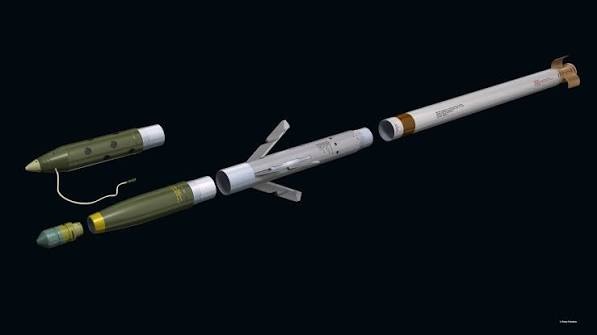
The Italian Air Force is considering acquiring U.S. technology that can transform inexpensive, unguided rockets into precision-guided weapons, potentially providing a more economical way to counter drones than relying on costly air-to-air missiles.
The proposal follows approval by the U.S. Department of State for a possible Foreign Military Sale to Italy involving 5,031 BAE Systems Advanced Precision Kill Weapon System (APKWS) II guidance kits.
APKWS is installed between the warhead and rocket motor of an otherwise unguided missile. Its four deployable fins are equipped with laser seekers, allowing the rocket to engage designated targets with precision. The system can turn a relatively inexpensive weapon—costing less than €100,000 ($117,000)—into a guided munition.
For the Italian Air Force, the technology could provide an economical alternative to launching weapons such as the AIM-120 AMRAAM, which can cost roughly ten times as much, against comparatively inexpensive drones.
According to the U.S. State Department, the proposed sale would strengthen Italy’s ability to address both existing and emerging threats, while enhancing homeland defense and contributing to regional deterrence.
The potential $364 million package would include more than the APKWS guidance kits. It would also cover launchers, warheads, rocket motors and associated technical assistance, the State Department said.
Italian sources told Defense News that no agreement has yet been finalized and that the technology remains under assessment. Italy’s Eurofighter fleet is considered the most likely platform for the system, particularly as the aircraft are already being used to respond to drone-related threats along Europe’s borders.
Earlier this month, an Italian Eurofighter participating in NATO’s Baltic air-policing operation shot down an unidentified drone after it entered Latvian airspace.
The United Kingdom has already moved ahead with the technology. In May, the Royal Air Force revealed that APKWS had been integrated onto its Eurofighters following an accelerated procurement program that completed testing and deployment in just two months.
The RAF described APKWS as giving its pilots a precise and relatively inexpensive means of engaging airborne targets, including drones, at a substantially lower cost than conventional air-to-air missiles.