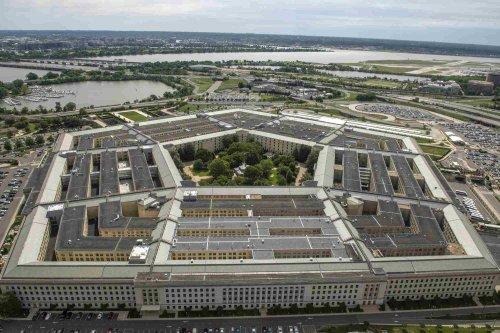
A Pentagon assessment of U.S. military deployments in Europe is expected to produce at least four possible force-structure options for Defense Secretary Pete Hegseth by November 6, weeks before the review is scheduled to conclude in December, according to a document obtained by Reuters.
The six-month review, launched in June, has raised concerns among NATO members that Washington could significantly reduce the approximately 80,000 U.S. troops stationed across Europe. Some European governments also fear that countries perceived by President Donald Trump as having provided insufficient assistance during the U.S.-Israeli conflict with Iran could face consequences.
The Pentagon’s previously undisclosed “Terms of Reference” outline how the review will be conducted and identify several factors officials will consider when assessing American military bases and deployments across Europe.
One notable element of the document is a planned decision briefing involving the top U.S. military commander in Europe and Pentagon policy chief Elbridge Colby. The meeting is scheduled to take place by September 18 and is expected to play an important role in shaping the alternatives that will ultimately be presented to Hegseth.
NATO Allies Remain Wary of the Review
Colby is scheduled to discuss the review with NATO ambassadors at the alliance’s headquarters in Brussels on Thursday.
A senior Pentagon official said the detailed development of multiple alternatives demonstrates how seriously the administration is approaching the assessment.
“We want to be able to talk through the pros and cons of a variety of different force levels or dispositions,” the official told Reuters.
Whether the process will ease European concerns remains uncertain. Officials in several European capitals privately remain skeptical and worry that Washington may already have settled on a broad direction for reducing its military presence.
The Trump administration has repeatedly indicated that it wants the United States to devote fewer military resources to Europe while expecting NATO members to assume greater responsibility for the continent’s defense.
Trump has also criticized European allies for depending heavily on American security guarantees while, in his view, failing to provide adequate assistance during the conflict involving Iran. Among Washington’s complaints are allegations that some countries delayed or restricted permission for U.S. aircraft to use their airspace and military bases.
NATO Secretary General Mark Rutte has acknowledged some of Trump’s frustrations but has maintained that most European allies have provided substantial assistance.
The Pentagon official said the administration had made its broader objective clear: the United States intends to shift toward providing more limited but strategically important support while European allies take the lead.
The official also acknowledged that recent disputes with certain allies have created pressure for options that could involve lowering U.S. troop levels in Europe. However, the official stressed that the review is designed to consider a broad range of possibilities rather than predetermine the final outcome.
Hegseth Criticizes NATO’s “Free-Riders”
When Hegseth announced the review in June, he criticized what he described as NATO allies that were “free-riding” on American defense commitments. He said the assessment would ensure that U.S. requirements for access, basing and overflight were clearly established.
The Terms of Reference indicate that the review will go beyond those three areas, commonly referred to as ABO.
In addition to examining whether the United States can maintain dependable access to allied territory, military bases and airspace, Pentagon officials will assess space and cyber capabilities, as well as intelligence systems and infrastructure that support America’s ability to project military power globally.
According to the senior Pentagon official, the definition of ABO was broadened so that the United States can account for the full range of assistance provided by NATO allies.
The review will also examine whether individual allies have a realistic plan for fulfilling their NATO defense-spending commitments and addressing shortfalls in the alliance’s crisis-response capabilities, known as the NATO Force Model. The issue has gained additional importance following U.S. force reductions announced earlier this year.
Reuters previously reported that Washington had circulated a questionnaire to NATO allies as part of the review. The survey asks governments about defense spending, military strategy, procurement and their willingness to support U.S. foreign-policy priorities.
One question asks whether a country has imposed restrictions on U.S. access, basing or overflight rights and, if so, why those restrictions exist and whether the government would consider removing or reducing them.
Another asks whether the country has publicly opposed regulations or other measures that could limit transatlantic cooperation in the defense industry. Governments are also asked whether they would be prepared to oppose such measures in the future.
Allied governments have been asked to submit their responses by Friday.
The senior Pentagon official acknowledged that the timetable is demanding but said the department expects earlier analysis and existing data to help speed up the process.
“We are working very, very hard, and it is a relatively tight timeline,” the official said. “A lot of prior analysis will inform this, which should allow us to move quicker on our end.”