As the United States, under Donald Trump, reassesses its security commitments to Europe, Turkey is positioning itself as a key partner in strengthening the continent’s defense framework.
At an event marking the 74th anniversary of Turkey’s accession to NATO, Defense Minister Yaşar Güler criticized the European Union for not fully including Ankara in its defense initiatives.
Although Turkey is part of NATO, it is not an EU member, resulting in overlapping but often restrictive rules that limit collaboration with EU countries. Güler warned that excluding non-EU allies like Turkey from defense efforts could ultimately weaken Europe’s security and resilience more than a potential reduction in U.S. military presence.
He emphasized that Turkey should no longer be viewed as a peripheral ally on NATO’s southeastern edge but as a central player capable of contributing to security across Europe. His remarks, delivered ahead of the 2026 NATO Summit in Ankara, reflect how Turkey sees its evolving role within the alliance and the broader global security environment.
Güler also revealed that Turkey will lead NATO’s Allied Reaction Force between 2028 and 2030. According to Serhat Güvenç of Kadir Has University, Turkey is among the few NATO members able to contribute meaningfully across multiple operational domains. He added that countries on NATO’s eastern flank—such as Poland, Romania, the Baltic states, and Nordic nations—are increasingly recognizing Turkey’s importance as Europe works to deter Russia and manage instability to its south.
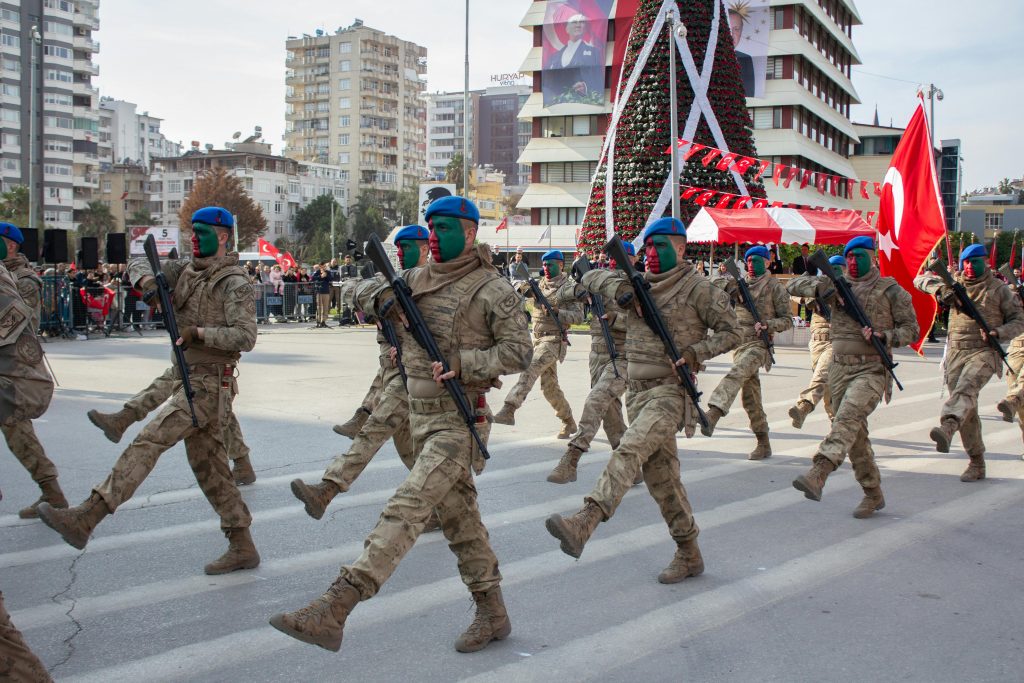
Turkey argues that it brings significant advantages to Europe, including a large standing military, extensive combat experience, strategic geography linking Europe and the Middle East, and a rapidly growing defense industry capable of producing drones, ammunition, armored vehicles, and naval systems.
From Ankara’s perspective, deeper engagement with Europe is not just about influence but also about security. Turkish officials believe that a weakened NATO or a divided European defense system could leave the country more vulnerable amid rising regional tensions.
Retired Brigadier General Hüseyin Fazla noted that Turkey’s operational contributions and defense industry progress have strengthened its case for closer integration. He said European countries are increasingly compelled to work with Ankara as its military-technology capabilities gain recognition within NATO planning processes.
However, political challenges remain. EU defense initiatives such as PESCO and the European Defence Fund require unanimous approval, allowing countries like Greece and Cyprus to block Turkey’s participation. Ankara’s attempt to join the Military Mobility project, for instance, stalled due to opposition from Athens and Nicosia.
Fazla argued that Greece and Cyprus see Turkey’s inclusion not as beneficial to their security but as undermining their strategy of balancing Turkey within the EU. He also pointed to broader resistance in Western Europe—particularly in countries like France and Germany—where Turkey is often viewed more as a geopolitical necessity than a natural strategic partner.
Güvenç added that cultural and political hesitations continue to shape Europe’s approach, even when collective security is at stake. Meanwhile, countries closer to Russia’s sphere of influence tend to value Turkey’s military strength more highly.
Turkey’s position is further complicated by its relationship with Russia. While maintaining economic and political ties with Moscow, Ankara also relies on NATO’s protection and contributes to alliance plans aimed at deterring Russian aggression. Güvenç described this not as contradiction, but as a pragmatic response to Turkey’s exposed geopolitical position.
Security concerns also extend to the southeast, where Iran’s growing missile capabilities pose a potential threat. Facilities such as the Kürecik radar base provide early warning coverage that significantly enhances Europe’s missile defense capabilities.
At the same time, tensions with Israel and increasingly sharp rhetoric from some Israeli officials have added another layer to Turkey’s security calculations.
Despite these complexities, NATO membership remains central to Turkey’s defense strategy. Güvenç highlighted that the alliance’s collective defense principle—Article 5—offers a level of deterrence Turkey could not achieve alone. The reported presence of U.S. nuclear weapons at Incirlik Air Base further reinforces this security guarantee.
Looking ahead, Güler expressed hope that the upcoming NATO Summit in Ankara will reaffirm allies’ commitment to collective defense.
For Turkey, the conclusion is clear: if Europe is preparing for a future with reduced U.S. involvement, then closer cooperation between Europe and Turkey will become increasingly essential.