The US Air Force island operations strategy is gaining momentum as the service develops additional locations from which to deploy aircraft, monitor potential adversaries and respond to threats across the Pacific and Arctic regions. Recent activity includes a rare fighter deployment to Shemya Island in Alaska’s Aleutian chain and plans for larger-scale exercises at airfields in the Northern Mariana Islands.
The developments reflect two related but distinct priorities: strengthening homeland defence against potential Russian activity in the North Pacific and increasing the number of airfields available for US forces in the central Pacific, particularly in a potential conflict involving China.
Shemya deployment revives a Cold War-era readiness posture
In late October, US Air Force personnel deployed F-16 fighters, tanker aircraft and cargo planes to Eareckson Air Station on Shemya Island. The deployment ran from October 18 to October 26 and involved aircraft maintaining an alert posture, with crews ready to launch at short notice.
According to Captain Kitsana Dounglomchan, spokesperson for the Alaskan NORAD Region, this was the first time in decades that aircraft had maintained an alert posture at Eareckson. Although such deployments were commonplace during the 1980s, the recent exercise marked a return to that level of readiness at the remote installation.
Shemya is located in the Aleutian Islands, closer to Russia than to mainland Alaska. Its position gives the US military access to strategically important airspace and waters connecting the North Pacific and Arctic.
US and Canadian aircraft conduct coordinated homeland defence exercise
The Shemya deployment concluded with long-range operations as part of a joint US-Canadian homeland-defence exercise.
F-16s operating from Eareckson covered the southern part of Alaska’s theatre of operations. Meanwhile, F-35s and F-16s launched from Eielson Air Force Base, approximately 1,600 miles away, to cover the northwestern sector. Canadian CF-18 fighters flew from Cold Lake, around 2,600 miles from Shemya, to cover the northern portion of the exercise area.
Air Force Lieutenant General Robert Davis, commander of the Alaskan NORAD Region, said the deployment demonstrated the ability to operate from a remote location, maintain aircraft readiness, launch on short notice and integrate US and Canadian forces in defending the northern approaches.
The exercise also tested Eareckson’s infrastructure. Airmen certified its aircraft-arresting system for use by F-16 fighters, providing further evidence that the airfield can support future fighter operations from an austere location.
Shemya retains its strategic importance
The US military has maintained a presence on Shemya since the Second World War. During the Cold War, the installation supported refuelling and surveillance aircraft, as well as radar systems used to monitor Soviet military activity, particularly intercontinental ballistic missile developments.
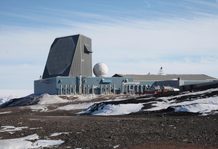
One of its most significant installations is the Cobra Dane radar, constructed in the 1970s and still used to monitor missile activity.
More recent activity has reinforced the island’s continuing military relevance. In September 2024, US soldiers deployed High Mobility Artillery Rocket Systems (HIMARS) to Shemya during a force-projection operation. The deployment followed increased Russian and Chinese activity in the region, including the first joint Sino-Russian bomber patrol near Alaska.
Other exercises have focused on protecting the island’s infrastructure against possible attacks from the sea and air.
Dounglomchan declined to discuss future operations at Eareckson but said NORAD retains the ability to reposition forces across Alaska and the Arctic when and where required, including at remote locations such as Shemya.
Air Force considers expanded operations in the Northern Mariana Islands
As the Shemya exercise concluded, the Air Force released a proposal outlining plans to assess more extensive operations at airfields on Rota, Saipan and Tinian in the Commonwealth of the Northern Mariana Islands.
The service intends to study the potential effects of conducting up to 1,500 aircraft operations annually at these locations, with the possibility that the figure could exceed 1,800. The activities would include aircraft take-offs and landings.
The proposed exercises would range in scale from small to large and take place several times a year, with individual deployments lasting a few weeks. Each airfield could support deployments involving up to 1,000 personnel and as much as 550,000 gallons of fuel, alongside munitions, temporary infrastructure and other operational support.
The Air Force study will examine the potential social, economic and environmental consequences of these activities. It is not expected to be completed until mid-2028.
Tinian airfield restoration supports dispersed operations
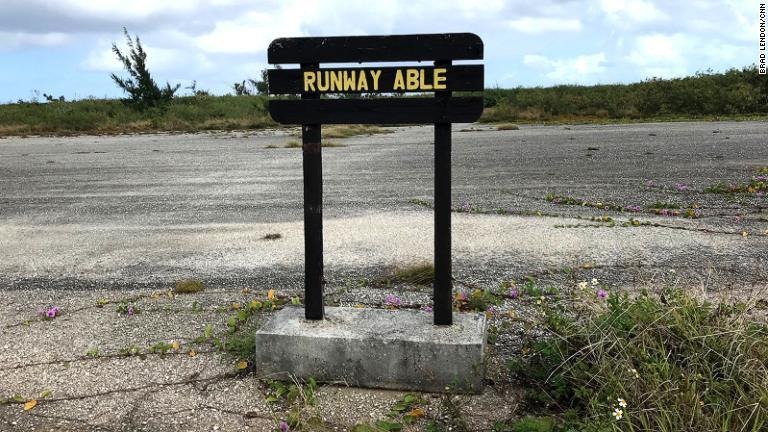
The proposal builds on ongoing work to restore North Field on Tinian, one of the largest and most important US airbases constructed during the Second World War.
After the war, the airfield was abandoned and gradually became overgrown. Since late 2023, Air Force personnel have been clearing vegetation, removing debris and rehabilitating its runways.
By mid-2025, the restoration had progressed sufficiently for North Field to be designated a semi-permanent contingency location supporting the Air Force’s principal base on Guam, approximately 100 miles to the south.
The Northern Mariana Islands form part of the Second Island Chain, a geographical arc extending from Japan through the central Pacific towards Indonesia. The Air Force has been assessing airfields across this chain and upgrading selected locations to support its Agile Combat Employment concept.
The approach emphasises distributing aircraft and personnel across multiple locations rather than concentrating operations at a small number of major bases. The objective is to improve resilience and complicate an adversary’s efforts to disrupt US air operations, particularly through missile attacks.
Agile Combat Employment aims to complicate Chinese targeting
The expansion of alternative operating locations is closely connected to concerns about China’s growing missile capabilities.
Kelly Grieco, a senior fellow at the Stimson Center whose research focuses on airpower strategy, explained that every additional airfield available to US aircraft increases the number of locations that China would need to consider when planning missile operations.
China’s missile inventory is substantial, but it is not unlimited. Dispersing aircraft across more airfields could therefore make it harder for an adversary to disable US air operations through attacks on a few major installations.
However, the military value of individual locations depends heavily on their geography.
Grieco said Shemya is primarily relevant to homeland defence. Its position in the North Pacific makes it a useful forward operating location for NORAD, particularly for intercepting Russian aircraft approaching North American airspace.
The value of the remote airfield, she noted, lies less in its ability to generate large numbers of aircraft sorties under contested conditions than in its geographical position.
The Northern Mariana Islands serve a different purpose.