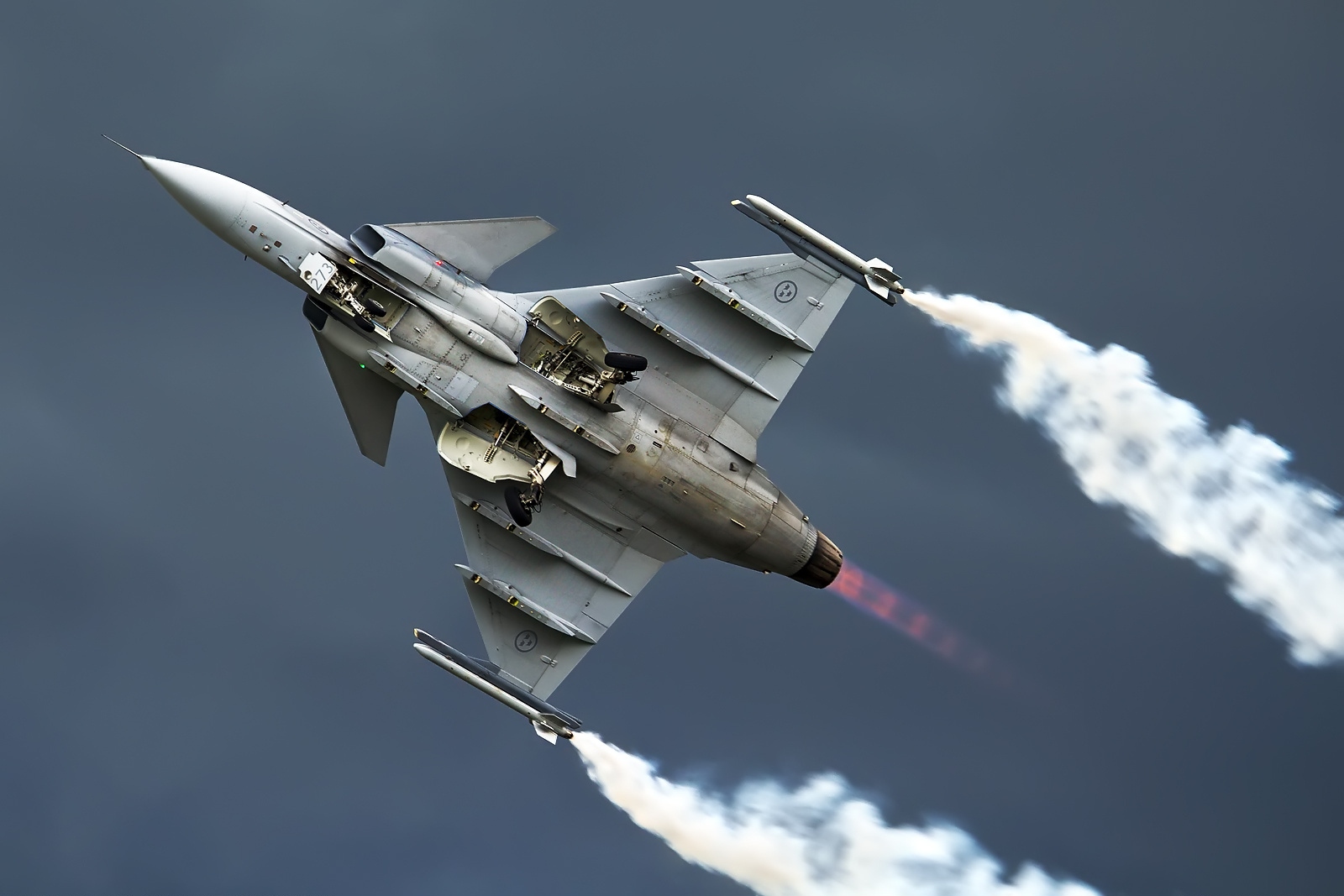
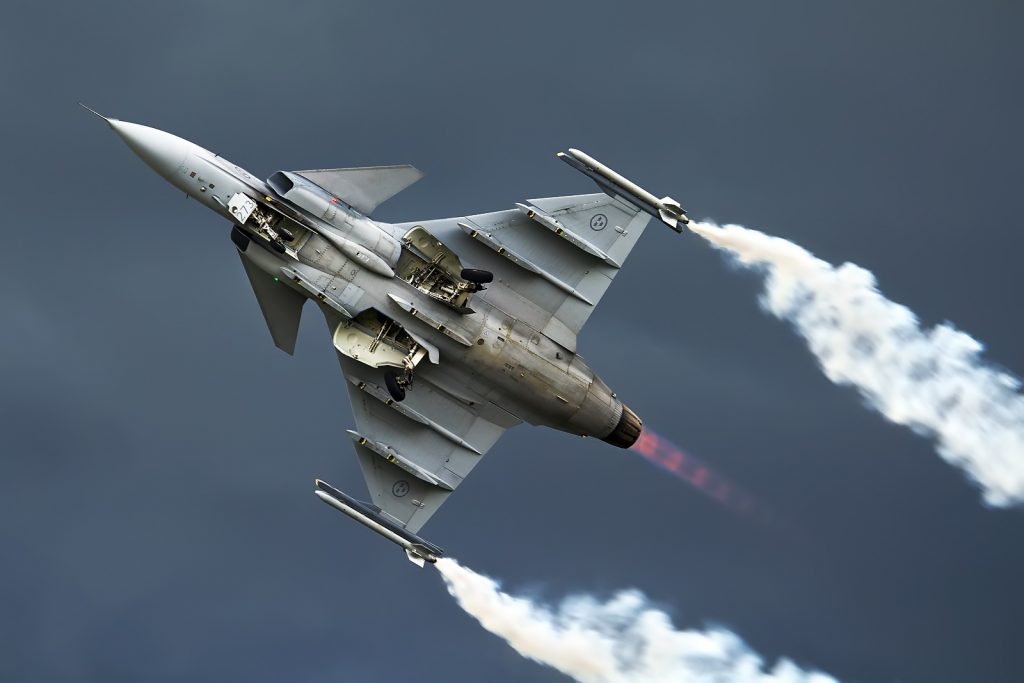
Maj. Gen. Jonas Wikman has led the Swedish Air Force since December 2022, guiding an extensive modernization effort aimed at expanding combat capabilities while supporting Sweden’s transition into NATO. He commands a force of more than 2,700 personnel and oversees an expanding Gripen fighter fleet, with long-term plans to field 120 aircraft combining legacy C/D variants with the newer E model. Sweden is also preparing to raise its defense budget by approximately $2.9 billion in 2026, an 18% increase compared to 2025.
Speaking ahead of the new year, the Air Force chief discussed the progress of Sweden’s future fighter initiative, enhancements to the Gripen E’s electronic-warfare systems, the primary threats facing national security, his operational priorities, and his views on Canada’s potential interest in the Swedish-built aircraft.
Status of Sweden’s Future Fighter Program
Asked about the direction of Sweden’s next-generation fighter plans following Saab’s contract extension for a continued concept study, Wikman said the process remains ongoing. While earlier discussions included the possibility of loyal wingmen and other unmanned systems, the Air Force is still focused on maintaining flexibility.
He explained that Sweden continues to invest in expertise and options rather than committing prematurely to a single solution. According to Wikman, the Air Force expects to be ready in the coming year to present political leaders with a clearer position, which would help establish a national path forward for the program.
Interest in unmanned systems has grown, particularly in terms of integrating emerging technologies into existing platforms and operations. Originally, Sweden intended to analyze options, wait for political decisions, and then move on to the next system within a collaborative fighter framework. However, Wikman noted that rapidly advancing technology makes it impractical to delay the introduction of unmanned platforms until later stages.
He compared this approach to how upgrades are handled across the Gripen fleet: whenever new software or capabilities are developed for the Gripen E, efforts are made to implement them on older variants as quickly as possible.
National vs. Collaborative Fighter Options
When asked to rank potential paths—developing a domestic fighter, joining a multinational program, or license-producing an existing design—Wikman said the question does not lend itself to a simple hierarchy. He emphasized that Sweden’s eventual solution is likely to blend elements of all three approaches, combining national initiatives with international cooperation.
He added that the Air Force has been directed to ensure all options remain viable. While he has personal views, Wikman stressed that individual opinions are not guiding the process. At present, all three approaches are still being examined at a conceptual level.
Wikman also cautioned against focusing too narrowly on the aircraft itself. Sweden, he said, has a tradition of avoiding overly platform-centric thinking, instead placing strong emphasis on how air power integrates with ground forces, command-and-control systems, and broader operational concepts.
Electronic Warfare Advances on Gripen E
Discussing the Gripen E’s enhanced electronic-warfare suite, Wikman described it as one of the aircraft’s defining strengths. Both defensive and offensive EW capabilities have been a top priority for the Air Force.
He highlighted the integration of EW systems with a wide range of sensors that share information internally and across networks, allowing data to be distributed to other platforms—similar in concept to how the F-35 operates. These capabilities enable deeper penetration into contested environments while influencing adversaries and feeding intelligence to systems such as the GlobalEye airborne early warning platform and other shooters.
Wikman believes the Gripen E’s full potential is often underestimated. Rather than focusing on a single method like stealth alone, he said the aircraft offers a combination of survivability features, including low observability, advanced EW, spoofing, and sensor disruption, all contributing to reduced detectability.
Security Threats to Sweden
On the question of national security threats, Wikman was unequivocal: Russia remains Sweden’s primary concern. He described the situation as a sustained, systemic confrontation between Russia and the broader Western alliance.
Priorities and Challenges Ahead
Looking ahead, Wikman said the Air Force is not facing a crisis but must adapt to a faster pace of capability development. Sweden’s goal of reaching 3.5% of GDP in core defense spending by 2030 requires balancing national readiness with alliance commitments.
A key priority is ensuring Sweden is a net contributor to NATO. This year, the Swedish Air Force and Navy conducted operations in Poland and plan to deploy again to Latvia next year. Achieving this balance requires adjusting training and force management so that operational deployments and capability development can proceed in parallel.
He cited recent deployments to Poland as examples of how this approach works in practice, with fighter units deploying additional personnel and equipment while simultaneously testing and refining air and ground operations. Wikman said this integrated mindset will be critical going forward.
He also noted that 2026 will mark the Swedish Air Force’s 100th anniversary.
Counter-Drone Operations and NATO Deployments
Reflecting on NATO air-policing missions in Poland, where Gripen aircraft successfully detected and engaged slow, low-flying targets, Wikman said this capability has become increasingly important. Earlier radar designs were not optimized for detecting such objects, but the mission to protect a key logistics hub required the Air Force to address this challenge.
He specifically referenced Shahed drones, explaining that the Air Force conducted rapid validation before deployment to ensure the Gripen could locate and neutralize these targets. While technically and tactically demanding, the effort confirmed that Swedish forces can now counter such threats, making it a verified part of their operational capability.
Canada and Potential Cooperation
Regarding Canada’s consideration of the Gripen as an alternative to the F-35, Wikman declined to comment on the procurement decision itself, calling it entirely Canada’s choice. He said he has maintained open communication with Canada’s air chief to ensure mutual understanding of the platform but emphasized that the decision lies outside his responsibilities.
Beyond aircraft purchases, Wikman sees growing potential for cooperation between the two countries. Sweden and Canada are both involved in establishing a new NATO logistics headquarters in Enköping, which could serve as a shared base for dialogue on overlapping security challenges.
Despite the geographic distance, Wikman said the two nations share similar perspectives, values, and strategic interests. With Sweden’s entry into NATO, he expects cooperation between the Swedish and Canadian air forces to become more frequent and mutually beneficial.