European members of NATO are signaling a renewed commitment to strengthening security in the Arctic, placing Greenland at the heart of those efforts. Leaders across the continent are seizing on comments from the White House—particularly from Vice President J.D. Vance—who has argued that Europe’s alleged failure to adequately safeguard Greenland is a key justification behind the Trump administration’s interest in acquiring the island, which remains an autonomous territory within the Kingdom of Denmark.
President Donald Trump has repeatedly floated the idea of the United States assuming control of Greenland, citing its critical strategic value for American national defense. He has even suggested that force could be used if necessary—an extraordinary proposition given that both countries are NATO allies.
In response, European governments appear focused on expanding both Denmark’s and Europe’s military presence in and around Greenland, aiming to address U.S. concerns and remove any rationale for unilateral American action. Among defense and policy circles in Europe, discussions have intensified around the possibility of a NATO-led Arctic mission modeled on the alliance’s “Baltic Sentry” operation. Senior officials from countries including Germany, the United Kingdom, France, and Belgium have explored the idea privately, with Belgian Defense Minister Theo Francken becoming the first to publicly advocate for such a mission earlier this month.
Germany’s defense minister, Boris Pistorius, added momentum to the discussion on Jan. 13 during talks in Berlin with EU foreign policy chief Kaja Kallas. He referenced a potential NATO operation dubbed “Arctic Sentry,” while cautioning that any such mission would require formal NATO approval and would not materialize quickly. In the interim, he emphasized that European allies must demonstrate clearly that they are prepared to shoulder more responsibility for Arctic security alongside the United States.
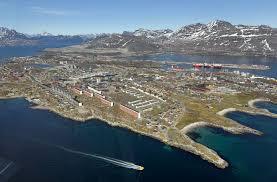
The U.S. military already maintains a presence on Greenland, with approximately 150 personnel stationed at Pituffik Space Base. Their primary roles involve missile warning systems and space monitoring. This footprint is significantly smaller than during the Cold War era, when troop levels exceeded 1,000 under a longstanding agreement with Denmark that grants the U.S. broad operational freedom on the island dating back to 1951.
Despite growing public debate, NATO officials stress that no formal decision has been made regarding an Arctic Sentry mission. Speaking at a security forum in Sweden, NATO’s Supreme Allied Commander Europe, Gen. Alexus Grynkewich, noted that Arctic responsibilities were recently consolidated under Joint Force Command Norfolk. However, he said it was too early to conclude that a standalone Arctic mission would be launched.
While urgency from European capitals has increased, Arctic security has long been a concern for NATO. The region’s strategic importance has been recognized for decades, with alliance forces operating around Greenland since the Cold War. NATO Secretary General Mark Rutte confirmed that Arctic defense was the subject of extensive discussion last summer and that planning is ongoing. Speaking in Brussels on Jan. 13, he recalled that the issue was already prominent during Trump’s first term, particularly as melting ice opens new shipping routes and as Russia and China increase their activity in the region.
Grynkewich underscored that Moscow and Beijing’s presence is far from benign. He warned that their vessels are conducting seabed mapping and reconnaissance designed to undermine NATO’s maritime and undersea capabilities—activities that could rapidly escalate if left unchecked.
Rutte reiterated that Arctic security is a shared responsibility across the alliance, extending beyond the seven NATO members with Arctic territory. He pointed to commitments from countries such as Germany and the U.K. as evidence of broad support for protecting the high north.
Denmark’s own investments—including P-8 maritime patrol aircraft, long-range drones, F-35 fighter jets, and aerial refueling capabilities—were highlighted by Rutte as essential contributions to the defense of both NATO and the Arctic region.
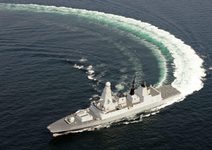
According to a NATO official speaking anonymously, any future alliance presence would likely combine traditional naval assets like frigates with unmanned systems such as drones. However, the official cautioned that deploying and integrating such technologies in the Arctic’s extreme conditions would be far more challenging than in other theaters like the Baltic or Mediterranean.
Meanwhile, Trump’s portrayal of growing foreign threats near Greenland has drawn pushback from Danish officials. Stine Bosse, a Danish member of the European Parliament, directly contradicted his claim that the waters around Greenland are crowded with Chinese and Russian ships. Following discussions with Rutte, Bosse stated unequivocally that no such vessels are currently operating near the island.
A central argument used by the Trump administration is that Denmark lacks the capability to defend Greenland on its own. Yet many Europeans now view the most immediate danger to the island as coming not from rival powers such as China or Russia, but from the United States itself.
Bosse described Greenlanders as deeply alarmed by Washington’s rhetoric, noting widespread fear and anxiety among the population. Polling conducted in early 2025 showed that only six percent of Greenlanders support becoming part of the United States.
Greenlandic leaders have been equally firm. “Nothing about Greenland without Greenland,” Foreign Minister Vivian Motzfeldt declared during remarks in Denmark. Prime Minister Jens-Frederik Nielsen echoed that stance, stating alongside Danish Prime Minister Mette Frederiksen that Greenland’s allegiance lies with Denmark, NATO, and the European Union—not the United States.
EU foreign policy chief Kaja Kallas confirmed in Berlin that confidential discussions are underway regarding possible responses should U.S. threats escalate. Pistorius warned that any attempt by Washington to seize Greenland would represent an unprecedented crisis—both for NATO and for the concept of collective defense itself.
Although the 1951 defense agreement allowing U.S. forces to operate on Greenland remains in effect, Denmark also maintains a standing order from the same era instructing its troops to respond with force—even without direct orders—if any foreign power attempts to take control of the island.