Germany does not intend to develop its own nuclear arsenal but is exploring the possibility of integrating French and British nuclear capabilities into a collective deterrence framework similar to NATO’s U.S.-led nuclear umbrella, Chancellor Friedrich Merz said.
Speaking on the Machtwechsel podcast in his first major interview of the year, Merz stated that Germany should not pursue independent nuclear weapons. Instead, he proposed examining whether France and the United Kingdom could provide a nuclear shield for Europe comparable to the U.S. role in NATO. He emphasized that any such arrangement would ultimately depend on decisions made by Paris and London.
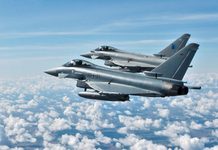
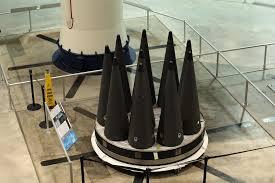
Both France and the U.K. rely primarily on submarine-launched ballistic missiles for nuclear deterrence, with France also maintaining dozens of air-launched cruise missiles deployed on Rafale aircraft. Under NATO’s nuclear-sharing framework, Germany’s Tornado jets and upcoming F-35A aircraft are equipped to deliver U.S. nuclear weapons stored in Germany, though Berlin lacks authority to use them independently.
French President Emmanuel Macron has previously suggested extending France’s nuclear deterrence to Germany. However, France keeps its nuclear forces outside NATO’s command structure to preserve what it calls strategic independence. Merz said the current security environment makes it important to seriously consider France’s offer rather than dismiss it.
Macron recently announced that he would outline France’s nuclear doctrine in an upcoming speech, noting that France’s “vital interests” include a European dimension. He also highlighted ongoing strategic discussions with Germany and other European leaders on aligning nuclear policies, cooperation, and security interests to strengthen shared defense strategies. France has also held talks with Sweden on related matters, though details remain limited.
Amid Russia’s invasion of Ukraine and deteriorating relations with Moscow, debates over nuclear deterrence have intensified across Europe. Germany is reassessing its military and foreign policy stance while balancing legal and treaty obligations, including the German reunification treaty and the Nuclear Non-Proliferation Treaty, which restrict nuclear weapons proliferation.
Merz noted that the idea of Franco-German nuclear cooperation dates back to the 1960s but said current discussions are still in early stages, with only preliminary talks initiated.
Meanwhile, France and the U.K. agreed last July to deepen coordination of their nuclear deterrence strategies, asserting that any serious threat to one nation’s vital interests would also endanger the other, and that no major threat to Europe would go unanswered by both countries.