European members of NATO have slightly reduced their dependence on the United States for arms purchases, directing a larger share of their defense imports to countries such as South Korea, France, and Israel. This trend was highlighted in new analysis from the Stockholm International Peace Research Institute (SIPRI).
According to SIPRI’s report released on March 9, the United States supplied 58% of the major weapons imported by European NATO countries between 2021 and 2025. This represents a decline from the 64% share recorded in the previous five-year period ending in 2024.
Defense spending across Europe increased significantly after Russia invaded Ukraine in 2022, leading to a surge in weapons purchases that more than tripled the region’s arms imports. At the same time, several European governments have begun exploring ways to lessen their reliance on U.S. military equipment. Concerns about the reliability of American security commitments have grown following remarks by former President Donald Trump toward NATO allies and Washington’s increasing emphasis on domestic defense priorities.
SIPRI noted that growing concerns about Russia, combined with uncertainty about the United States’ long-term commitment to European defense, have encouraged NATO countries in Europe to expand their weapons procurement.
Although European defense manufacturers have increased output and the European Union has supported the region’s arms industry with new funding initiatives, European governments still relied heavily on U.S. equipment over the past five years. According to SIPRI researcher Katarina Djokic, this was particularly true for high-value systems such as fighter aircraft and long-range air-defense platforms.
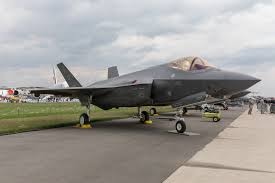
By the end of 2025, twelve European nations had either ordered or selected a total of 466 F-35 fighter jets produced by Lockheed Martin. Of these, 39 aircraft were ordered or approved for purchase during the previous year.
South Korea emerged as the second-largest supplier of weapons to European NATO countries, accounting for 8.6% of their imports during the 2021-2025 period, up from 6.5% in earlier data. Israel also expanded its role, increasing its share from 3.9% to 7.7%, while France’s share grew from 6.5% to 7.4%.
Globally, the transfer of major weapons between countries increased by 9.2% during the 2021-2025 period compared with the previous five years, marking the fastest growth in a decade. SIPRI attributed much of this rise to the sharp expansion of European arms purchases as governments sought to strengthen their military capabilities in response to Russia.
Mathew George, who directs SIPRI’s Arms Transfers Programme, explained that while military aid to Ukraine since 2022 has been a major factor, many other European nations have also boosted imports to improve their defenses against what they perceive as a growing Russian threat.
Deliveries of U.S. arms to Europe increased dramatically—by 217%—during the 2021-2025 period compared with the previous five years. This figure includes weapons supplied to Ukraine as well as equipment purchased by other countries and subsequently transferred to Ukrainian forces, such as air-defense missiles and guided bombs.
Despite shifts in import patterns, the United States remained the world’s largest arms exporter between 2021 and 2025, holding 34% of the global market. France ranked second with 9.8%. Russia’s share dropped significantly to 6.8%, roughly one-third of its level in the earlier five-year period.
According to SIPRI senior researcher Pieter Wezeman, many countries buy U.S. weapons not only for their advanced technology but also as a way to strengthen political and strategic ties with Washington. From the American perspective, arms exports serve both as a diplomatic tool and as a way to support the domestic defense industry.
Germany moved ahead of China to become the fourth-largest arms exporter during the 2021-2025 period, with nearly a quarter of its exports going to Ukraine. Italy also climbed in the rankings, rising from tenth place to sixth, with 59% of its weapons exports destined for the Middle East.
By the end of 2025, U.S. manufacturers had outstanding orders for 936 combat aircraft. France had at least 180 aircraft on order, while China’s backlog included around 90 fighter jets. SIPRI notes that order books can provide a rough indication of which countries may dominate arms exports in the coming years.
The United Kingdom and Germany each had orders for roughly 34 major warships. Israel had secured at least 78 export orders for missile air-defense systems, compared with at least 66 for Germany and 55 or more for the United States.
Ukraine was the world’s largest arms importer between 2021 and 2025, accounting for 9.7% of global imports. The United States supplied 44% of Ukraine’s weapons, followed by Germany with 14%. However, SIPRI reported that arms deliveries to Ukraine fell noticeably in 2025 after the United States reduced its military assistance.
India ranked as the second-largest arms importer worldwide during the same period, although its share of global imports declined slightly by about 4%. In other parts of Asia, Pakistan increased its arms imports by 66%, while Japan’s imports rose by 76% and Taiwan’s by 54%.
SIPRI researcher Siemon Wezeman noted that concerns about China’s growing military strength and strategic ambitions are driving many countries in Asia and Oceania to strengthen their armed forces, often through foreign weapons purchases.
In South Asia, India’s high level of arms imports is largely influenced by its strategic rivalry with China and its longstanding tensions with Pakistan, which is the primary recipient of Chinese weapons exports. According to Wezeman, imported weapons were used during the military confrontation between India and Pakistan in 2025.
In Africa, Algeria’s arms imports dropped sharply—by 78%—during the 2021-2025 period. In contrast, Morocco increased its purchases by 12%, making it the largest arms importer on the continent.