Norway’s top Arctic warfare troops rely on a surprisingly traditional tactic to evade advanced drone detection: hand-built snow shelters known as quinzhees.
In a forested area roughly 400 kilometers from the Russian border, an officer from the Norwegian Long Range Reconnaissance Squadron remains concealed inside a compact snow structure, with only a faint glimpse of his light-grey weapon visible. The soldier—referred to by the nickname “Poster Boy”—belongs to an elite Arctic unit trained to operate deep behind enemy lines, carrying out reconnaissance missions. His shelter, about 1.5 meters tall and 2 meters wide, is constructed by piling snow and allowing it to harden, a skill the unit has refined over time.
According to the officer, constant technological advancements mean concealment strategies must keep evolving. Techniques that were effective just a few years ago—like tents and standard camouflage—are no longer sufficient against modern surveillance tools.
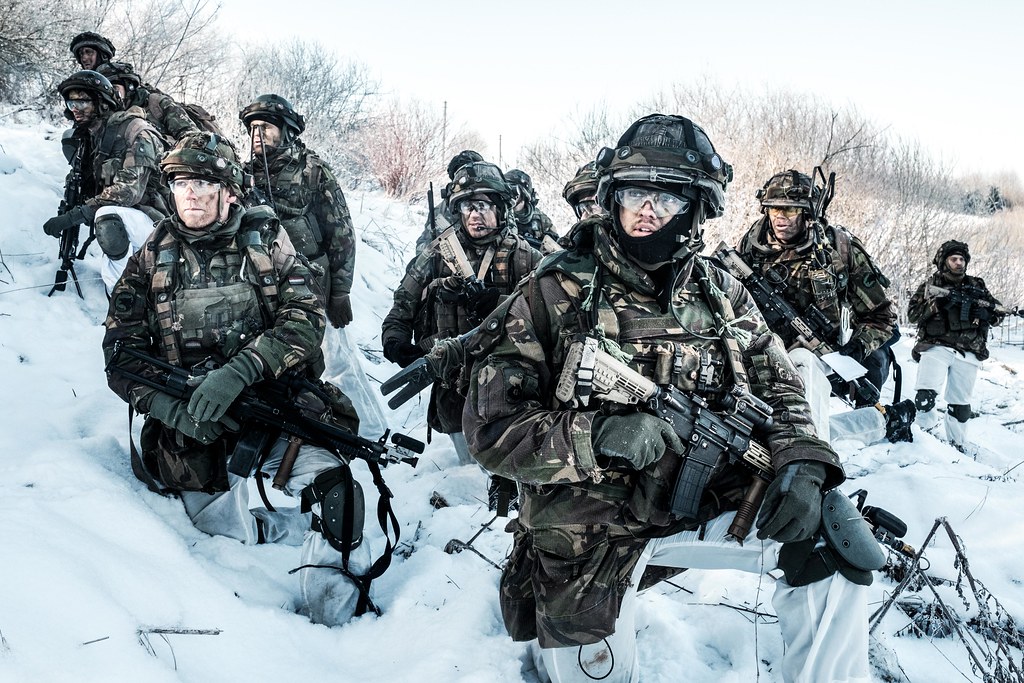
The training environment also includes collaboration with other elite forces, such as the U.K. Royal Marines and Canada’s Special Operations Forces. These units emphasize frequent movement—sometimes every 15 minutes—to avoid detection in fast-paced combat scenarios.
While they focus on staying hidden from enemy drones, Norwegian reconnaissance teams also deploy their own unmanned systems for surveillance. They are currently testing a range of cold-weather drones, including U.S.-made Skydio models and first-person-view variants, to enhance battlefield awareness and extend operational reach.
“Poster Boy” noted that such technologies will be especially critical in any potential confrontation with Russia, where operations would span vast, frozen terrain.
Major General Lars Lervik, head of the Norwegian Army, highlighted the growing importance of drones during NATO’s large-scale Arctic exercise, Cold Response 2026, held across Norway from March 9–19. In addition to surveillance drones, forces are experimenting with attack drones and unmanned ground systems for both air-to-ground and ground-based missions.
Despite these innovations, the core challenge remains achieving stealth—particularly in environments like Ukraine, where forces are constantly exposed to detection. To counter this, Norwegian troops focus heavily on minimizing their visual, thermal, and electronic footprints in snowy terrain.
Recent trials in Denmark, conducted by the Norwegian Defense Materiel Agency, demonstrated the effectiveness of Saab’s Mobile Camouflage System, which is designed to reduce visibility across multiple detection methods, including radar and thermal imaging, even in Arctic conditions.
Still, for Norway’s elite Arctic soldiers, nature remains their most reliable ally. Snow itself provides the most effective cover.
“As far as concealment goes, nothing beats snow,” the officer explained. “We move under cover of darkness, in fog or snowfall when tracks disappear quickly. In clear conditions, we remain still and hidden.”