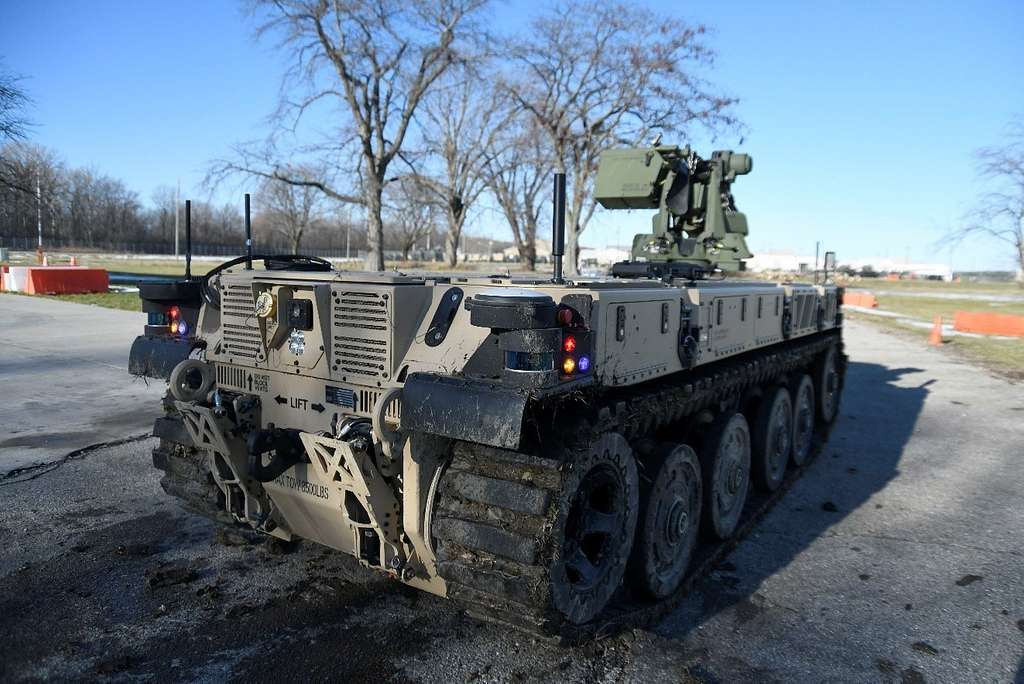
Ukraine plans to procure 25,000 unmanned ground vehicles (UGVs) in the first half of 2026—more than twice the number acquired in 2025—as the Defense Ministry pushes to replace frontline logistics roles traditionally handled by soldiers with robotic systems.
Defense Minister Mykhailo Fedorov announced the target after recent discussions with local UGV manufacturers. He also noted that contracts for 2027 are already being put in place to ensure stability in production pipelines.
Fedorov highlighted the growing importance of these systems, stating in an April 18 Facebook post that UGVs are playing a key role in logistics and evacuation tasks. In March alone, Ukrainian forces conducted more than 9,000 missions using such platforms. He reiterated the ministry’s objective of transitioning all frontline logistics to robotic solutions.
Since January, Ukraine’s Defense Ministry has allocated over 14 billion hryvnia (about $330 million) through a digital procurement platform that enables frontline units to order equipment directly from domestic producers. This funding has supported the deployment of more than 181,000 drones, UGVs, and electronic warfare systems.
Shortly after the announcement, Kyiv formally adopted the Bizon-L—a logistics robot capable of carrying 300 kilograms over a 50-kilometer range—under NATO cataloging standards, approving it for operational use by Ukrainian forces and allied militaries.
President Volodymyr Zelenskyy reported that Ukrainian forces have carried out over 22,000 unmanned missions in the past three months, reducing the need for soldiers to perform high-risk tasks. In an April 14 address marking Arms Makers’ Day, he highlighted a notable operation in which a robotic strike unit from the 3rd Separate Assault Brigade captured a fortified Russian position in the Kharkiv region using only aerial drones and UGVs. According to reports, Russian troops signaled their surrender before being guided into captivity by drones.
Zelenskyy described the operation as the first instance in the war where an enemy position was seized entirely through unmanned systems.
While scaling production to tens of thousands of UGVs across a 1,200-kilometer frontline presents significant challenges, Ukrainian defense officials remain confident. Andrii Hrytseniuk, head of the government-backed defense tech initiative Brave1, noted that the ecosystem has grown to around 300 ground-drone companies—up from none in 2022—and has distributed 175 grants to developers.
Brave1 serves as Ukraine’s defense innovation hub, coordinating funding, testing, and frontline feedback for both domestic and international manufacturers.
Zelenskyy underscored the broader goal of advancing defense technology, emphasizing that innovation in this space is ultimately about safeguarding human life.