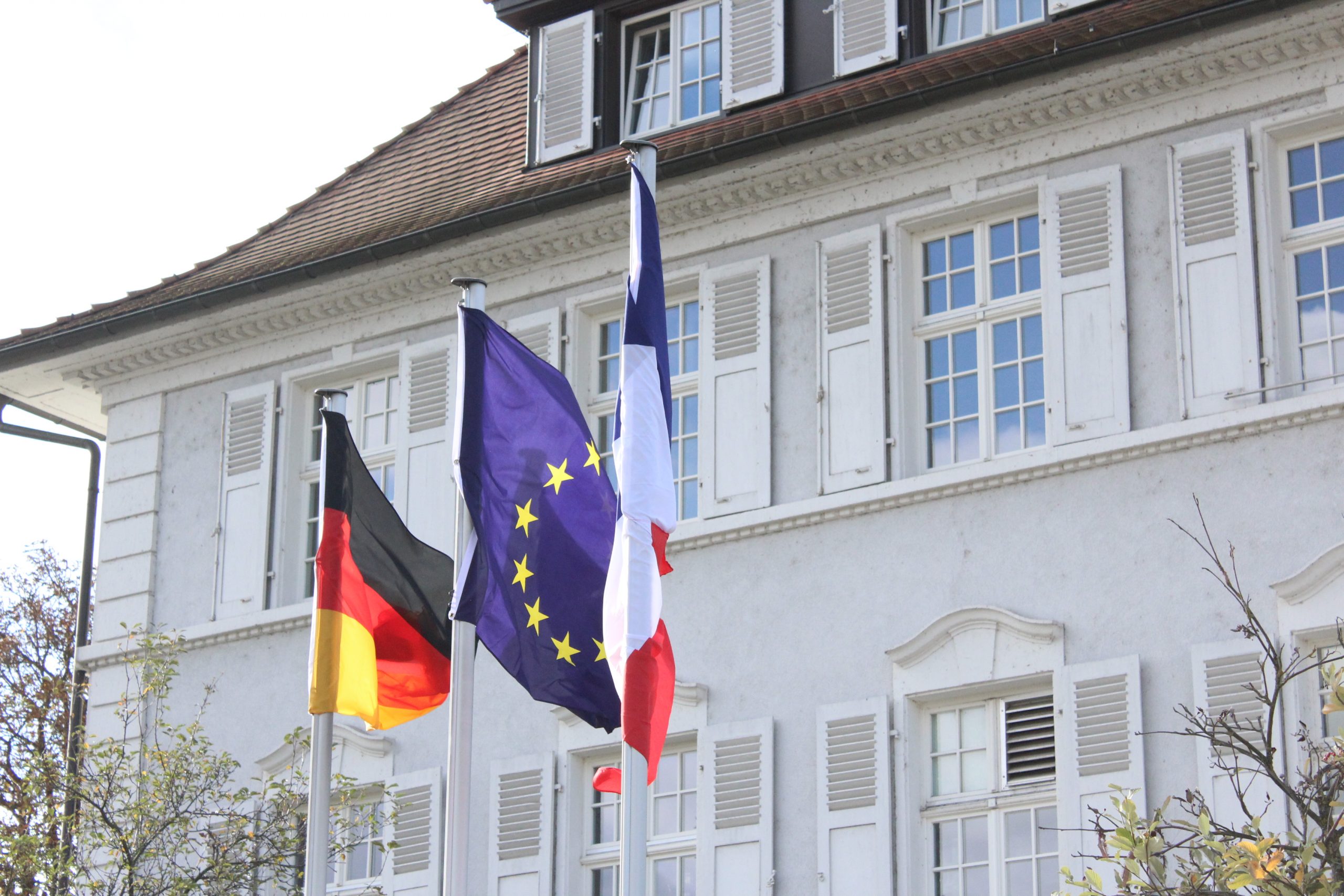
France and Germany have begun translating their nuclear cooperation plans into tangible actions, marking a significant step in their evolving defense partnership. Earlier this month, French nuclear-capable aircraft visited a German air base, and the two nations are preparing to participate in joint military exercises focused on nuclear deterrence.
The closer collaboration follows the creation of a nuclear steering group in March by Paris and Berlin, aimed at strengthening coordination on strategic nuclear issues. The initiative forms part of France’s new “forward deterrence” policy, under which Paris has pledged to extend the protective reach of its nuclear deterrent to European allies.
Germany was among the earliest supporters of the initiative, joining shortly after its announcement. Since then, the framework has expanded to include nine participating countries stretching from Norway to Greece.
Speaking alongside French President Emmanuel Macron on July 17, German Chancellor Friedrich Merz confirmed that Germany’s conventional military forces would take part in France’s upcoming nuclear-related exercises. According to Politico, Germany is expected to participate in the French “Poker” exercise, scheduled for September.
Macron also revealed that, for the first time, a French nuclear-capable Rafale fighter had been temporarily stationed at Germany’s Nörvenich Air Base near Cologne, where the Franco-German Defence and Security Council convened on July 17. The deployment followed a symbolic mission in which French Rafales conducted aerial refueling operations alongside German Eurofighter aircraft, underscoring the growing strategic partnership.
The Nörvenich meeting represented the first major bilateral defense gathering since disagreements over the Future Combat Air System (FCAS) program strained relations between French and German defense industries. Despite those tensions, both leaders projected unity and emphasized deeper cooperation.
Merz described the initiative as the beginning of a “new, shared course in deterrence,” while stressing that it is intended to reinforce—not replace—NATO’s existing nuclear-sharing framework.
He reiterated Germany’s commitment to NATO’s nuclear deterrence arrangements, under which U.S. nuclear weapons are stationed on German territory and could be deployed by German dual-capable aircraft if authorized by the U.S. president. Similar arrangements also exist in Belgium, the Netherlands, Italy and Turkey.
Under France’s forward deterrence model, Paris will retain full authority over its nuclear arsenal and all decisions regarding its use. However, allied countries such as Germany could contribute conventional military support, while French combat aircraft may increasingly operate from partner nations’ air bases across Europe.
Macron described Germany as a potential “vanguard” in strengthening Europe’s nuclear deterrence posture.
Since the United Kingdom left the European Union in 2020, France has remained the bloc’s only nuclear-armed member. Alongside unveiling the forward deterrence strategy earlier this year, Macron also announced plans to expand France’s nuclear arsenal, reflecting a broader shift away from decades of Cold War-era arms control and restraint.
The newly established steering group will continue refining Germany’s role within France’s deterrence framework, identifying areas for operational cooperation and determining how German forces can contribute.
Macron said that integrating Germany into France’s nuclear strategy would involve sharing aspects of French operational doctrine, conducting joint exercises, developing collaborative initiatives and partnerships, and building greater trust among military personnel, experts and defense institutions on both sides.