At a former flight-testing facility south of Paris, drones fly over fields and wooded areas while ground teams evaluate technologies designed to detect and neutralise them. The trials reflect growing concern across Europe over unauthorised drone activity and so-called hybrid attacks since Russia launched its full-scale invasion of Ukraine in 2022.
Demand for counter-drone technologies, including electronic jamming equipment and interceptor drones tested at Brétigny-sur-Orge, is expanding beyond traditional customers such as governments, police forces and the military.
Private companies and public-sector organisations responsible for critical infrastructure across Europe are increasingly looking to improve their protection. Some utility operators are seeking permission to shoot down threatening drones themselves, prompting governments from Paris to Berlin to reconsider existing security arrangements.
Authorities fear that hybrid warfare or a drone strike could disrupt electricity supplies to millions of people. Such attacks have repeatedly damaged Ukraine’s power infrastructure following Russian strikes.
Kristian Ruby, secretary general of European energy association Eurelectric, told Reuters that heating disruptions caused by hybrid attacks this winter were no longer merely a theoretical concern but an increasingly realistic possibility.
Several European governments are beginning to consider granting infrastructure operators powers that have traditionally been reserved for military personnel. However, interviews conducted by Reuters with more than 30 executives, government officials and drone specialists indicate that counter-drone technology is advancing more rapidly than the legal frameworks governing its deployment.
National approaches remain inconsistent, and significant legal questions persist, particularly over who has the authority to order action against a suspected drone. Intercepting or destroying an aircraft could injure people on the ground or damage property, leaving companies concerned about potential liability and accountability.
France Expands Counter-Drone Powers
France has emerged as one of the countries taking the lead on this issue. In August, its parliament approved legislation permitting authorised operators of critical infrastructure, along with approved contractors, to detect, jam and shoot down drones near designated facilities.
The measure followed a series of unauthorised drone flights over sensitive military and civilian locations. These incidents included reported drone activity over the Île Longue nuclear submarine base near Brest in northwestern France in December 2025.
A senior French official involved in the initiative told Reuters, on condition of anonymity, that the government aims to equip an expanded list of strategically important sites by 2027.
The official said France had previously lacked adequate means of responding to the threat, adding that concerns had intensified over the past decade as unmanned aerial vehicles became cheaper, more accessible and increasingly widespread.
The government intends to provide critical infrastructure operators, including state-owned electricity company EDF and railway operator SNCF, with access to a range of approved counter-drone solutions. The options would vary according to the location and nature of the threat, covering technologies from electronic jammers to interceptor drones.
Systematic Paris-Region, which manages the government’s counter-drone testing programme at Brétigny-sur-Orge, confirmed key aspects of the initiative. The organisation said evaluations launched during the summer had identified three systems integrators and 17 counter-drone systems. Assessments remain ongoing, alongside efforts to speed up procurement of suitable solutions.
France’s defence ministry said the August legislation would strengthen the country’s ability to respond to drone threats, while clarifying that its comments applied only to critical infrastructure within its remit. EDF and SNCF declined to comment.
Who Has the Authority to Neutralise a Drone?
The discovery of a drone carrying explosives near a Ukrainian cargo aircraft at Germany’s Leipzig/Halle airport in August highlighted the expanding reach of the threat.
Germany attributed the incident to Russia, which denied involvement. Moscow has repeatedly rejected allegations that it has conducted hybrid attacks across Europe, including in countries supporting Ukraine.
Nevertheless, concerns are growing that government agencies may struggle to protect widely dispersed infrastructure quickly enough. Even relatively inexpensive drones can cause extensive damage and generate substantial repair bills.
In Germany, responsibility for counter-drone operations currently rests primarily with the police. The country’s interior ministry told Reuters that it was examining how infrastructure operators and other third parties might legally participate in active counter-drone operations.
Austria announced similar plans in September, proposing to give operators of critical infrastructure, including major energy companies, greater authority to respond to drone threats. Defence Minister Klaudia Tanner said at a press conference that the government could not independently protect every vulnerable site.
Poland has adopted a more advanced approach. Infrastructure operators told Reuters that they had already deployed counter-drone equipment and conducted training exercises with military and police units. Restricted drone zones have also been established around critical energy facilities, with designated security personnel authorised to destroy, disable or take control of unauthorised drones entering those areas.
However, two sources at electricity transmission companies on NATO’s eastern flank told Reuters that further legal clarity was necessary before operators could intervene confidently. They said additional assurances, potentially including judicial precedents, might be needed to establish who would be responsible for collateral damage.
Without clear rules governing liability, infrastructure companies could hesitate to neutralise a drone, particularly if the interception itself might cause injuries or expensive property damage.
Infrastructure Operators Shift from Recovery to Prevention
Giving private and public utility companies greater authority to counter drones would represent a significant change in Europe’s approach to infrastructure security.
Executives, officials and energy analysts told Reuters that utilities have traditionally prioritised strengthening networks and restoring services after disruptions rather than attempting to prevent every attack.
Leonhard Birnbaum, chief executive of German energy company E.ON, said in September that infrastructure operators must accept that some attacks will succeed and prepare accordingly, rather than assume every incident can be prevented. E.ON operates approximately 2,720 substations across Germany.
Elsewhere, Lithuania is constructing a fortified substation near its border with Russia. The project forms part of broader efforts by the Baltic states and Poland to reinforce their defences. Other measures include building bunkers, installing anti-drone nets and stockpiling difficult-to-replace components needed to maintain critical electricity infrastructure.
Poland’s state-owned transmission operator, PSE, uses helicopters to patrol sections of its approximately 16,500-kilometre high-voltage network. The company is also preparing to deploy more capable aircraft to help safeguard an undersea electricity connection with Sweden.
Despite these measures, inexpensive drones continue to present a significant challenge. Large transformers and other essential electrical equipment can take years to replace, while repairing damaged infrastructure may still leave facilities out of service for months.
Not every energy company wants to assume a greater role in countering such threats.
Asta Sihvonen-Punkka, chief executive of Finland’s national grid operator Fingrid, told Reuters that responsibility for protecting critical infrastructure against security threats should remain with government authorities and the armed forces.
She described transferring such powers to utility companies as a major change that would require extensive legal consideration.
Jari Stenius, head of security at Finnish energy company Fortum, similarly said he preferred energy operators to concentrate on supplying power, leaving security matters to the police and military.
Counter-Drone Technology Advances Faster Than Regulation
Security officials and technology providers say counter-drone systems are becoming increasingly automated, partly because it is impractical to station specialist personnel at every vulnerable facility.
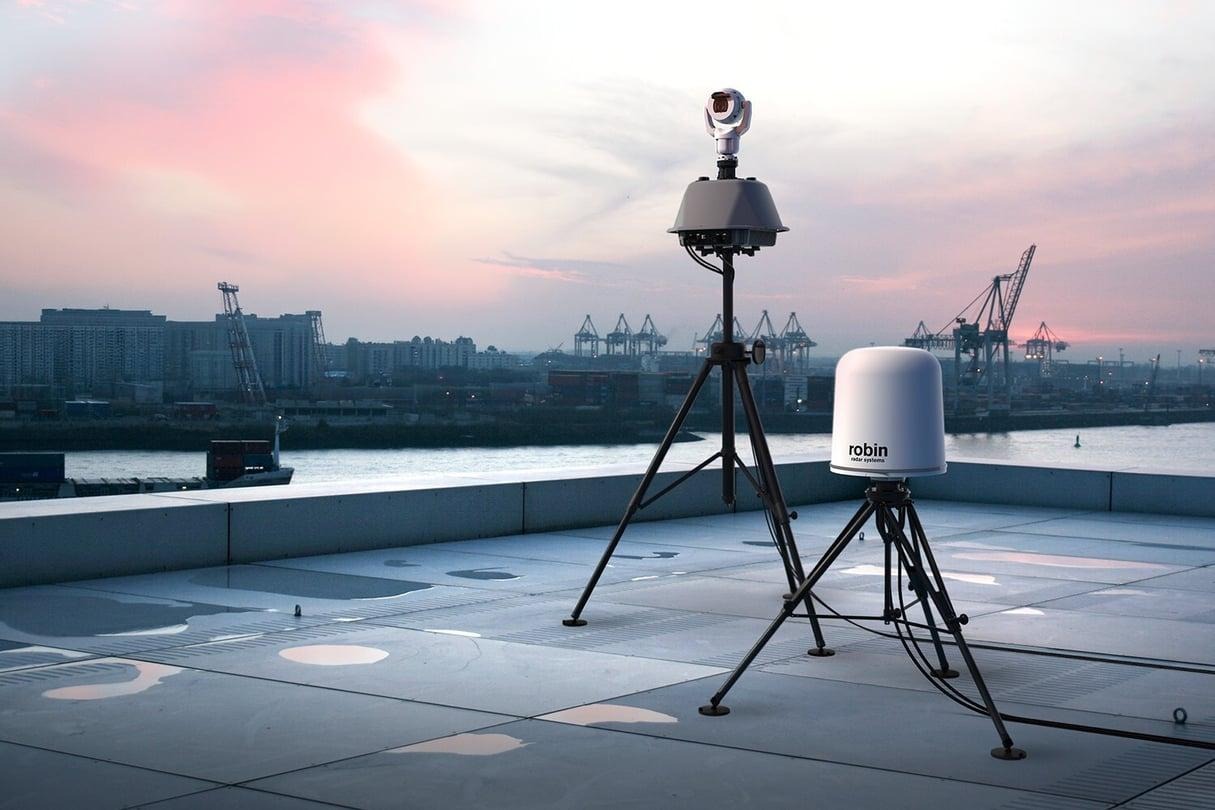
Modern solutions integrate sensors, command-and-control software and countermeasures into a coordinated system that can detect, identify, classify and respond to a potential threat within seconds.
However, several companies told Reuters that uncertainty surrounding the authority to approve an intervention was slowing investment in the final stages of these systems.
France is seeking to automate as much of the response process as possible, according to the senior official involved in the government’s initiative. The long-term objective is to enable utility security personnel to detect a threat and activate an automated response at the push of a button. Requiring every facility to employ personnel trained to operate military-grade equipment would be impractical, the official explained.
German defence company Rheinmetall told Reuters that civilian infrastructure operators frequently face delays between detecting a drone and deciding whether to deploy countermeasures. Fragmented legal responsibilities remain a major obstacle.
The company also reported a sharp increase in interest from private infrastructure operators seeking counter-drone capabilities. It is conducting workshops, site inspections and infrastructure assessments for prospective customers, while preparing for what it described as a rapidly expanding market segment.
As drone threats continue to evolve, European governments face the challenge of aligning legal authority, operational responsibility and technological capability. For infrastructure operators, the central question is no longer simply how to detect a drone, but whether they will have the legal authority and practical means to stop it before critical services are disrupted.