On September 22, Ukrainian President Volodymyr Zelenskyy proposed a temporary halt to Russian and Ukrainian attacks on energy infrastructure, presenting a potential opportunity for limited de-escalation after months of continued strikes. US President Donald Trump expressed support for the proposal amid concerns that attacks on energy facilities were contributing to higher global energy prices. Moscow also responded favourably to the general idea of an energy ceasefire, although the Kremlin sought to expand the negotiations to include Russian maritime energy exports and sanctions.
Energy infrastructure has become a central component of the economic dimension of the war. Both countries are attempting to weaken the other’s capacity to sustain military operations and maintain economic stability by striking strategically important energy assets. Russia’s long-range missile and drone campaign aims to exert pressure on Ukrainian society and influence the country’s political leadership. Ukraine, meanwhile, has expanded its long-range strike capabilities to disrupt Russia’s energy revenues and constrain its economic resources.
Although an energy truce could offer significant benefits ahead of winter, the prospects for a durable arrangement remain uncertain. Earlier attempts to suspend attacks have repeatedly encountered difficulties. A workable agreement would require clearly defined restrictions, independent verification and procedures for resolving disputed incidents without allowing a single alleged violation to derail the entire process.
Energy Infrastructure as a Strategic Front
Energy facilities have become major targets in the conflict as both sides seek to undermine the other’s ability to sustain the war. Ukraine has increasingly targeted Russian oil refineries and related infrastructure, while Russia has employed missiles and drones against Ukraine’s electricity network and other critical facilities. These parallel campaigns have become important factors influencing the strategic balance and the conditions under which future negotiations might take place.
Ukraine’s long-range campaign against Russian refineries has intensified over the past 18 months. According to reported figures, Russian refinery throughput declined to 3.8 million barrels per day in June 2026, its lowest level in more than two decades and approximately 30% below the corresponding level a year earlier. Gasoline output reportedly fell by around 20% compared with 2025, while diesel production dropped by nearly 30%. These disruptions prompted Moscow to introduce restrictions on fuel exports in an effort to protect domestic availability.
Russia has also significantly expanded its long-range drone operations. It reportedly launched approximately 55,000 Shahed-type drones during 2025, around five times the previous year’s level. Recorded damage incidents across Ukrainian regions rose from 358 in 2023 to 650 in 2024 and 1,553 in 2025.
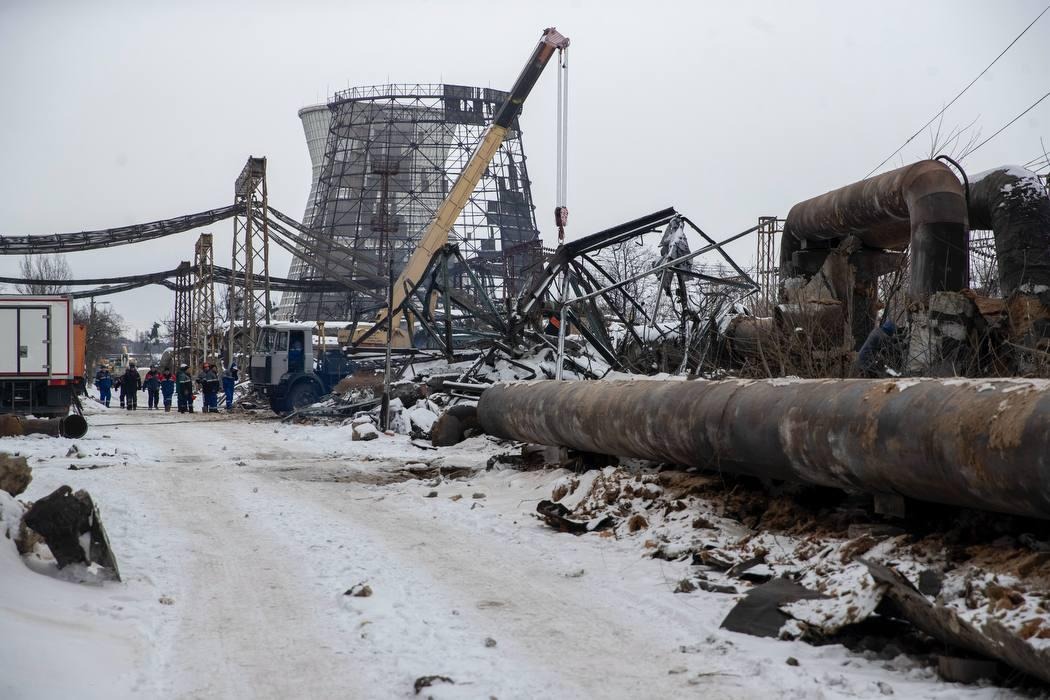
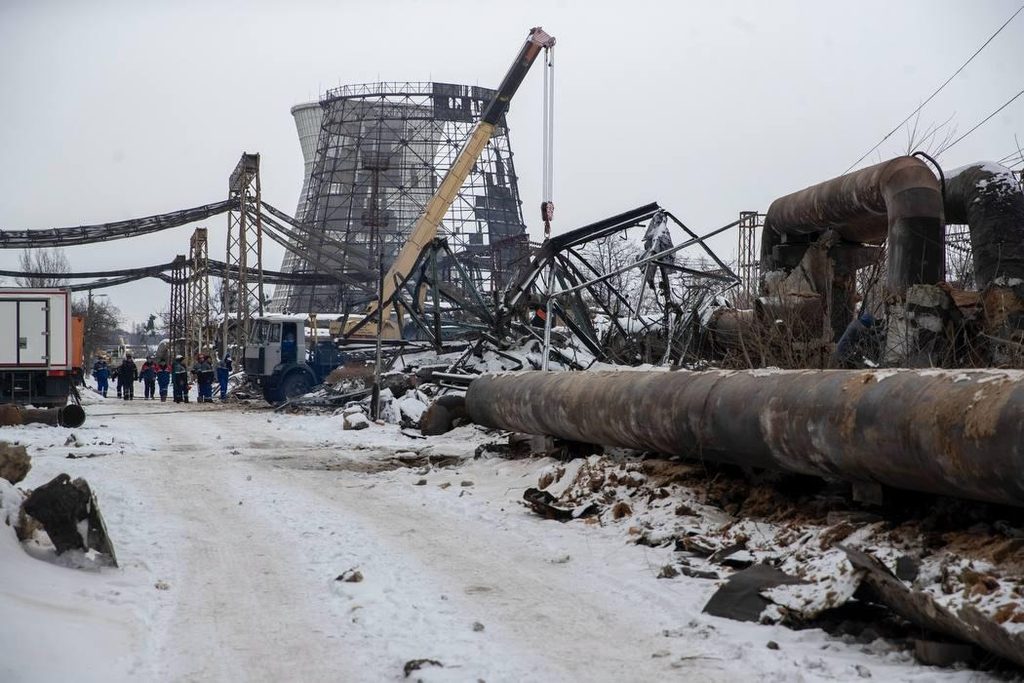
Russian attacks have repeatedly damaged electricity transmission and distribution infrastructure, including substations that had previously been hit. Repeated strikes on the same facilities can complicate repairs, consume scarce maintenance resources and increase pressure on other parts of Ukraine’s power network. Winter attacks add another dimension to this strategy because electricity, heating and repair services become especially important during periods of severe cold. Damage during these months can impose greater civilian hardship and make infrastructure recovery more difficult.
The consequences extend beyond the two countries. Disruptions to energy supplies and shipping have added pressure to international markets. In September 2026, Brent crude reportedly rose above $100 per barrel amid the Strait of Hormuz crisis and attacks affecting Middle Eastern energy infrastructure. Continued strikes against energy assets could intensify market volatility as winter approaches, strengthening the incentive for outside powers to pursue a temporary halt.
Why an Energy Truce Would Be Difficult to Sustain
Despite the potential benefits, the same military strategies that make an energy truce attractive also give both sides reasons to hesitate. Ukraine would risk allowing Russian refineries time to restore production and recover from damage. Russia, meanwhile, would lose an instrument for putting pressure on Ukraine’s population and infrastructure during winter.
Research by the CSIS Futures Lab indicates that Russian drone and missile activity increases during the winter months. Its analysis found that Russia launched 24% more Shahed drones and 14% more cruise missiles in winter than during the rest of the year. A moratorium on energy attacks would therefore constrain an important part of Russia’s established campaign against Ukraine’s energy system.
Previous attempts to establish such restrictions demonstrate the difficulty of securing compliance. In March 2025, Russia and Ukraine accepted a US-backed moratorium covering a range of energy-related facilities, including refineries, pipelines, fuel-storage installations, electricity-generation and transmission infrastructure, nuclear facilities and hydroelectric dams.
However, the arrangement lacked a comprehensive international monitoring system capable of independently verifying alleged violations. It did not establish a sufficiently developed framework for satellite surveillance, real-time information exchange, formal investigations or predetermined responses to breaches.
Similar problems affected shorter ceasefire initiatives. During the Orthodox Easter ceasefire in April 2026, Moscow and Kyiv accused each other of widespread violations. Ukraine reported thousands of alleged Russian breaches, while Russia also claimed numerous Ukrainian violations. These competing accounts illustrate how the absence of credible monitoring and agreed procedures for attribution can undermine confidence and encourage escalation.
Designing an Agreement That Can Withstand Disputes
Previous ceasefire efforts offer two important lessons for future negotiations: the need for precise terms and the establishment of credible independent verification.
First, the agreement should define its scope narrowly and explicitly. The list of protected facilities could build on categories discussed in earlier negotiations, but it should be supplemented by an agreed register identifying specific locations. This would help prevent disputes over whether a particular refinery, substation, pipeline, storage facility or other installation falls within the arrangement.
The negotiations should also distinguish the energy moratorium from wider political and economic disputes. Linking compliance to sanctions relief or unrelated demands could complicate implementation and create additional opportunities for the agreement to collapse. A limited arrangement focused on energy infrastructure would be easier to define and assess than one tied to broader questions about the future of the war.
The Black Sea Grain Initiative provides a useful example of sector-specific cooperation. Under that arrangement, representatives of Ukraine, Russia, Turkey and the United Nations worked through a Joint Coordination Centre in Istanbul. The initiative facilitated the export of more than 32 million metric tonnes of grain and other food products to international markets. It nevertheless eventually broke down after Russia linked its continued participation to demands concerning restrictions affecting its agricultural and fertiliser exports, including issues involving the Russian Agricultural Bank and access to the SWIFT financial messaging system. The experience demonstrates both the potential of narrowly defined agreements and the risks of allowing wider disputes to undermine them.
Second, the energy truce would need an independent verification mechanism. A neutral body could examine reported attacks, while a joint commission could assess disputed incidents using agreed evidentiary standards. Responses to violations could be graduated according to the reliability of the evidence, the seriousness of the incident and whether breaches were repeated. This would reduce the risk that one contested event automatically terminates the arrangement.
The commission’s technical findings should not depend entirely on unanimous approval from both parties. Otherwise, either side could obstruct the publication of findings by withholding agreement. A credible process would require clear rules for collecting evidence, determining responsibility and communicating conclusions.
How Technology Could Improve Monitoring
Although verifying attacks across a large conflict zone would remain challenging, several existing technologies could help establish a more objective record.
Satellite-based fire-detection systems can identify thermal anomalies around industrial sites and other locations. NASA’s Fire Information for Resource Management System (FIRMS), for example, provides satellite observations that can help researchers identify possible fires or unusual heat signatures. Such observations cannot independently establish who launched an attack or whether a particular strike violated the truce, but they can help identify incidents requiring further investigation.
Night-time satellite imagery could also help detect major electricity outages. Commercial satellite images, local utility records, air-raid information and credible open-source reporting could provide additional evidence about damage, the timing of incidents and the resulting disruption.
Combining these sources would reduce reliance on competing statements from Moscow and Kyiv. It would also allow monitors to distinguish, where the evidence permits, between a confirmed attack, damage of uncertain origin and an allegation that remains unverified. Emerging analytical technologies could support mediators in organising evidence and identifying patterns, provided that their findings remain open to independent review.
Prospects for a Sustainable Energy Truce
Trump’s support for an energy truce could create an opening for negotiations, but the initiative would face serious obstacles if Moscow attempted to make the arrangement conditional on sanctions relief or concessions concerning its energy exports.
A more practical approach would be to establish a limited, clearly defined moratorium with an agreed list of protected facilities, independent monitoring and transparent procedures for investigating alleged violations. Such an arrangement could help reduce damage to Ukraine’s civilian energy supply during winter while limiting further disruption to international energy markets.
Ultimately, the success of an energy truce would depend not simply on whether both sides announce a suspension of attacks, but on whether they agree in advance on what is prohibited, how compliance will be assessed and what happens when violations are alleged. Without those safeguards, ambiguity and mutual accusations could undermine the arrangement before it delivers meaningful results.