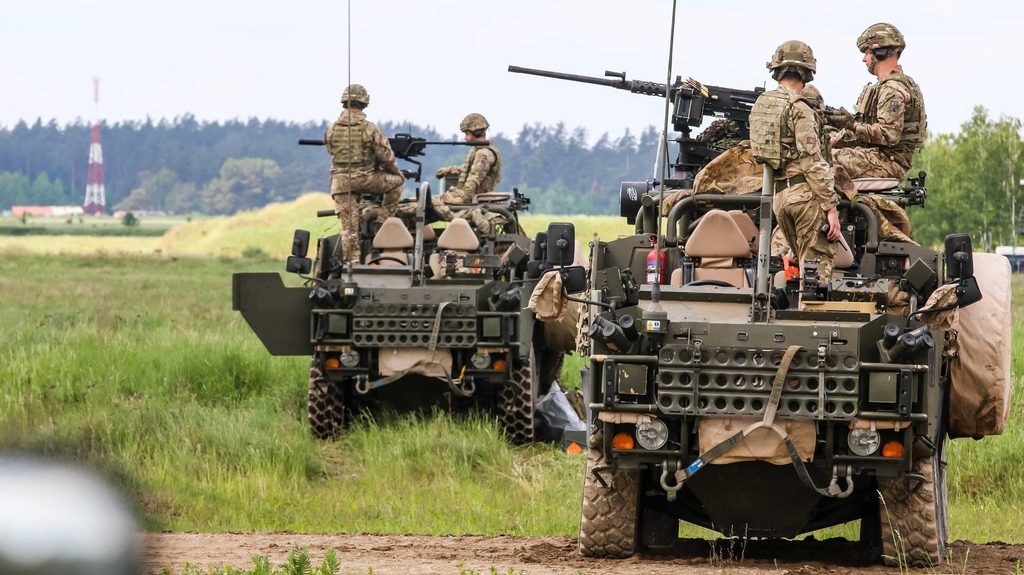
The Coalition of the Willing military exercise in Poland marks the first major readiness drill for a proposed multinational force that could support Ukraine after the war with Russia ends. Named KOALICJA 26.2, the exercise runs from November 9 to 22, 2026, and brings together approximately 2,800 troops from 11 countries under the joint leadership of Britain and France.
The exercise is being conducted through the Multinational Force-Ukraine (MNF-U), the military component of the Coalition of the Willing. Its central purpose is to test how participating countries could deploy, protect, coordinate and sustain a multinational force intended to help rebuild Ukraine’s Armed Forces and strengthen the country’s postwar security.
Activities are taking place in Poland, France and Turkey. The United States is not participating in the exercise.
KOALICJA 26.2 to test multinational force readiness
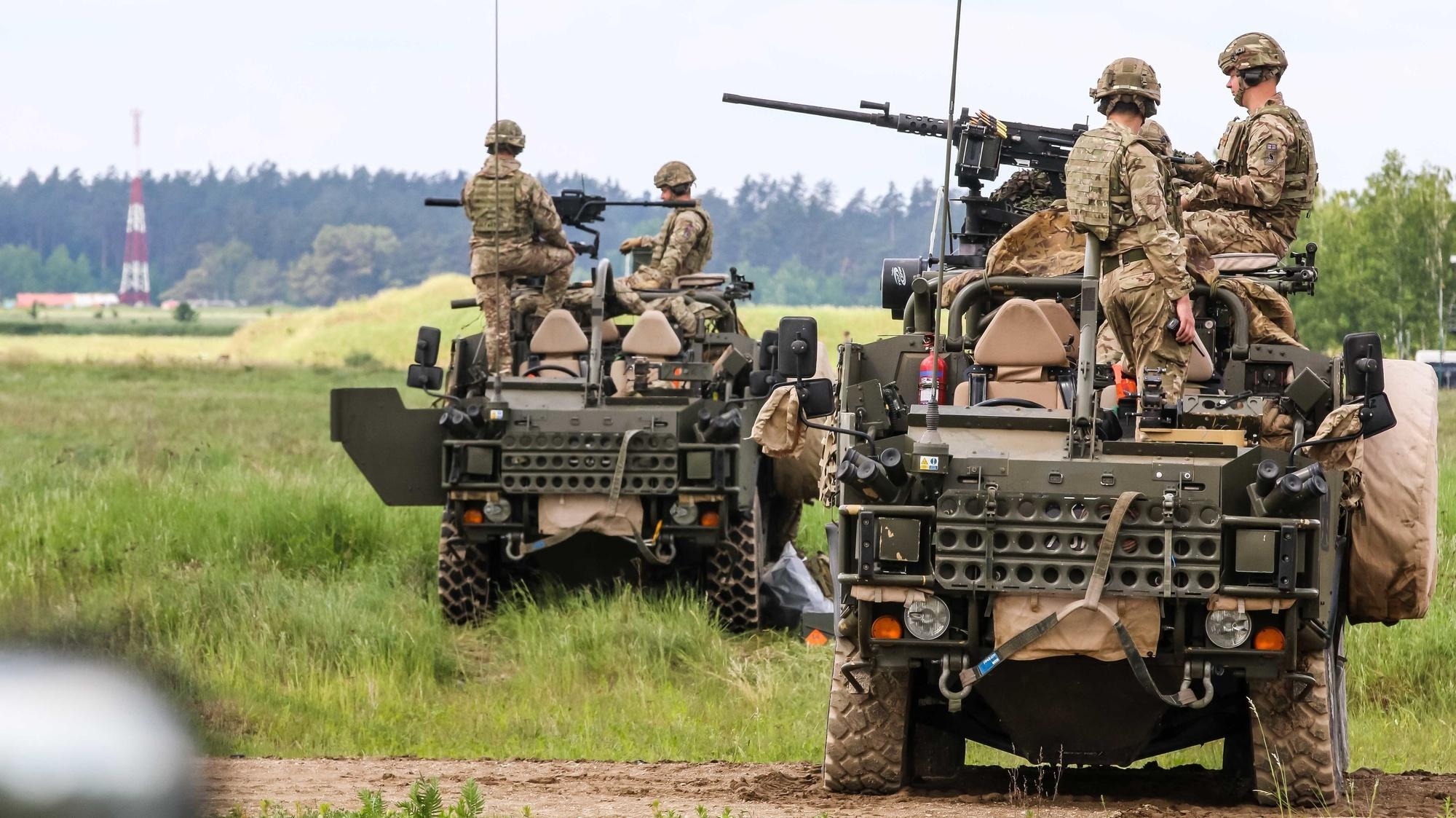
The exercise combines land, air and maritime components to examine the practical requirements of a possible future deployment to Ukraine. Training will cover the movement of personnel and equipment, logistical support, force protection and coordination between national military contingents.
Another major objective is to test the command-and-control arrangements of the MNF-U. Participating forces will assess how different military components can integrate and operate together under a common multinational structure.
The 11 participating countries are:
- Belgium
- Estonia
- France
- Germany
- Lithuania
- Netherlands
- Poland
- Spain
- Sweden
- Turkey
- United Kingdom
The British Ministry of Defence says approximately 2,800 troops are taking part across the exercise’s different components. Poland is hosting the main activities and providing logistical support. Its defence ministry has separately announced that nearly 2,000 Polish soldiers will participate.
British and French forces lead the exercise
Britain and France are jointly leading KOALICJA 26.2, reflecting their role in establishing and commanding the proposed multinational force.
The United Kingdom is contributing approximately 300 personnel, including soldiers from the British Army’s 7th Brigade, also known as the Desert Rats. They will practise the logistical movements required to deploy and sustain troops.
The British contribution also includes Royal Air Force Typhoon fighter aircraft and a Voyager refuelling aircraft. Their sorties will help rehearse how coalition air activity could support the reopening of Ukrainian airspace and provide reassurance for commercial aviation.
France is also sending hundreds of troops. According to reporting by Defense News, its contingent will include a unit equipped with approximately 50 contact drones. The unit is described as the second of its kind, following the deployment of another such unit to Romania.
Poland will act as the host nation and take responsibility for coordinating the movement and logistical support of coalition personnel on its territory. Warsaw is expected to manage the movement of MNF-U troops after the war, although Polish forces are not intended to deploy into Ukraine as part of the proposed mission.
Turkey to test maritime mine-clearance arrangements
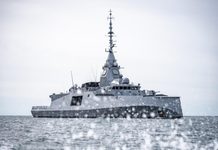
Turkey’s contribution will focus on the maritime component of the Multinational Force-Ukraine. Turkish troops will not travel to Poland for the exercise. Instead, the country’s military will establish the MNF-U maritime element in Istanbul.
The activities will test arrangements for clearing naval mines from the Black Sea. Such operations would be intended to improve maritime safety and help restore commercial shipping access to Ukrainian ports after hostilities end.
The proposed force could also contribute to safer air operations around Ukraine. Together, these activities are intended to help restore commercial air travel and maritime trade, supporting the country’s postwar economic recovery.
MNF-U would not be a peacekeeping force
The proposed Multinational Force-Ukraine is intended to support Ukraine’s military and provide security reassurance after the fighting ends. However, it would not have a conventional peacekeeping or ceasefire-monitoring mandate.
The force would deploy into Ukraine only after hostilities have ended, subject to the necessary political and military conditions and an invitation from the Ukrainian government. It would operate outside NATO’s command structure.
Its potential tasks could include supporting the training and regeneration of Ukraine’s Armed Forces, helping protect the country’s airspace, contributing to the security of maritime routes and assisting with the restoration of critical military capabilities.
The distinction between this mission and ceasefire monitoring is important. Former French Ambassador to Ukraine Gaël Veyssière told Military Times that monitoring a ceasefire would be a different task from the proposed force’s objective of strengthening the Ukrainian military.
The MNF-U is part of a broader effort to provide security guarantees intended to reduce the risk of renewed Russian aggression after a settlement.
Proposed force size and deployment challenges
The exercise does not establish the final size of a force that could eventually deploy to Ukraine. Britain and France have previously indicated that each could contribute approximately 5,000 troops.
However, the number required for a credible deployment could be considerably higher. The Center for Strategic and International Studies estimated last year that even a limited tripwire presence could require between 10,000 and 25,000 personnel.
Force rotation would increase the overall manpower requirement. Ed Arnold, a senior research fellow at the Royal United Services Institute and a former British military officer, told Military Times that only about one-third of a force would be available for frontline duties at any given time. The remaining personnel would be needed for rotation and other supporting responsibilities.
The scale and composition of any eventual deployment therefore remain uncertain. The November exercise is intended to test readiness and coordination, rather than confirm a final force structure.
Russian opposition remains a major obstacle
Russian President Vladimir Putin has rejected the prospect of foreign troops being stationed in Ukraine. In September 2025, he warned that Western forces deployed there would be considered legitimate targets.
That position presents a significant challenge for countries considering a postwar military presence. Although the MNF-U is not designed as a combat or peacekeeping force, its potential role would be closely linked to deterring another Russian attack.
Polish defence officials have argued that the proposed presence could help address Ukrainian concerns about renewed aggression after the war. The force’s effectiveness, however, would depend on the commitments made by participating governments and the security arrangements agreed with Kyiv.
Ukraine presses allies for firm security guarantees
The exercise is taking place against the backdrop of continuing diplomatic efforts to end the war. U.S., Russian and Ukrainian negotiators were scheduled to meet in Abu Dhabi on November 10 and 11, according to U.S. special envoy Steve Witkoff.
Those talks follow a turbulent year for diplomatic efforts. Negotiations had stalled after the United States and Israel began strikes against Iran in February, before diplomatic engagement resumed in September with meetings involving Witkoff, fellow U.S. envoy Jared Kushner and Russian President Vladimir Putin in Moscow, followed by a visit to Kyiv.
Meanwhile, Ukrainian President Volodymyr Zelenskyy has urged allies to move quickly on postwar security arrangements. He pointed to continuing Russian attacks on Ukraine’s electricity grid and other critical infrastructure as the country prepares for its fifth winter since Russia launched its full-scale invasion.
“Peace has no alternative, and postwar security guarantees must be truly cast-iron,” Zelenskyy said.
KOALICJA 26.2 is intended to demonstrate that participating countries can organise and deploy a coordinated multinational force if a suitable postwar arrangement is reached. Whether that force eventually enters Ukraine will depend on the end of hostilities, Kyiv’s consent and the political and military commitments of the coalition members.