France is developing the DAUPHIN off-board active decoy, a drone-based electronic warfare system designed to protect naval vessels against modern anti-ship missiles. Led by the French Defence Procurement Agency (DGA) to meet French Navy requirements, the programme combines Thales’ electronic warfare expertise with Lacroix’s work on the aerial platform.
The programme was highlighted ahead of the Euronaval exhibition. DAUPHIN is an acronym for Drone d’Autoprotection Projeté et Héliporté d’Interception Navale, translated as Projected and Heliborne Self-Protection Drone for Naval Interception.
Initiated in late 2024, the project aims to add another layer to the defensive systems carried by surface combatants, complementing both hardkill weapons and conventional softkill countermeasures. Its central concept is to deploy a drone carrying an electromagnetic jammer that can attract and deceive an incoming missile’s radar seeker, encouraging it to target the decoy rather than the ship.
DAUPHIN off-board active decoy: System design and operation
The DAUPHIN system combines a pyrotechnic ejector, a multicopter unmanned aerial vehicle (UAV) and a compact electronic warfare payload. Lacroix is responsible for developing the aerial vector that carries the equipment, while Thales is designing the embedded jamming payload.
Once deployed, the decoy is intended to operate autonomously, without requiring a datalink connection to the host ship. This allows it to perform its defensive role independently after launch.
The system uses a specialised antenna to determine the direction from which the threat’s radar signal is arriving. Its stabilisation algorithms then help the multicopter maintain a position directly in front of the missile’s radar seeker beam.
According to the programme description, DAUPHIN uses new, internally developed technology that is free from US International Traffic in Arms Regulations (ITAR) restrictions. This is intended to provide France’s defence industry with a sovereign electronic warfare capability.
DRFM technology creates false radar targets
At the centre of the electronic warfare payload is a Digital Radio Frequency Memory (DRFM) system. DRFM technology captures and stores an incoming radar signal before modifying and retransmitting it to generate a deceptive radar return.
The objective is to mislead the missile seeker about the location of the actual ship, making the decoy appear to be a more attractive target.
Thales is also developing a solid-state High Power Amplifier (HPA) to support the system’s jamming capability. According to the company, a single DAUPHIN drone can simulate the radar cross-section (RCS) of an FDI frigate or an even larger vessel.
Radar cross-section is a measure of how detectable an object is to radar. By generating a radar return that imitates a much larger ship, the decoy is intended to draw the incoming missile away from its intended target.
International development of off-board active decoys
DAUPHIN is part of a wider international effort to develop more capable off-board active decoy systems. Navies are seeking additional ways to counter anti-ship missile threats without relying exclusively on expensive, limited-inventory hardkill interceptors.
France and the United Kingdom
During the programme briefing, Thales officials confirmed that they are coordinating with Thales UK because of the overlap between their business areas.
France and the United Kingdom have previously worked together on the Accolade Technology Demonstration Programme (TDP), which explored advanced off-board active decoy technologies. However, DAUPHIN is described as a new and distinct architecture rather than a continuation of the Accolade effort.
US Navy’s Long Endurance Electronic Decoy
The United States Navy is pursuing a comparable capability through its Long Endurance Electronic Decoy (LEED) programme, developed in partnership with Lockheed Martin.
LEED is intended to provide a ship-launched, long-endurance radio-frequency decoy. The programme seeks to combine a modular RF payload with autonomous flight, offering an alternative to existing hovering rocket-based systems such as the MK 234 Nulka.
The objective is to strengthen the US Navy’s non-kinetic defences against incoming anti-ship missile attacks.
Israel’s Rafael C-GEM decoy
Israel has also fielded an off-board active radio-frequency decoy through Rafael Advanced Defense Systems’ C-GEM system. According to the source material, C-GEM is operational aboard Israeli Navy Sa’ar 6-class corvettes.
Unlike DAUPHIN’s multicopter platform, C-GEM is an expendable, rocket-launched system. It deploys an autonomous micro-electronic countermeasures (ECM) payload suspended beneath a parachute.
Both systems use DRFM technology and solid-state active electronics to generate radar deception. Their methods of positioning and directing the jamming effect, however, are different.
DAUPHIN uses a rotary-wing drone to maintain its position in front of the incoming missile’s radar seeker beam. C-GEM instead uses electronic beam steering to direct its jamming signals towards threats while descending.
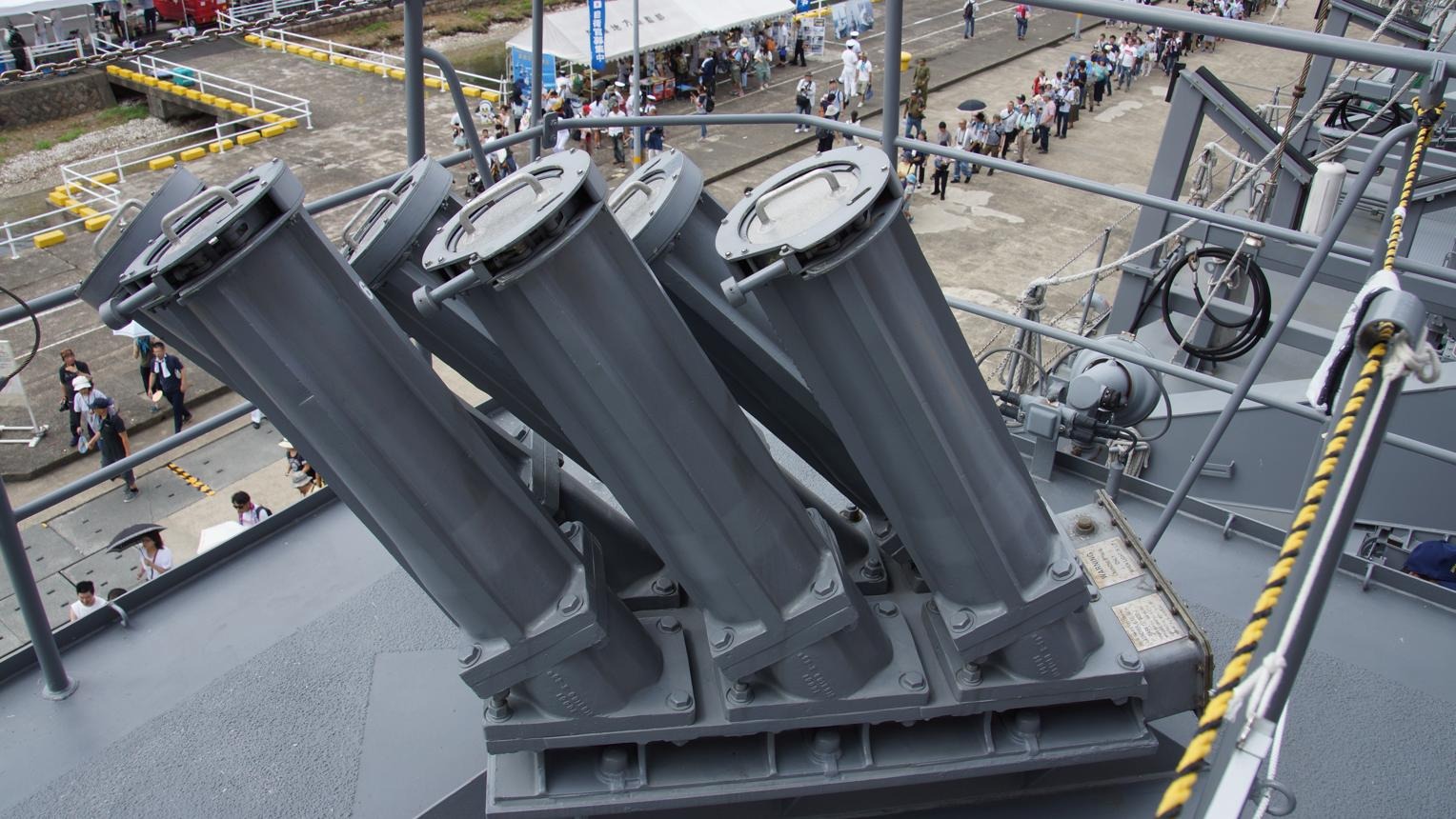
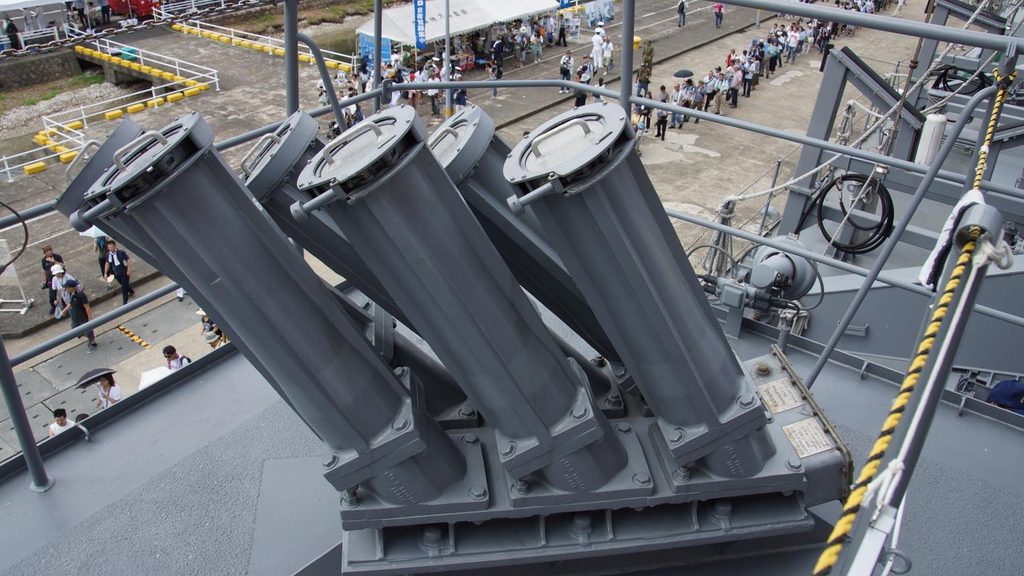
C-GEM is designed for deployment from standard 110 mm to 150 mm decoy launchers, including NATO 130 mm SRBOC launchers.
Tactical advantages of DAUPHIN for naval vessels
The introduction of an autonomous off-board active decoy could give naval vessels an additional means of disrupting incoming missile attacks. DAUPHIN is intended to operate alongside shipboard electronic jammers and other defensive systems, adding another layer to a vessel’s protection.
A successful deception could divert an incoming missile away from the ship, reducing the need to engage every threat with a hardkill interceptor. This is particularly relevant for expensive weapons such as the Aster missile family, which a warship carries in limited numbers.
By combining an active decoy with existing defensive measures, the system is intended to improve a vessel’s overall ability to respond to high-intensity missile threats.
DAUPHIN development timeline and next steps
The programme is progressing with the involvement of five DGA centres, which are working to reduce technological risks. One milestone already achieved is the successful demonstration of the high-power transmission block.
Lacroix is expected to produce the first prototype of the aerial vector, with flight testing planned throughout 2027.
The launcher for the system has not yet been selected. The current design effort is focused on keeping the overall solution as compact as possible.
Shipboard integration will be addressed through a separate contract after the current development phase has been completed. Decisions about whether the drone can be recovered and reused after deployment are also pending. A reusable configuration would require the replacement of components such as the pyrotechnic propellant.
The programme has not yet reached the stage at which the system can be marketed for export.
If development proceeds as planned, DAUPHIN will give the French Navy another option for protecting surface combatants against modern anti-ship missiles. Its combination of an autonomous multicopter platform, DRFM-based radar deception and a domestically developed electronic warfare payload is intended to provide a new capability within France’s naval defensive architecture.