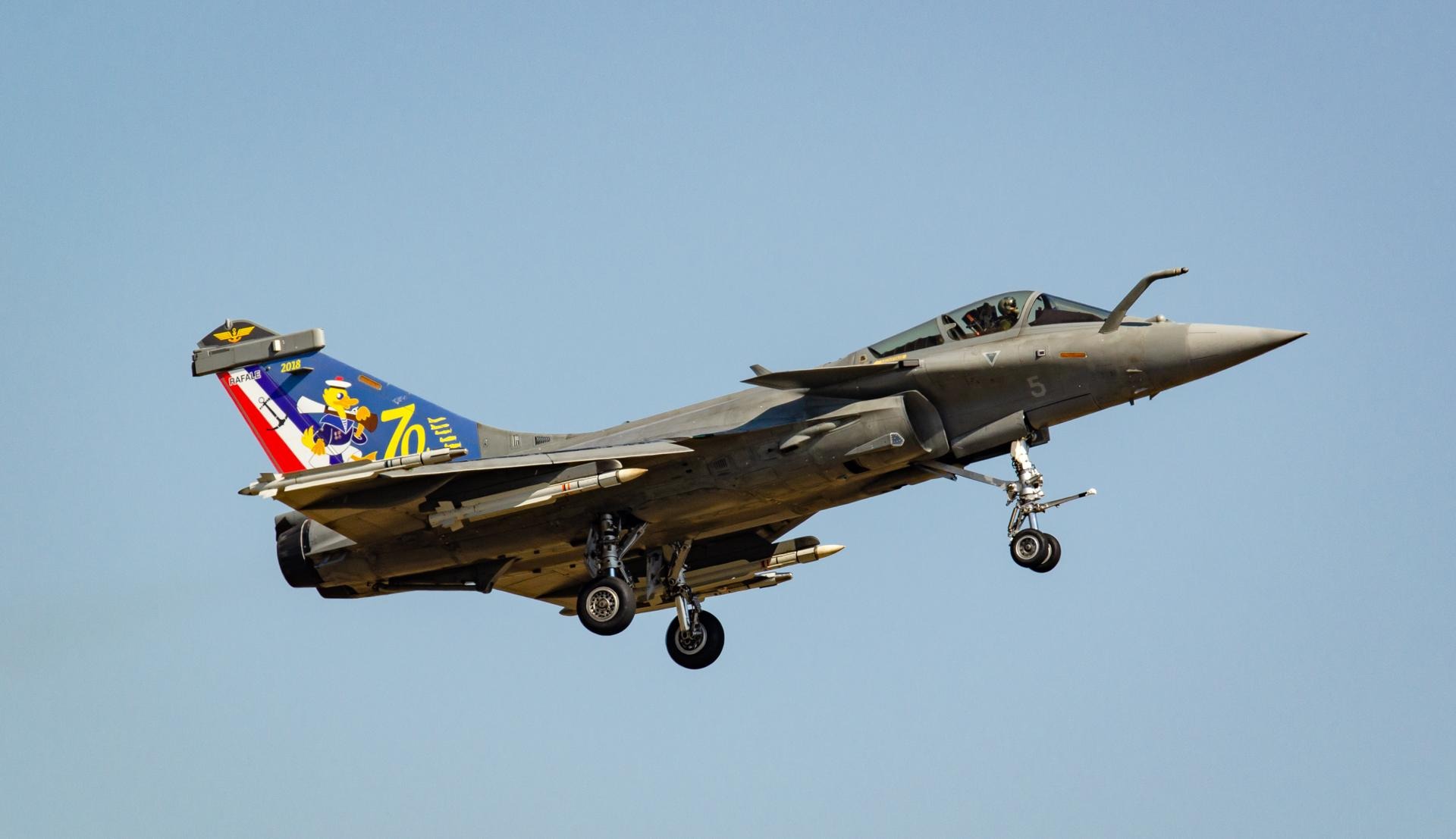
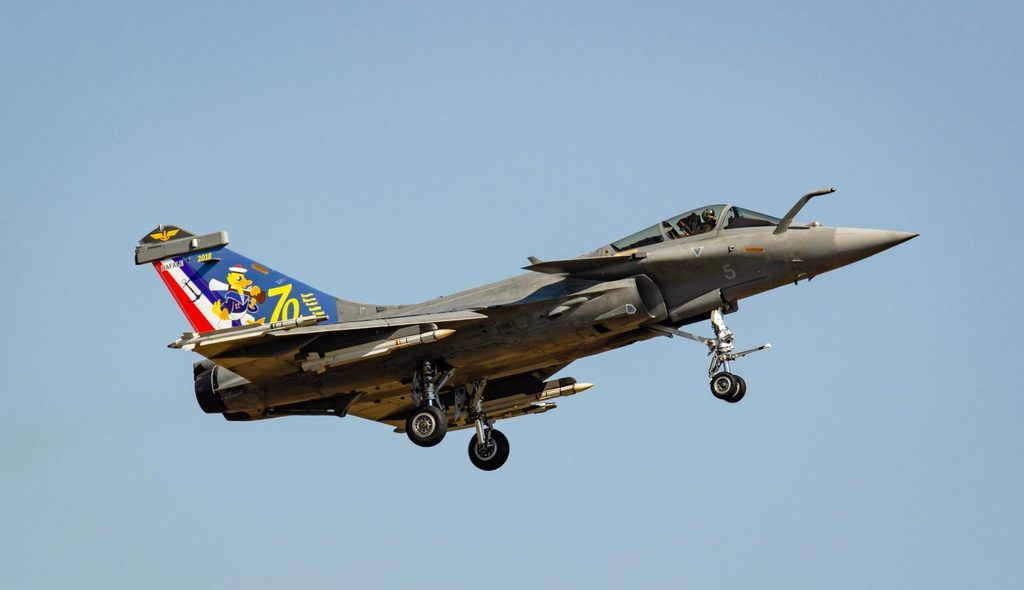
France and Sweden have conducted their first joint France Sweden nuclear deterrence exercise under French President Emmanuel Macron’s proposed forward deterrence initiative. The exercise brought French nuclear-capable Rafale fighter jets and an Airbus A330 MRTT tanker aircraft into Swedish airspace, where they operated alongside Swedish Gripen fighters.
Named Exercise Excalibur, the activity took place in northern Sweden from November 16 to 18. According to statements from the two countries’ armed forces, its purpose was to strengthen interoperability between the French and Swedish air forces.
The exercise did not involve actual nuclear weapons and was not directed against any particular country, the two defence ministries said.
The deployment represents another step in France’s efforts to develop closer strategic cooperation with European partners. Macron’s forward deterrence proposal seeks to strengthen Europe’s ability to deter threats, amid Russian nuclear rhetoric and uncertainty surrounding the future of US security guarantees.
Exercise Excalibur advances France-Sweden defence cooperation
The French deployment combined Rafale fighter aircraft with an A330 MRTT tanker, while Swedish Gripen fighters participated in the exercise over northern Sweden.
The Swedish Armed Forces described the activity as part of a shared roadmap for strategic cooperation initiated through discussions on forward deterrence.
“Since the in-depth dialogue on ‘forward deterrence’ was initiated, France and Sweden are taking steps to implement their common roadmap for strategic cooperation,” the Swedish Armed Forces said.
It added that the exercise demonstrated the two countries’ readiness and ability to operate together, reflecting their commitment to deterring threats and strengthening allied security.
The French Armed Forces General Staff also highlighted the operational significance of the deployment. In a post on X, it said the participation of Rafale and Gripen fighters, supported by an A330 MRTT, demonstrated a high level of interoperability between the two air forces in the field of nuclear deterrence.
France expands forward deterrence cooperation with European partners
The France-Sweden exercise follows another European military activity held the previous month. In that exercise, British Eurofighter Typhoon fighters escorted French Rafale aircraft during a simulated nuclear-strike mission.
France has been engaging several European countries to develop practical cooperation under Macron’s forward deterrence proposal. The initiative comes against a backdrop of heightened concern over Russia’s nuclear signalling and questions about the reliability of long-term US security commitments to Europe.
France maintains an independent nuclear deterrent built around two components:
- Sea-based deterrent: Strategic ballistic-missile submarines provide the ocean-based element of France’s nuclear forces.
- Airborne deterrent: Rafale fighter aircraft can carry nuclear-tipped cruise missiles developed by MBDA.
The Excalibur exercise involved aircraft associated with the airborne component of this deterrent. However, the participating forces stressed that no nuclear weapons were used.
Rafale and Gripen cooperation could broaden operational options
Beyond demonstrating cooperation between the two air forces, the deployment has prompted discussion about how European aircraft could operate together in a potential high-intensity conflict.
Etienne Marcuz, a senior analyst at the Fondation pour la Recherche Stratégique, said the deployment could help France test ways of dispersing its aircraft to improve their survivability against an adversary’s disabling strike.
In a post on X, Marcuz also argued that this type of cooperation could enable new operational approaches, including missions against targets deep in the Russian Arctic or smaller-scale raids that might not require aerial refuelling.
His assessment points to potential operational advantages from combining French and Swedish aircraft, although these scenarios represent an analyst’s interpretation of the exercise rather than confirmed mission plans.
Swedish Gripen fighters could support French strike operations
Marcuz described Sweden’s Gripen fighters as highly capable combat aircraft designed to operate against Russian ground-based air defences and air-to-air threats.
He suggested that Gripens could provide valuable support in a nuclear strike mission, potentially allowing French Rafale aircraft to be assigned to other tasks.
The combination could therefore offer operational flexibility beyond the immediate purpose of improving interoperability. However, the exercise itself was intended to demonstrate cooperation and readiness, not to rehearse an actual nuclear attack.
A further step towards European strategic autonomy
Exercise Excalibur illustrates how France is translating its forward deterrence proposal into practical military cooperation with European partners.
The participation of French Rafale aircraft, Swedish Gripen fighters and an A330 MRTT tanker provided an opportunity to test coordination between the two air forces in a strategically sensitive area.
While the exercise did not involve nuclear weapons or target any country, it demonstrated a willingness to develop closer cooperation around France’s airborne nuclear deterrent.
As France continues discussions with European partners, such activities could contribute to a broader framework for European deterrence and defence cooperation.