European missile manufacturer MBDA and German space technology startup Atmos Space Cargo are exploring the development of an orbital deep-strike capability that could deliver conventional military payloads from Earth orbit using specialised spacecraft and atmospheric reentry vehicles.
The companies have signed a cooperation agreement to assess the feasibility of combining military payloads with orbital transportation and reentry technologies. Their initial work will examine system architecture, technical feasibility, payload integration and potential technology demonstrations.
The initiative is intended to explore a new approach to European conventional deterrence. However, the agreement represents an assessment and development effort rather than confirmation that an operational orbital weapons system will be built.
MBDA and Atmos explore European orbital deterrence
The proposed capability would combine Atmos’s expertise in transporting payloads into orbit and returning them through Earth’s atmosphere with MBDA’s experience in defence systems and military payloads.
Atmos chief executive Sebastian Klaus has argued that Europe needs an orbital deterrent to address a gap in its long-range precision-strike capabilities.
In March, Klaus advocated developing a conventional system that could be launched from orbit and reach any legitimate military target worldwide within 60 minutes. This is an ambition he has outlined for the proposed capability, not a demonstrated performance specification.
“The agreement brings together our expertise in orbital transportation and atmospheric reentry with MBDA’s defense systems expertise to explore a potential new conventional defense capability,” Klaus said in a LinkedIn post announcing the cooperation.
“Our objective is clear: deterrence. To help European allies prevent aggression by strengthening the credibility of Europe’s ability to defend itself.”
In a separate statement, Klaus described orbital transportation and return as a new layer of strategic infrastructure. He said the companies would investigate how existing defence technologies could be combined with emerging space capabilities to strengthen Europe’s conventional deterrence.
Any eventual deployment or use would remain subject to applicable law and decisions by the relevant governmental and military authorities. Atmos also emphasised that specific developments and future projects would require further evaluation and separate agreements.
Division of responsibilities between MBDA and Atmos
The partnership brings together two companies with different areas of expertise.
Atmos will contribute its knowledge of orbital transportation, spacecraft systems and atmospheric reentry. MBDA will provide defence systems expertise and experience in developing military payloads.
MBDA is Europe’s largest missile manufacturer and is jointly owned by Airbus, BAE Systems and Leonardo. Its participation gives the project access to an established European defence technology and weapons development business.
Thomas Gottschild, managing director of MBDA Deutschland, said the objective was to provide European armed forces with an innovative capability developed within Europe.
“Our goal is to provide our armed forces with a highly innovative, sovereign European capability,” Gottschild said. “We are very much looking forward to this new project.”
The agreement does not yet establish a detailed weapons design, development schedule or operational deployment plan.
Atmos’s Phoenix spacecraft technology could support orbital reentry
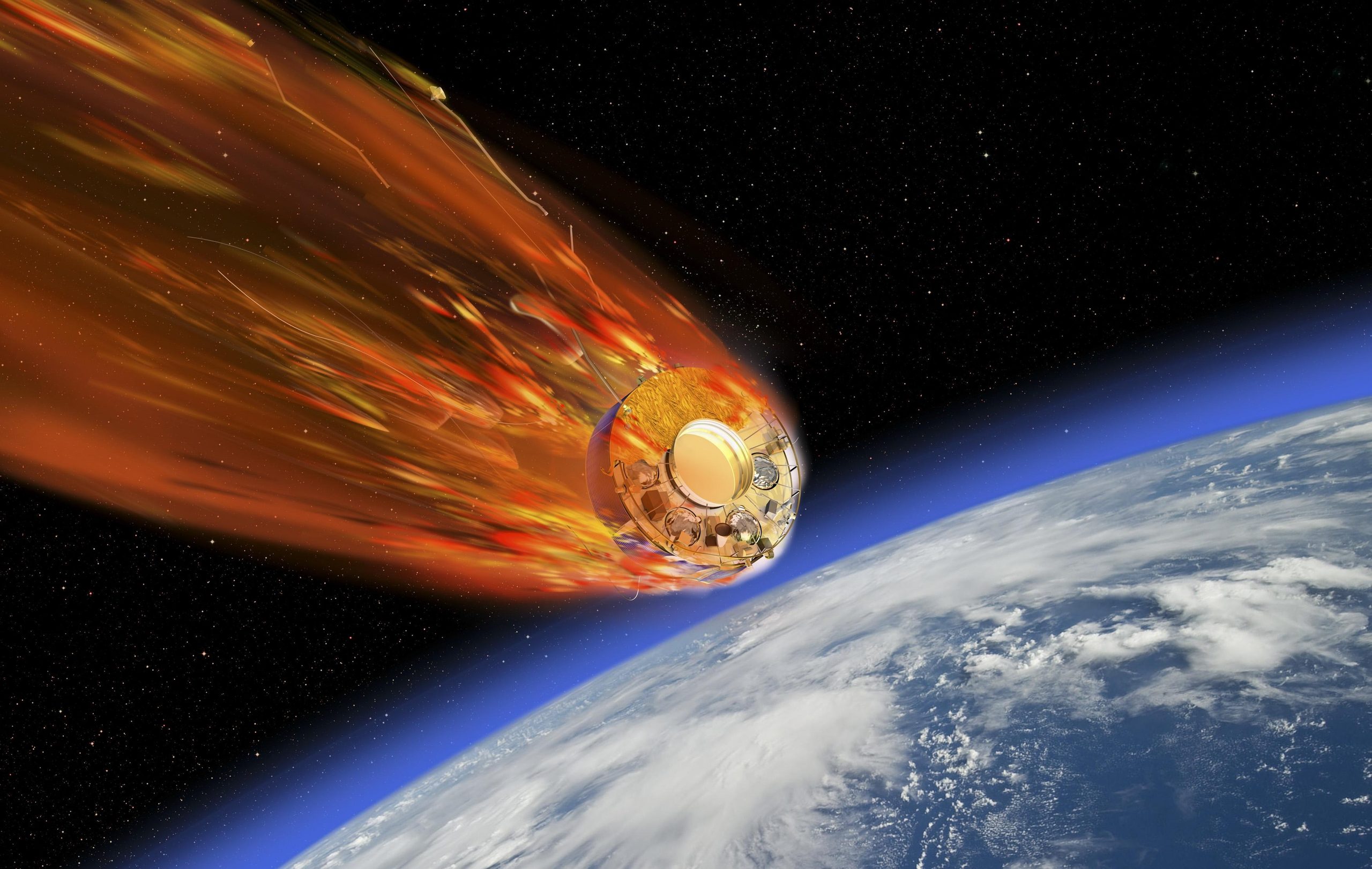
Atmos is developing reusable spacecraft designed to transport cargo into low Earth orbit and return payloads to Earth. Its technology uses an inflatable cushion that functions as a heat shield and aerodynamic braking system during atmospheric reentry.
The company successfully tested the underlying concept in April 2025. It is now developing the Phoenix 2 spacecraft, which is designed to carry payloads weighing up to 100 kilograms.
Atmos says Phoenix 2 missions could last anywhere from three hours to 12 months, depending on the mission requirements.
The company has stressed that its civilian Phoenix vehicles remain separate from the dedicated defence system it is exploring with MBDA. The cooperation therefore should not be interpreted as a decision to convert its existing civilian spacecraft directly into weapons platforms.
Phoenix 3 could increase payload capacity
Atmos is also working with the European Space Agency (ESA) to study a larger spacecraft concept known as Phoenix 3.
The proposed vehicle could carry a payload of approximately one metric tonne, substantially more than the 100-kilogram capacity planned for Phoenix 2.
The larger platform could expand the range of payloads that Atmos can transport into orbit and return to Earth. However, the Phoenix 3 concept remains under study, and its potential capabilities should not be confused with an operational system.
Atmos secures funding for spacecraft development
Atmos raised €25.7 million in a Series A funding round in April this year. The company said the financing would support the establishment of an initial fleet of three Phoenix 2 vehicles and further development of Phoenix 3.
It also announced plans to establish a business serving government and defence customers under the name Atmos Works.
The funding and organisational expansion reflect Atmos’s intention to develop commercial, institutional and government applications for its spacecraft technology.
Earlier Atmos partnership explored delivery of autonomous systems
Atmos has also been investigating how its reentry technology could support the delivery of autonomous systems to the Earth’s surface.
Last year, the company formed an alliance with ARX Robotics to explore integrating unmanned systems with its reentry vehicle technology. The concept envisaged using Phoenix spacecraft to transport autonomous systems from orbit to the ground, including for potential support of defence operations.
That initiative and the new MBDA cooperation both explore military applications for Atmos’s orbital transportation and reentry capabilities, although they address different aspects of the technology.
Orbital deep-strike proposal remains at an early stage
The MBDA-Atmos agreement highlights growing European interest in using commercial and emerging space technologies for defence applications. Combining orbital transportation with military payload expertise could create new options for conventional deterrence if the technical and operational challenges can be addressed.
Nevertheless, the companies are still assessing the architecture and feasibility of the proposed orbital deep-strike capability. Payload integration, possible demonstrations and further development arrangements remain to be evaluated.
The project also raises important questions about the legal and governmental framework governing any future deployment. Atmos has explicitly stated that any eventual use would depend on applicable law and decisions by the responsible authorities.
For now, the partnership marks an exploratory step towards a potential European space-based defence capability, rather than the introduction of an operational orbital strike weapon.