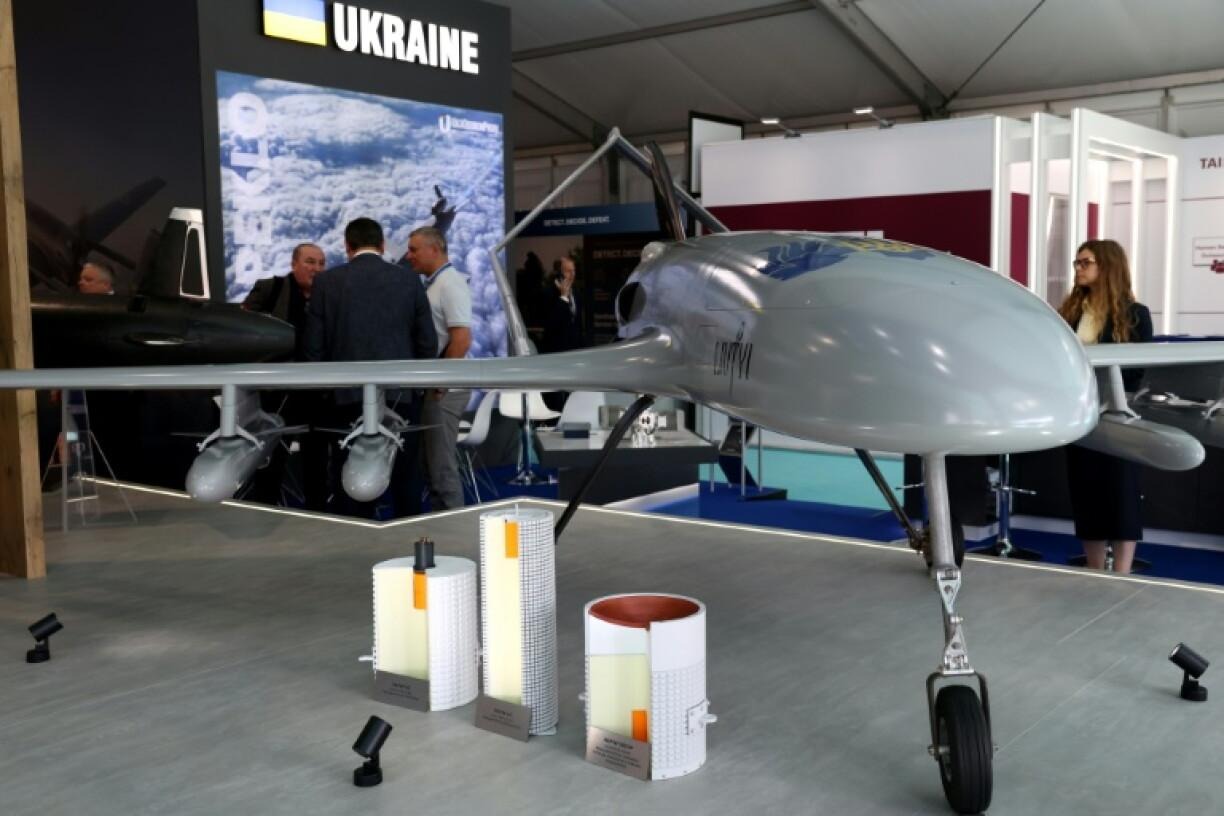
Ukraine plans to double its drone supplies and more than triple its long-range strike capabilities in 2027, as Kyiv seeks to expand its ability to attack Russian military targets far behind the front lines. The plans were outlined by Defence Minister Yevhenii Khmara following the 37th meeting of the Ukraine Defense Contact Group in Brussels on 17 November.
The announcement comes as European partners commit additional funding and equipment to Ukraine, including more than 1,000 long-range strike drones from the United Kingdom. It also highlights continuing differences between Washington and some European allies over the strategic value of Ukrainian attacks deep inside Russia.
“There are prospects in this, and we are only getting started,” Khmara said at a press conference following the meeting.
Ukraine drone production set for major expansion in 2027
Ukraine wants to make unmanned systems a substantially larger part of its military capabilities next year. Khmara told the EU Foreign Affairs Council that drones would account for more than half of the country’s weapons requirements in 2027.
At the press conference, he indicated that approximately 62% of funding should be directed towards drones. The proposed allocation covers several categories, including first-person-view (FPV) systems, medium-range strike drones, deep-strike platforms and logistics drones.
The planned expansion includes more than increasing the number of systems available to Ukrainian forces. Kyiv also wants to strengthen its long-range strike capacity, with Khmara saying that this capability is expected to grow more than threefold in 2027.
Ukraine is also seeking to expand joint production with European partners. The approach combines Ukrainian battlefield experience and technological expertise with European industrial capacity, investment and manufacturing infrastructure.
UK commits £260 million package and more than 1,000 strike drones
Britain announced a new £260 million support package for Ukraine on 18 November, including more than 1,000 long-range strike drones. Some of the systems will be capable of travelling more than 1,000 kilometres, according to the UK government.
The package includes strike drones equipped to carry heavy warheads, allowing Ukraine to target military production facilities and other military objectives well behind the front lines.
The British contribution will also include maritime, logistics and surveillance drones. These systems are intended to support operations at sea, improve battlefield monitoring and help deliver essential supplies to frontline units.
The UK government said more than 80% of the package’s funding would be spent with British companies, including small and medium-sized businesses across England, Scotland, Wales and Northern Ireland.
Prime Minister Andy Burnham was due to announce the package in Berlin during a meeting of the Coalition of the Willing, where European leaders were also expected to discuss diplomatic efforts to end the war. US special envoys Jared Kushner and Steven Witkoff were expected to brief European leaders on the peace negotiations.
US and European allies differ over deep strikes inside Russia
Ukraine’s plans to expand its long-range strike campaign have exposed differences in emphasis between Washington and several European supporters.
US Under Secretary of War for Policy Elbridge Colby used his opening remarks at the Brussels meeting to question the effectiveness of attacks deep inside Russia. He argued that such operations had not demonstrated a clear ability to end the war or significantly slow Russian advances on the front line.
Colby also warned that attacks on civilian infrastructure could strengthen public support for the Kremlin and increase Russia’s willingness to escalate. He referred specifically to strikes against facilities associated with the Russian online retailer Wildberries.
However, Colby acknowledged that attacks against Russia’s military production and war-making capabilities could contribute to slowing its advances. He also said Ukraine should not be forced to fight with its hands tied behind its back.
German Defence Minister Boris Pistorius pushed back against criticism of Ukrainian attacks on strategic military targets inside Russia. He argued that the focus should instead be on Russia’s repeated attacks against civilian energy, water and heating infrastructure in Ukraine.
Pistorius described criticism of strikes against legitimate military and military-use targets in Russia as misplaced, given the continuing damage inflicted on Ukrainian civilian infrastructure.
The disagreement reflects a wider debate among Ukraine’s supporters about how best to balance battlefield defence, long-range attacks and the risk of further escalation.
Germany and Norway pledge additional drone support
European countries announced further assistance at the 37th Ukraine Defense Contact Group meeting, including commitments to procure Ukrainian-made drones and support joint production.
Germany pledged to purchase jointly produced medium-range and deep-strike drones. The arrangement is intended to support collaborative manufacturing while increasing the supply of systems required by Ukrainian forces.
Norway announced that it would allocate $300 million towards purchasing Ukrainian drones for the country’s defence forces. The funding forms part of a broader Norwegian support package announced at the meeting.
Other partners also outlined additional military assistance. According to Ukraine’s Defence Ministry, the meeting produced commitments covering air defence, ammunition, electronic warfare systems, naval drones and other military equipment.
These contributions underline the growing importance of European procurement and industrial cooperation in sustaining Ukraine’s military requirements.
Britain defends Ukraine’s right to conduct deep strikes
British Defence Secretary Wes Streeting defended the value of Ukraine’s long-range strike operations, arguing that they had helped weaken Russia’s military capabilities.
He said deep strikes had contributed to degrading President Vladimir Putin’s war machine, buying time and saving lives. Streeting also described the participation of the US representative in the Brussels meeting as evidence of continued American involvement.
The British government said its newly announced drones would enable Ukraine to strike military production facilities and other legitimate military targets far behind the front lines.
“It’s not for us to tell Ukraine how to fight their war,” Streeting said.
The UK position contrasts with the more cautious emphasis expressed by Colby, although the US official also acknowledged that attacks on Russia’s war-making capacity could help reduce pressure on Ukrainian forces at the front.
Ukraine seeks greater production capacity and sustained European support
Ukraine’s planned expansion of drone supplies reflects the increasingly important role of unmanned systems in its military strategy. The country is seeking to increase both the availability of drones for frontline operations and its ability to strike military targets at greater distances.
Achieving the 2027 targets will depend on timely funding, continued support from European partners and the ability to expand production. Joint manufacturing arrangements could also help connect Ukraine’s operational experience with the industrial capacity of its allies.
The latest commitments from Britain, Germany and Norway provide additional support for that effort. However, the debate in Brussels shows that Ukraine’s partners do not always agree on the priorities or strategic consequences of its long-range campaign.
For Kyiv, the immediate objective is to secure the resources and production capacity needed to sustain its defence while expanding the range of military options available in 2027.