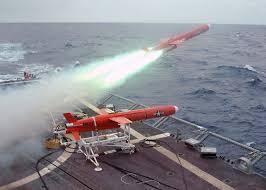
The above image is for representational purposes only.
British defence contractor Babcock is planning to create a container-based missile launch solution using low-cost interceptors developed by Estonian startup Frankenburg Technologies, aiming to deliver an affordable maritime shield against one-way attack drones.
The two companies have signed a memorandum of understanding to assess the development of what they describe as a “cost-effective and innovative” naval counter-drone air-defence system. Engineering work will be led from the UK, with the partners highlighting the project as a step toward building a new sovereign defence capability.
Headquartered in Tallinn, Frankenburg Technologies says its mission is to produce missile systems that cost a fraction of traditional interceptors—up to ten times cheaper—and can be manufactured far more rapidly. The company is led by CEO Kusti Salm, formerly of Estonia’s Ministry of Defence, while technology and engineering efforts are overseen by Andreas Bappert, previously with Diehl Defence.
According to Salm, the rise of drone warfare has fundamentally reshaped modern combat, requiring defence systems that prioritize speed, scale, and affordability from the outset. He noted that collaboration with Babcock would help fast-track the delivery of a deployable maritime defence capability.
Babcock and Frankenburg say the proposed air-defence solution would offer scalable, kinetic protection for military forces and critical infrastructure across Europe, while also creating opportunities for exports to international markets.
The partnership comes as European militaries urgently seek economical ways to counter the widespread use of low-cost drones, a trend clearly demonstrated in the ongoing conflict in Ukraine.
Frankenburg has previously stated that its Mark 1 interceptor is the smallest guided missile currently available. In October, Estonia selected the company as one of four firms to establish operations in the country’s new Defence Industry Park, with initial plans to produce up to 100 short-range air-defence missiles per day.
Measuring roughly 60 centimeters in length, the Mark 1 was designed specifically for high-volume manufacturing. It uses a solid-fuel rocket motor and relies on commercially available components, with the company reporting that the system progressed from initial concept to live-fire testing in just over a year. In December, Frankenburg announced its first successful end-to-end hard-kill interception of a fast aerial target at NATO’s Ādaži base in Latvia, describing the milestone as a breakthrough moment for the missile sector.
Babcock CEO David Lockwood said the rapid evolution of drone warfare signals a fundamental shift in defence, requiring industry to adapt quickly to emerging threats.
Separately, Frankenburg signed an MoU with Polska Grupa Zbrojeniowa in November to integrate its missiles onto Polish platforms, with plans to establish local production capacity of up to 10,000 missiles annually.