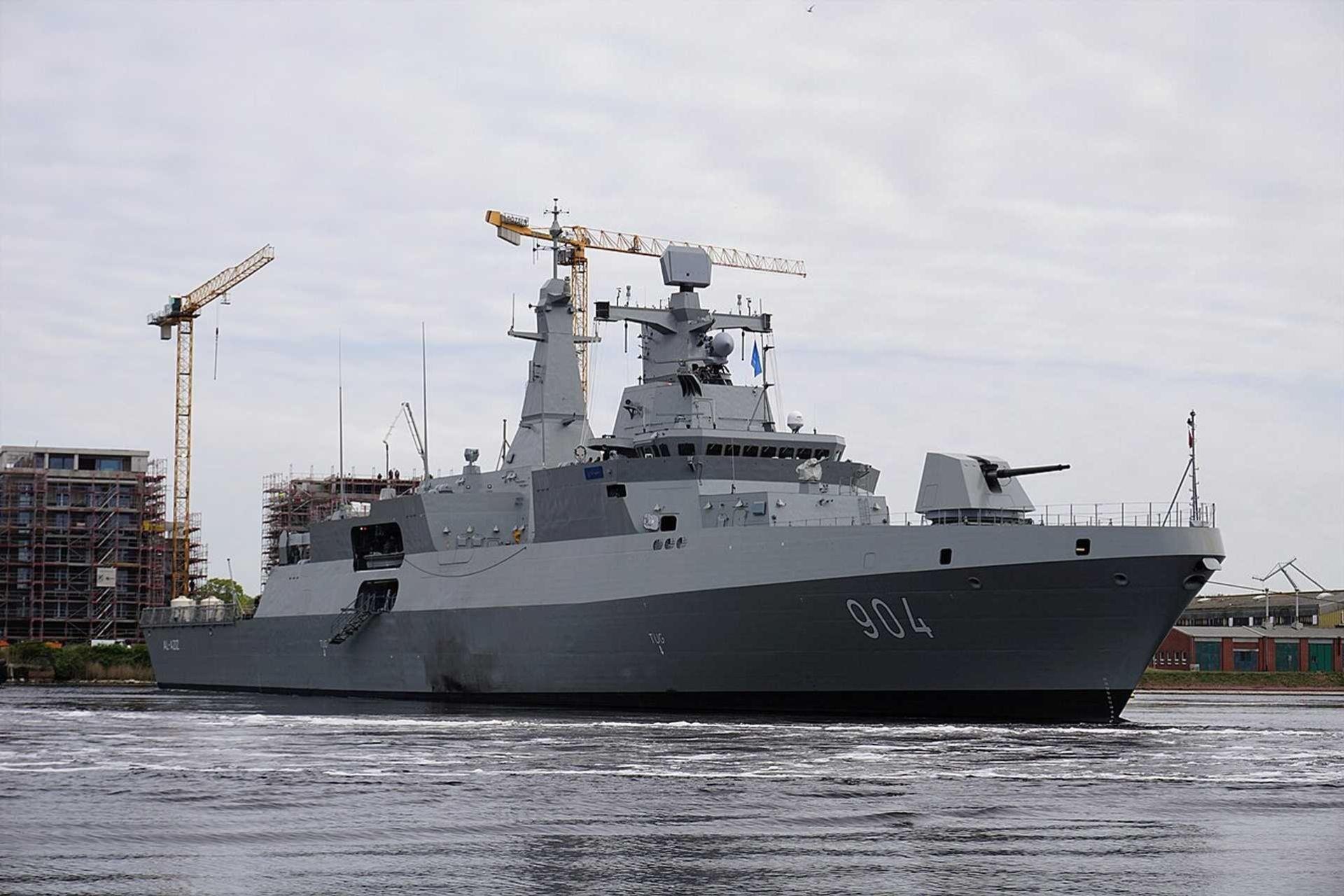
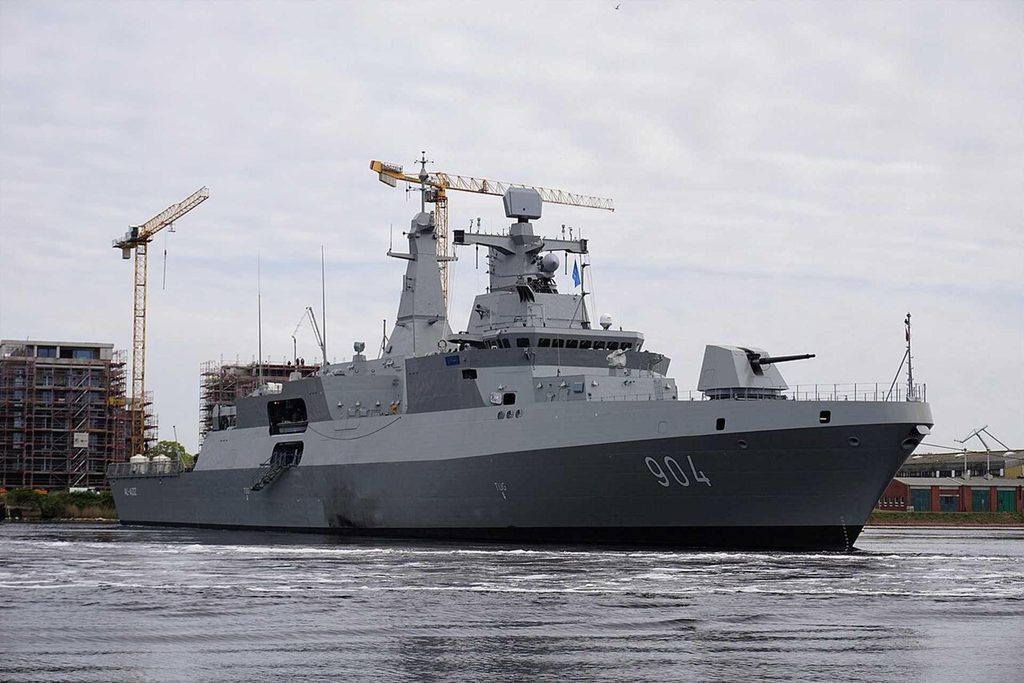
Germany’s parliament has approved the purchase of four additional MEKO A-200 DEU frigates from shipbuilder TKMS, bringing the country’s planned fleet to eight vessels. The decision follows Berlin’s cancellation of the troubled F126 frigate program and marks a shift in its naval procurement strategy.
The Bundestag’s budget committee had cleared funding for the first four MEKO frigates on July 8, while also authorizing an option for four additional ships. According to the German Defense Ministry, exercising that option will establish a uniform fleet of eight vessels primarily designed for anti-submarine warfare.
The first ship is scheduled for delivery in 2029, the ministry said. The frigates are intended to support NATO operations across the Baltic Sea, North Sea, Atlantic Ocean, and High North.
Germany Replaces the Troubled F126 Program
Berlin selected the MEKO design after ending its agreement with Damen Naval for six F126 frigates. The original program was intended to provide the German Navy with a new generation of ships capable of strengthening its anti-submarine warfare capabilities.
The Defense Ministry said it terminated the contract after a comprehensive review identified substantial performance problems with Damen’s execution of the project.
The cancellation has since escalated into a major financial dispute. According to Der Spiegel, Damen is seeking €4.7 billion (approximately $5.3 billion) in compensation from the German government, arguing that the contract termination lacked a sound legal basis and was politically driven.
Germany had already spent more than €2 billion on the F126 program without receiving a completed vessel, public broadcaster ARD reported.
Billions Allocated for the MEKO Frigates
The initial order for four MEKO frigates was reportedly valued at €6.3 billion, while the option for the next four ships was estimated at €5.3 billion. Reuters reported that the second procurement phase, including project support and contingency reserves, would cost approximately €5.6 billion.
Operating the additional four vessels through 2045 is projected to require a further €1.55 billion, adding significantly to the program’s long-term financial commitment.
The Defense Ministry expects the standardized fleet to deliver operational efficiencies by simplifying crew training, maintenance procedures, and logistical support. It also highlighted that allied naval forces already operate variants of the MEKO A-200 design, providing an established foundation for the platform.
TKMS described the planned eight-vessel program as the largest surface-ship contract in its history. The company said the project had moved into the implementation stage following the order for the first four frigates.
Anti-Submarine Warfare Remains a Strategic Priority
Germany has significantly increased its defense investments since Russia’s full-scale invasion of Ukraine in 2022, with maritime security and anti-submarine warfare receiving particular attention. The Baltic and North seas remain key areas of concern, while the Arctic has gained additional strategic importance amid heightened tensions surrounding Greenland and the wider High North.
The F126 frigates were originally intended to play a central role in this naval strategy. Although that program has been abandoned, Germany is pursuing other capabilities to strengthen its ability to detect and counter underwater threats.
One notable acquisition is the Boeing P-8A Poseidon maritime patrol aircraft, designed for surveillance and submarine-hunting missions. Germany received its first aircraft in October 2025, providing another element of its expanding maritime defense capabilities.
The expanded MEKO order represents a major step in Berlin’s effort to rebuild its naval capacity, standardize its future frigate fleet, and reinforce its contribution to NATO maritime operations.