Dutch defence technology company Optics11 is expanding its underwater surveillance business, engaging with dozens of navies interested in its fibre-optic sensing technology for detecting underwater activity and potential threats. Between five and ten navies have already become clients, according to Chief Executive Officer Paul Heiden, while the company expects to conduct approximately 35 paid trials with naval customers this year.
Speaking to Defense News at the Euronaval maritime defence exhibition near Paris on November 4, Heiden said the trials involve several countries, including Germany, Sweden, the United Kingdom, Belgium and France. The German Navy’s evaluations are being conducted through several local defence industry partners.
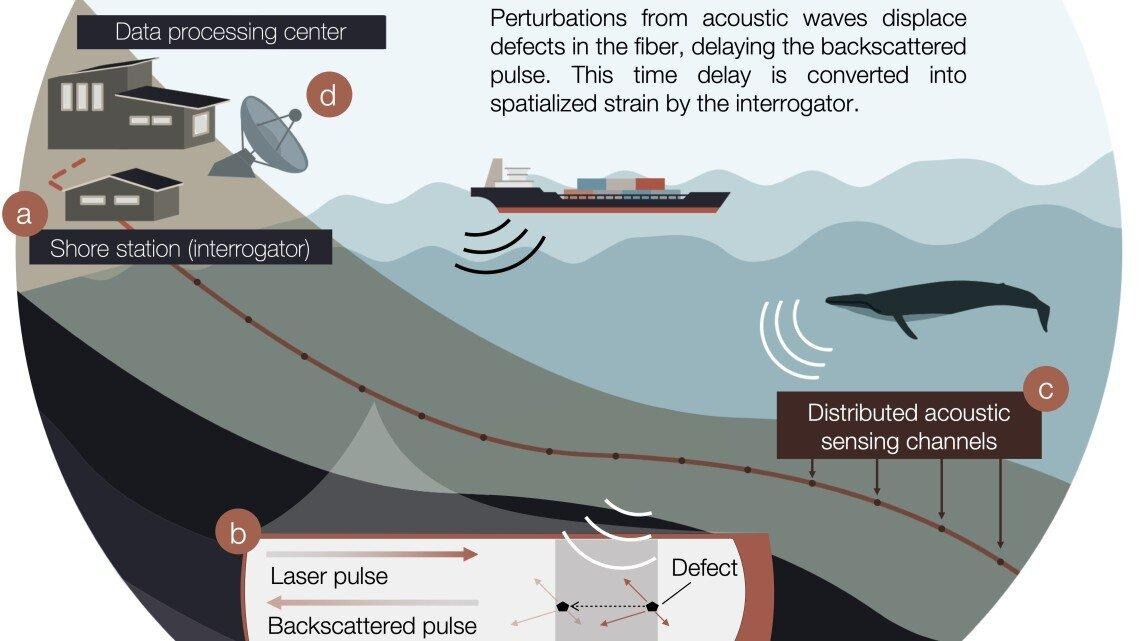
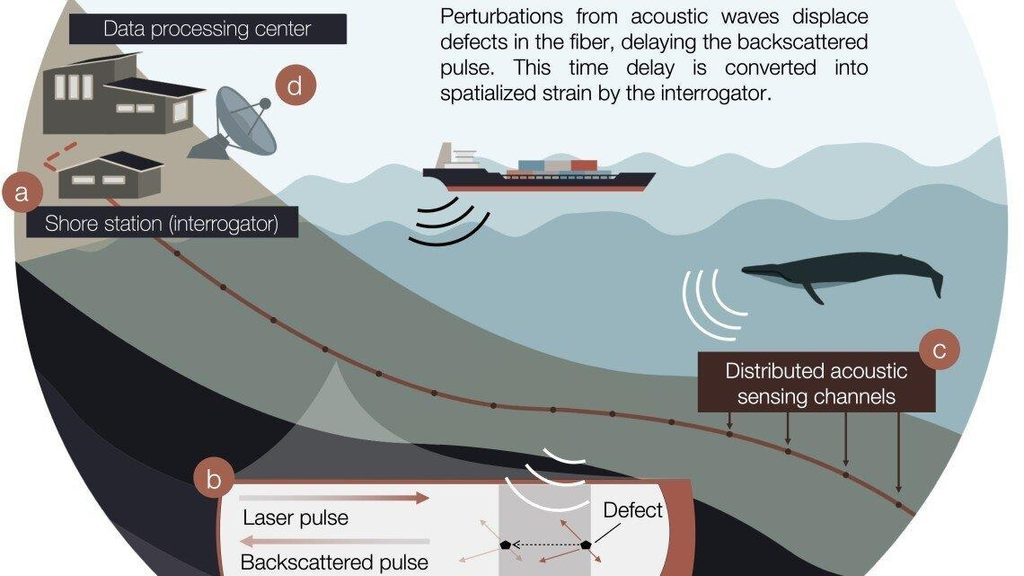
Optics11’s technology uses optical fibres to detect acoustic vibrations underwater. The company is developing systems for both fixed seabed monitoring and towed sensor arrays, positioning its products as a more sensitive alternative to conventional passive sonar systems based on piezoelectric sensors.
The growing interest reflects increasing attention to underwater infrastructure protection, maritime domain awareness and the detection of potential submarine and other underwater threats.
Optics11’s Fibre-Optic Technology Offers an Alternative to Conventional Sonar
Unlike conventional acoustic sensing systems that use piezoelectric detection elements, Optics11 sends light through optical fibres to identify vibrations and disturbances in the surrounding environment.
According to Heiden, this approach offers greater sensitivity and higher resolution than traditional passive sonar technology. The company says its sensing systems can collect significantly more acoustic information from a given volume of ocean.
The underlying fibre-optic technology was initially developed for medical applications. Heiden said its sensitivity is sufficient to detect cells dividing. In underwater applications, he claimed the company’s technology can detect an oil tanker at a distance of 100 kilometres.
These performance claims were made by the company’s CEO and have not been independently established in the source material.
Optics11’s technology portfolio includes two principal products:
OptiBarrier: Fixed underwater monitoring
OptiBarrier is a stationary seabed monitoring system designed to detect underwater acoustic activity. Its fixed deployment makes it relevant to persistent monitoring applications, including the surveillance of maritime environments and underwater infrastructure.
OptiArray: Towed underwater sensor arrays
OptiArray is a towed sensing system that can be deployed from submarines and unmanned vessels. The company is also developing a towed array for the Royal Netherlands Navy’s future Orka-class submarines, which have been ordered from France’s Naval Group.
Heiden described optical-fibre sensing as the future of underwater detection, reflecting the company’s confidence in the technology’s potential naval applications.
Naval Trials and Partnerships Across Europe
Optics11 is pursuing a broad international customer base, with naval evaluations already taking place or planned across several European countries.
The company expects approximately 35 paid trials with navies this year. These include multiple German Navy evaluations conducted through local defence industry partners, as well as trials involving Sweden, the United Kingdom, Belgium and France.
Optics11 has also established partnerships with major defence and maritime technology companies, including Saab, Rheinmetall, Fincantieri, Thales and Exail.
Another important relationship is with Ocean Infinity. Optics11 supplies technology to the company, which was selected by the United Kingdom to manage the anti-submarine surveillance programme under Britain’s Atlantic Bastion initiative.
Heiden said some of Optics11’s products are already deployed in war zones. However, he declined to provide further information, citing the classified nature of the company’s naval work.
Royal Netherlands Navy Has Supported Development for Eight Years
The Royal Netherlands Navy has played an important role in the development of Optics11’s underwater sensing technology.
According to Heiden, the company has worked with the Dutch Navy for at least eight years. The military has provided millions of euros in subsidies, helped guide the technology’s development and conducted tests of the systems aboard submarines.
This long-standing relationship has provided Optics11 with opportunities to develop and evaluate its products in operationally relevant environments.
The company is currently developing a towed sensor array for the Royal Netherlands Navy’s future Orka-class submarines. The vessels were ordered from France’s Naval Group, creating an additional opportunity to integrate Dutch-developed sensing technology into the Netherlands’ next generation of submarine capabilities.
AI and Proprietary Software Help Process Underwater Data
The increased sensitivity of fibre-optic sensing creates another technical challenge: processing the large volumes of acoustic information generated by the sensors.
Heiden said Optics11 initially considered working with an external software partner. However, the density of data collected by its systems proved too high for existing third-party sonar processing software to deliver the required value.
The company consequently developed its own edge-computing software, which has become an integral part of its product offering.
Edge computing involves processing data close to where it is collected rather than relying entirely on a remote central system. For underwater surveillance, this can help manage the substantial volumes of information generated by sensitive acoustic sensors.
Artificial intelligence has also changed the company’s software development requirements. According to Heiden, Optics11 now employs approximately ten software developers. As recently as 2024 and 2025, he had anticipated needing between 60 and 80 people for software development.
He said the reduced software development burden allows the company to invest more resources in acoustic specialists who understand how sound propagates through different underwater environments.
This expertise is important because acoustic behaviour varies with seabed conditions. Optics11 is working to optimise its algorithms for environments such as sandy and rocky seabeds, improving the precision of its detection and processing systems.
Optics11 Plans Further Expansion in the Middle East and Southeast Asia
Optics11 is pursuing a localisation strategy as it expands into new international markets.
Rather than relying exclusively on exports from the Netherlands, the company intends to establish local production and integration arrangements with defence industry partners in customer countries.
Heiden said this approach serves two purposes. It reduces supply-chain risks for customers and allows governments to direct a greater share of their defence spending back into their domestic economies.
The company identifies a local prime contractor in each market and works with that partner to integrate its technology into the wider defence system.
Optics11 is opening offices and recruiting employees in the Middle East and Southeast Asia, with the stated objective of operating through locally established teams and partnerships.
These markets are also among the areas where Heiden believes the company’s accumulated technological expertise provides a competitive advantage.
Company Relies on Trade Secrets to Protect Sensitive Technology
Optics11 considers the protection of its intellectual property particularly important because much of its technology has potential military and security applications.
According to Heiden, many of the company’s most significant technological developments over the past seven to eight years are protected through trade secrets rather than patents.
He explained that publicly disclosing technical details through patent applications or other publications could compromise sensitive capabilities.
The Dutch government assists the company in protecting its information. This includes providing specialists to help safeguard company data and vetting employees involved in classified technology development.
Heiden also described internal measures intended to protect employees from potential external pressure. He holds monthly discussions with staff to encourage them to report situations in which they or their families might face threats or intimidation.
The CEO said information about underwater data collection and naval deployments is particularly sensitive. Consequently, details about some of the company’s customers and operational applications remain classified.
€100 Million Raised as Optics11 Targets Further Growth
Optics11 has attracted substantial financing over the past 15 months. Heiden said the company raised approximately €100 million through equity financing and venture debt, including €25 million in venture debt from the European Investment Bank.
The increased interest in the company follows a significant change in the investment environment for defence technology.
Heiden said fundraising was difficult in early 2024 because many financial institutions excluded defence companies from their investment portfolios. That situation changed substantially in November 2024, following an incident in the Baltic Sea in which a vessel dragged its anchor and severed several underwater cables.
The incident highlighted the vulnerability of critical underwater infrastructure and prompted renewed interest in technologies capable of monitoring activity beneath the sea.
According to Heiden, investment firms subsequently became much more receptive to Optics11 and its underwater sensing capabilities.
Despite the substantial funding raised, the company is not yet profitable. Heiden expects it to become cash-flow positive in 2028.
He also indicated that Optics11 will probably seek additional investment next year, potentially targeting a valuation exceeding US$1 billion. Such a valuation would place the company in the category commonly referred to as a unicorn startup. This remains an ambition expressed by its CEO, rather than an established valuation.
Any new financing would partly support the company’s expansion into the Middle East and Southeast Asia, including the establishment of local offices, recruitment and closer integration with regional defence industry partners.
Growing Importance of Underwater Surveillance
Optics11’s expansion comes amid growing attention to the security of underwater infrastructure and maritime environments. Submarine activity, underwater cables and other critical seabed assets have become important considerations for naval surveillance and national security.
The company’s strategy combines fibre-optic sensing hardware, proprietary data-processing software and partnerships with established defence contractors.
Its ongoing work with the Royal Netherlands Navy, international naval trials and supply relationships with companies such as Saab, Thales and Rheinmetall provide a foundation for further growth.
However, the company still faces the challenges of scaling its operations, achieving profitability and protecting technology that it considers strategically sensitive.
With dozens of navies reportedly exploring its systems and further international expansion planned, Optics11 is seeking to establish itself as a significant supplier in the emerging market for advanced underwater sensing and maritime surveillance technology.