At the June 25 Eastern Flank Summit in Gdańsk, leaders from Finland, Poland, Estonia, Latvia, Lithuania, Romania and Sweden described the security and resilience of NATO’s Eastern Flank as a “common good and a shared responsibility”. This is a sound approach, the practical implications of which should encourage those involved to coordinate procurement more closely and better prioritise the capabilities entering their national arsenals.
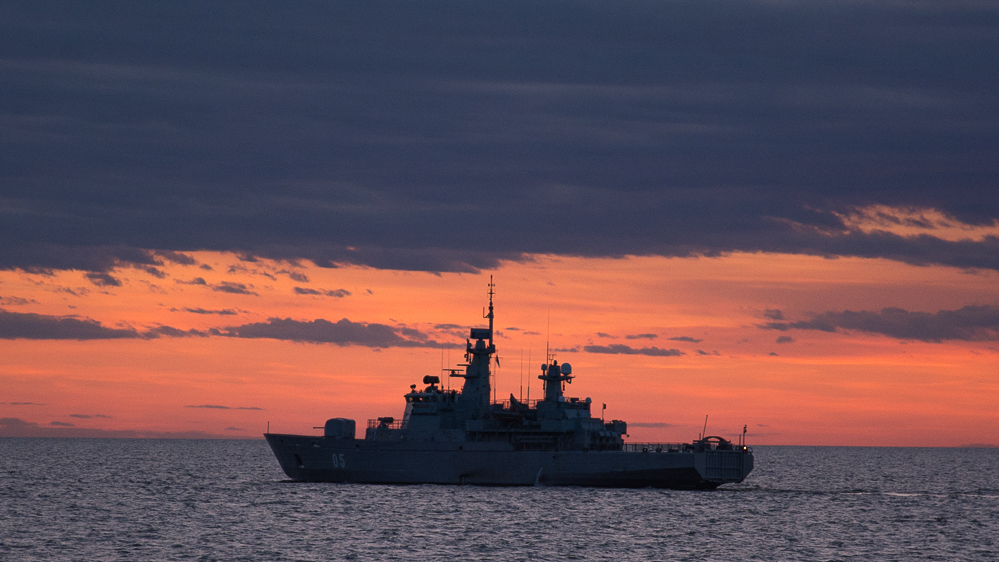
Speaking at the summit, EU Defence Commissioner Andrius Kubilius underlined the disproportionate contribution being made by the region: “These countries devote the largest share of their GDP to defence, taking responsibility for the security of the entire region.” He added that Eastern Flank countries account for €76 billion of funding under the EU’s SAFE programme, describing this as an expression of “solidarity across the whole of Europe.”
Indeed, with the exception of Finland, countries sharing borders with Russia and/or Belarus are leading NATO, and especially the EU, in terms of defence spending. For 2026, Lithuania has allocated 5.38% of GDP to defence, Latvia 4.91%, Estonia 5% and Poland 4.8%. Across the Baltic Sea, Sweden is increasing its 2026 defence budget by 18% compared to 2025 to over €16 billion, or 2.8% of GDP.
Initially, most efforts focused on defensive measures, but there has been a recent shift in thinking driven by concerns about America’s reliability: strategically in the context of discussions about NATO and, industrially with the Pentagon’s new priorities following Operation Epic Fury. This shift has pushed European leaders towards deep precision strike (DPS) capabilities as an increasingly important component of deterrence. In a joint statement issued at the July 2026 NATO Summit, Estonia, Finland and ten other European allies argued that “in order to deter, we recognise the need to demonstrate strength through credible capabilities such as DPS.”
Russia’s Next Target?
NATO chief Mark Rutte warned allies that Russia could attack within five years and analysts agree a confrontation between Russia and NATO could start in the Baltic region. The Atlantic Council identifies five conceivable targets carrying varying degrees of risk for Russia. Russian success under any scenario could isolate Baltic states from NATO allies and supplies and change the balance of power in the strategic Baltic Sea.
Indeed, Russia has already been laying the groundwork in the region with activities that, according to NATO’s definition of hybrid warfare, could be warning signs of something more significant. Pipelines and data cables under the Baltic Sea have been increasingly damaged since 2022; NATO’s air-policing fighter jets consistently ‘intercept’ Russian aircraft, while European governments are increasingly warning of Russian sabotage and other hybrid operations against critical infrastructure. In July, following fresh intelligence warnings of possible Russian provocations against Poland and the Baltic states, Polish Prime Minister Donald Tusk warned: “I don’t want to scare anyone, but the coming months, also because of the changing nature of the war in Ukraine, could be critical.”
To protect themselves, countries have pursued defensive measures to “shape” a Russian attack. $65 million was invested in the Baltic Defence Line announced by Estonia, Latvia and Lithuania in January 2024 and Poland began constructing its complementary $2.55 billion Eastern Shield fortifications in 2024. These countries as well as Finland and Ukraine have left the Ottawa Convention and in July 2026, Polish manufacturer ZSP Niewiadów said it would mass produce AP mines by 2027.
Nevertheless, Seth Jones from CSIS argued that “While these defensive measures are necessary, they are not sufficient,” and that an offensive campaign “designed to raise the costs on Moscow” is needed. Similarly, Tony Lawrence from ICDS said the region lacks “… many of the capabilities necessary for a credible deterrence by denial strategy and have yet to formulate a coherent concept for deterrence by punishment.”
Equipping Armies for “Deterrence by Punishment”
Leaders are finally taking concrete steps towards making this shift. They’ve learned from experiences in Ukraine and Iran that playing defence won’t win a war and that significant arsenals of long-range systems and missiles are required. In Sweden, Defence Minister Pål Jonson said last November, “…Russia is vigorously developing its long-range capabilities… We must build a stronger deterrent against that threat.” In Poland, the Armed Forces’ 2025-2039 priorities include “…developing capabilities for deterrence by punishment.
Despite seemingly coherent objectives, the translation of this into concrete capabilities remains chaotic. Poland’s Ministry of Defence came under fire earlier this year from lawmakers for selecting Saab’s A26 submarine model because with a price tag of $2.8 billion, MPs argue “the combat capabilities of the new Polish submarines without cruise missiles are not worth the funds…”. The A26s could potentially be equipped with MBDA’s combat-tested, 1000km-range MdCN missiles. For the moment, Poland’s principal long-range strike capability remains its air-launched American JASSM family, with Warsaw having ordered 821 JASSM-ER missiles for delivery between 2026 and 2030. Concerns over depleted US missile inventories have also raised questions over the timeliness. Sweden has mainly pursued air-launched DPS including an order of Taurus 500km-range cruise missiles produced by MBDA Deutschland and Saab.
Both Poland and Sweden lack counterstrike options for a Russian attack. Writers from The War Zone explain that ground-launched missiles are necessary because, “…even if airfields are damaged, they can still make high-priority deep strikes against critical targets in Russian territory,” and because the mobility of such systems compared to air- or sea-launched “is required to reduce vulnerability to counterstrikes…”
Yet it is precisely in the land domain that Baltic countries, and the EU as a whole, face a major missile capacity shortfall. To fill this gap, Poland and Sweden joined the European Long-Range Strike Approach (ELSA) with France, Germany, Italy and the UK. The initial goal was to develop European-made ground-launched strike capabilities (up to 2,000km) to reduce reliance on the U.S.
It seems divergent national priorities and lacking political enthusiasm have slowed the initiative. In June, the six ELSA countries agreed to transition the initiative into standalone Implementation Groups. This was followed in July by a wider commitment from 12 European NATO allies to invest $50.66 billion in deep precision strike capabilities over the next decade.
The problem is increasingly one of timing. Germany and Britain’s joint Deep Precision Strike programme envisages a family of stealth and hypersonic weapons with ranges exceeding 2,000km, but these are not expected to enter service until the 2030s. MBDA’s LCM therefore remains one of the few European options promising a sovereign 1,000km+ ground-launched capability considerably sooner, with its first Ground Launch System scheduled to become available from 2029.
Experts say France is leading in deep strikes programmes and looking to increase partnerships within Europe – potentially interesting to Baltic/Scandinavian countries. In June, France, Poland and their E5 partners agreed to “accelerate their commitment to European joint development and procurement of deep precision strike capabilities”, amid continued speculation over potential Polish interest in MBDA’s LCM. Sweden is moving in a similar direction, while bilateral Franco-Swedish defence cooperation has continued to deepen. This was recently highlighted by a €4.3 billion deal for Sweden to buy 4 modern French frigates, with Sweden set to “evaluate” adding French long-range strike (McDN) missiles to the deal.
The need to deter Russia from an attack is gaining urgency, and these developments come at just the right time, a fortiori as the Trump administration has decided not to deploy deep-strike units in Germany. They also validate EU Defence Commissioner Andrius Kubilius’s efforts to promote greater European defence-industrial cooperation. As he put it in August, “We are moving fast and decisively to help Member States on the EU Eastern Flank. SAFE is about enabling Member States to invest faster, procure more effectively together, and reinforce Europe’s defence industrial base.”