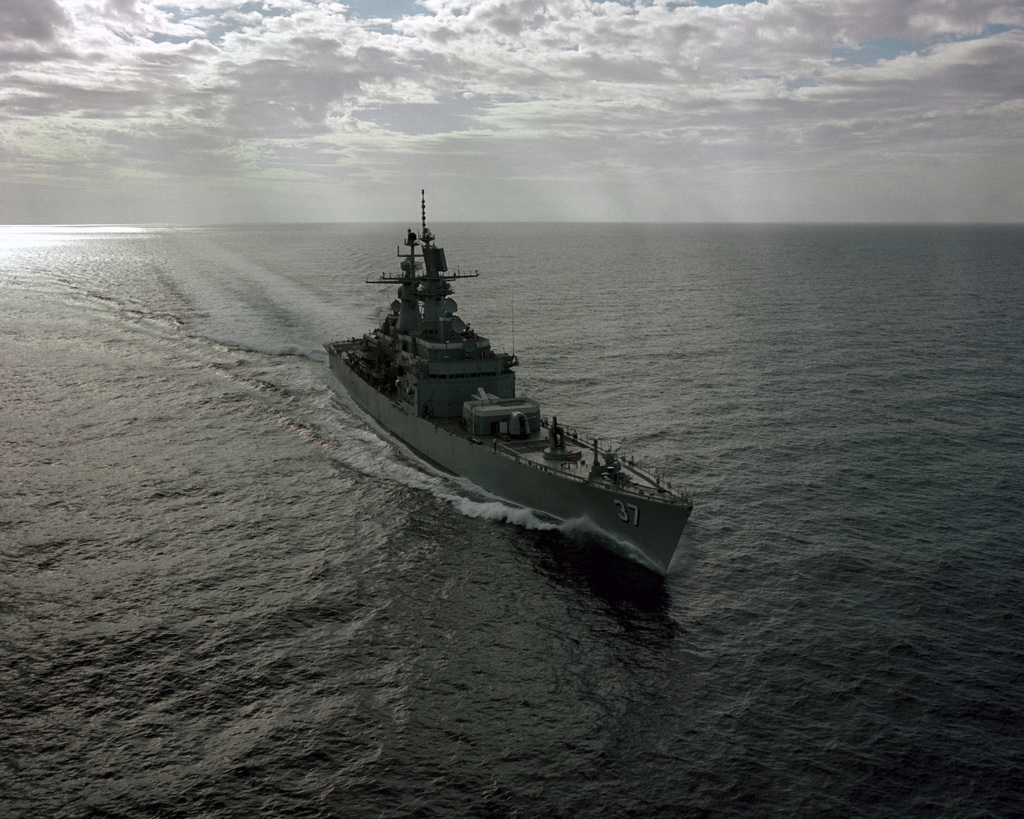
The U.S. Navy’s proposed nuclear-powered battleship program could carry an extraordinary price tag of approximately $275 billion, according to a Congressional Budget Office (CBO) report released Wednesday. The first vessel in the proposed Trump-class, designated BBG(X), is projected to cost about $23.4 billion.
The Trump administration announced in December that it planned to develop a new class of large surface combatants known as the Trump-class guided missile battleship.
If constructed as currently envisioned, the 35,000-ton nuclear-powered warship would become the most heavily armed surface combatant ever commissioned by the U.S. Navy. Its planned arsenal includes anti-aircraft, anti-ship and land-attack missiles, along with hypersonic weapons, nuclear-capable cruise missiles, high-powered laser systems and a rail gun.
The CBO report states that the proposed ship would be the world’s largest surface combatant and would exceed the size of any surface warship built for the U.S. Navy since World War II. It would be more than three and a half times the size of an Arleigh Burke-class guided missile destroyer and more than twice as large as a Zumwalt-class guided missile destroyer.
According to Navy projections, 15 Trump-class guided missile battleships would be constructed between 2028 and 2056. After the lead ship, the remaining 14 vessels are expected to cost around $18 billion apiece. For comparison, the USS Gerald R. Ford, the Navy’s flagship nuclear-powered aircraft carrier, was built at an estimated cost of $13.3 billion.
The CBO estimates that by 2058, the total tonnage of large surface combatants produced by U.S. shipyards would have to rise by roughly 60%. The report warns that achieving such an increase could place significant pressure on the nation’s shipbuilding industry.
The Navy’s move toward larger warships and away from smaller surface combatants would also increase the workload for shipyards. Under the 2027 plan, shipbuilders would need to deliver 12% more tonnage by 2035 than was required under the 2025 plan, based on CBO estimates.
To meet the Navy’s proposed fleet objectives, shipyards would have to complete roughly one new battleship every two years from 2028 through 2056, while maintaining production of two DDG-51 destroyers annually.
The ambitious plan comes as the U.S. shipbuilding sector continues to face longstanding challenges. In March, the Government Accountability Office (GAO) published a report examining nearly 20 years of weak performance in American naval shipbuilding. The agency found that ship production has fallen short of requirements, newly delivered vessels have experienced performance problems and some ships have arrived as much as three years behind schedule.
During testimony before the Senate Armed Services Committee, Shelby S. Oakley, a GAO director, said unrealistic assumptions regarding costs and construction schedules had consumed resources and contributed to delays. These problems, she said, have effectively left Navy programs and shipbuilders operating in a continual state of crisis management.
Despite the enormous initial investment, the CBO report points to a potential long-term advantage of nuclear propulsion. By eliminating the need to purchase conventional fuel, nuclear power could lower the battleship’s operating expenses over its service life. However, the GAO has not estimated how much could potentially be saved through reduced fuel costs.
The projected price of the Trump-class battleships has also changed since the program was first announced in December. The latest estimate of $23.4 billion for the lead vessel is approximately $6 billion higher than the Navy’s original projection.