The United Kingdom’s Royal Navy is facing a significant anti-submarine warfare (ASW) capability shortfall that could undermine its ability to counter Russian submarine activity and underwater sabotage, according to a report by a parliamentary Defence Committee examining security in the High North.
The Navy currently operates just five Type 23 frigates configured for anti-submarine warfare, falling short of its stated requirement for eight. The committee’s analysis indicates that the number of frigates fitted with towed-array sonar could remain at only five for the next three years, according to an inquiry report published on Thursday.
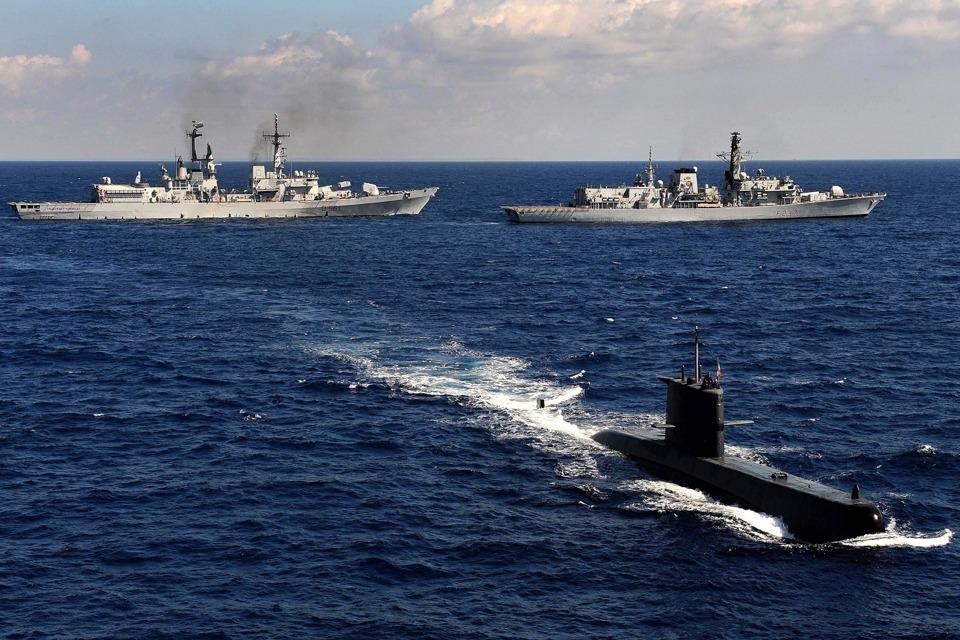
These specialised frigates play a vital role in tracking Russian submarines across the High North and British territorial waters. They are also essential for safeguarding the UK’s nuclear deterrent, particularly its ballistic missile submarines as they transit to and from their base at Faslane in Scotland.
The committee cautioned that, although additional frigates are expected to enter service in the coming years, current fleet availability raises concerns about whether Britain will be able to maintain the necessary maritime presence in the High North by 2030.
Given the importance of anti-submarine operations in the region, the committee urged the government not to retire any further Type 23 frigates equipped with towed-array sonar until each departing vessel has been replaced by a future Type 26 frigate on a one-for-one basis.
The UK has ordered eight Type 26 frigates from BAE Systems for its anti-submarine warfare fleet. The lead ship is expected to enter service in 2028, and Defence Minister Luke Pollard stated in June that the programme remained on schedule. Norway announced in August 2025 that it would purchase five Type 26 frigates, with deliveries due to begin in 2030.
However, if two Type 26 frigates currently being constructed for the Royal Navy were redirected to Norway to meet the export delivery schedule, Britain might not achieve its target of eight towed-array-sonar-equipped frigates until 2037.
The committee stressed that export contracts must not delay deliveries intended for the Royal Navy. It argued that defence exports should strengthen industrial capacity and allied military capabilities rather than create competition for a limited supply of warships, equipment and skilled personnel.
Growing Strategic Importance of the High North
The committee described the High North, encompassing the wider Arctic region and parts of the North Atlantic, as an increasingly important element of British defence and national security. Climate change and the resulting reduction in ice coverage are making previously inaccessible areas more navigable, creating new strategic opportunities and challenges.
As Arctic ice retreats, Russian military installations that were once difficult to access are becoming more exposed. According to the report, Moscow is seeking to protect these facilities while extending its military reach into the Atlantic and waters around the United Kingdom.
These developments pose risks to NATO’s transatlantic supply routes between North America and Europe, as well as to undersea cables, offshore infrastructure and Britain’s nuclear deterrent.
The committee also warned that the Royal Navy’s limited ability to operate beneath Arctic ice reduces its capacity to challenge Russian activities in the region. This could leave the UK increasingly reliant on a defensive posture rather than being able to contest Russian movements effectively.
It therefore requested an update from the government on plans to restore under-ice operating capabilities to at least some of the Royal Navy’s Astute-class nuclear-powered attack submarines.
Ageing Fleet and Maintenance Problems
The committee identified the Royal Navy’s anti-submarine frigates and nuclear-powered submarines as its most important assets for deterring Russian submarine operations and underwater sabotage. However, it noted that these platforms are ageing and are frequently unavailable because of maintenance requirements.
To lead an effective multinational response, the UK must address substantial shortfalls in the availability of its maritime forces. The report also called for an agreed strategy with European allies to deter—and, if necessary, defeat—hostile actions in the High North from 2030 onwards.
The committee asked the Ministry of Defence to provide a classified assessment of British and allied capability gaps in a potential 2030 conflict in the High North, specifically examining a scenario in which the United States does not provide military support.
It warned that the availability and numbers of Royal Navy platforms remain significantly below the government’s stated requirements. With 2030 identified as a key deadline for preparing to deter or defeat a Russian threat, the committee said substantial improvements would be necessary before the end of the decade.
The Royal Navy is supposed to maintain a fleet of 13 frigates and six destroyers. Yet, according to the committee, its current operational inventory includes only five Type 23 frigates and six Type 45 destroyers, highlighting the scale of the challenge.
Northern Sea Route Raises Additional Concerns
The growing accessibility of the Northern Sea Route could create another strategic challenge. The committee warned that Russia might seek to establish a dominant position over the route and potentially restrict freedom of navigation.
It recommended that the government develop options for sending a UK state-owned vessel through the route to demonstrate and support the principle of open navigation.
The northern passage could significantly shorten some commercial voyages. For example, the journey from Shanghai to Rotterdam is approximately 14,900 kilometres via the Northern Sea Route, compared with around 19,500 kilometres when travelling through the Suez Canal.
Questions Over the Royal Navy’s Hybrid Fleet Strategy
The report also questioned the Navy’s Hybrid Navy initiative, which aims to integrate crewed warships with uncrewed platforms. The committee cautioned that the High North presents exceptionally challenging operating conditions for autonomous systems and warned against treating unmanned vessels as a replacement for crewed capabilities before their effectiveness has been demonstrated in Arctic environments.
It recommended that the government explain within 12 months how it intends to test the programme’s principal uncrewed systems under High North conditions before deploying them for operational missions.
The proposed assessment should address critical issues including performance in extreme cold, vulnerability to electronic jamming and the risk of adversaries capturing autonomous platforms.
The committee’s central message is that the UK must strengthen its conventional maritime capabilities while carefully validating emerging technologies. Without improvements in fleet availability, submarine operations and allied coordination, Britain could struggle to meet its commitments in the strategically important High North by 2030.