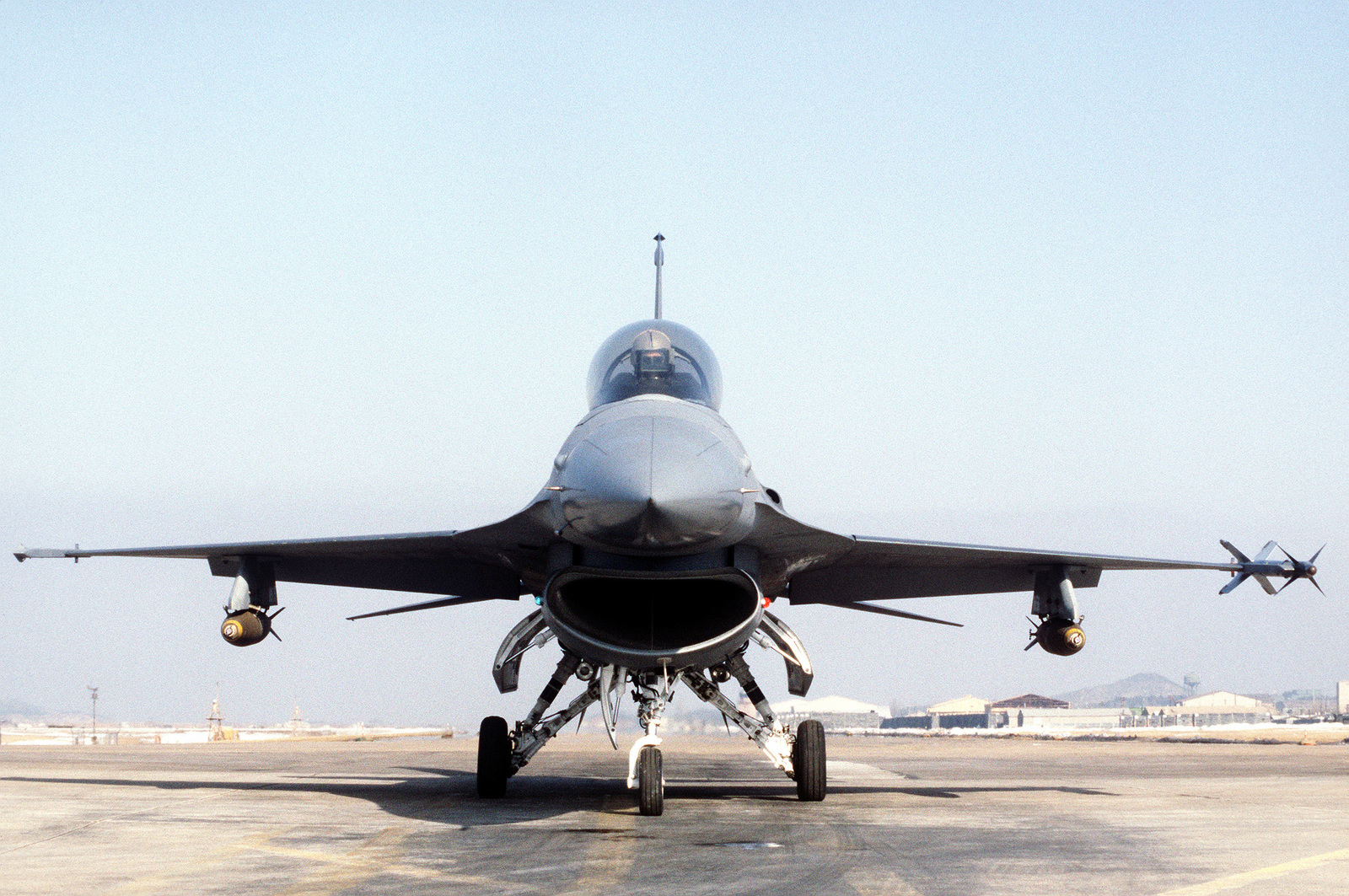
Ukraine’s F-16 fighter jets have emerged as one of Kyiv’s most effective tools for countering Russia’s relentless drone campaign. However, the heavy reliance on the aircraft for intercepting unmanned aerial threats is placing significant strain on Ukraine’s limited fleet.
According to an assessment by airpower analyst Justin Bronk for the Royal United Services Institute (RUSI), Ukrainian F-16s have shot down more than 2,500 Geran and Gerbera one-way attack drones since entering service.
Bronk noted that employing high-performance fighter aircraft against relatively inexpensive drones has resulted in excessive consumption of flight hours and air-to-air missiles. Since Ukraine received its first Western-supplied F-16s and trained pilots in mid-2024, the aircraft have been tasked extensively with drone interception missions.
The report highlights that Russia is now capable of producing over 6,000 one-way attack drones every month. In contrast, fighter aircraft have a limited service life before requiring lengthy factory-level maintenance carried out by specialized technicians, making this operational tempo difficult to sustain.
Ukraine currently operates an estimated 39 F-16s from the roughly 79 pledged by European allies. Its air force also includes about four Mirage 2000-5 fighters supplied by France, with up to 20 promised, along with a small number of legacy Soviet-designed Su-27 and MiG-29 aircraft.
The arrival of the F-16 has significantly strengthened Ukraine’s air capabilities. The fighters allow the Ukrainian Air Force to conduct precision stand-off strikes using U.S.-made JDAM guided bombs and French AASM Hammer glide bombs while also enhancing its ability to challenge Russian aircraft. Earlier this month, an F-16 reportedly shot down a Russian Su-35 fighter over eastern Ukraine, underscoring the aircraft’s growing battlefield impact.
Ironically, the F-16’s effectiveness has also created a new challenge. Because the aircraft excels at counter-drone operations, it has become heavily committed to missions that consume valuable resources.
Bronk told Defense News that the F-16 fleet has been burdened primarily with counter-unmanned aerial system (C-UAS) duties, where operational demand remains virtually constant.
Ukraine faces a complex air defense environment. Alongside thousands of drones, Russia continues to launch large-scale attacks involving cruise missiles and ballistic missiles. These strikes often begin with waves of drones before progressing to cruise missiles such as the Kh-101 and ballistic weapons including the Iskander-M and Kinzhal.
To reduce the drone threat, Ukraine has established dense short-range air defense (SHORAD) networks. These defenses combine short-range surface-to-air missiles, anti-aircraft artillery, mobile machine-gun teams, and domestically developed interceptor drones.
While effective, maintaining these layered defenses across the 745-mile front line and simultaneously protecting cities deep inside the country requires substantial manpower and resources.
The RUSI study points out that although SHORAD systems use comparatively inexpensive equipment and ammunition, they are labor-intensive and require extensive geographic coverage and personnel to remain effective.
These challenges also highlight the obstacles NATO would encounter if it attempted to duplicate Ukraine’s extensive SHORAD model. Bronk explained that sustaining such a dense network would demand manpower levels that are difficult for NATO to maintain over long periods.
Instead, he suggested NATO should prioritize investments in radar-guided anti-aircraft guns to defend critical infrastructure such as air bases and command centers, while also developing more affordable air-to-air weapons capable of destroying drones, including systems like the APKWS II guided rocket.
Even with improved drone defenses, cruise and ballistic missiles remain a major concern because short-range air defense systems have limited effectiveness against those threats.
Like the United States and Israel in managing missile defense, Ukraine must carefully conserve its limited inventory of advanced interceptor missiles, including the U.S.-made Patriot and the European SAMP/T systems.
Bronk argues that Ukraine should increasingly rely on SHORAD and other lower-cost systems to defeat drones, allowing its F-16 fleet to concentrate on higher-priority missions such as intercepting cruise missiles and carrying out precision strike operations.
He described the F-16 as the Ukrainian Air Force’s most capable platform for these demanding tasks and stressed that preserving its availability is essential.
Bronk also believes the aircraft’s effectiveness could be further improved through changes in command structure. Granting fighter squadrons and air wings greater authority to independently plan strike missions, rather than relying on centralized direction from army-focused headquarters, could enable the Ukrainian Air Force to respond more rapidly and deliver greater operational impact.