
European autonomous systems developer TEKEVER has expanded its European footprint with the launch of TEKEVER Germany, coinciding with the German Armed Forces’ evaluation of the company’s unmanned aerial systems for potential military use, including logistics and force support.
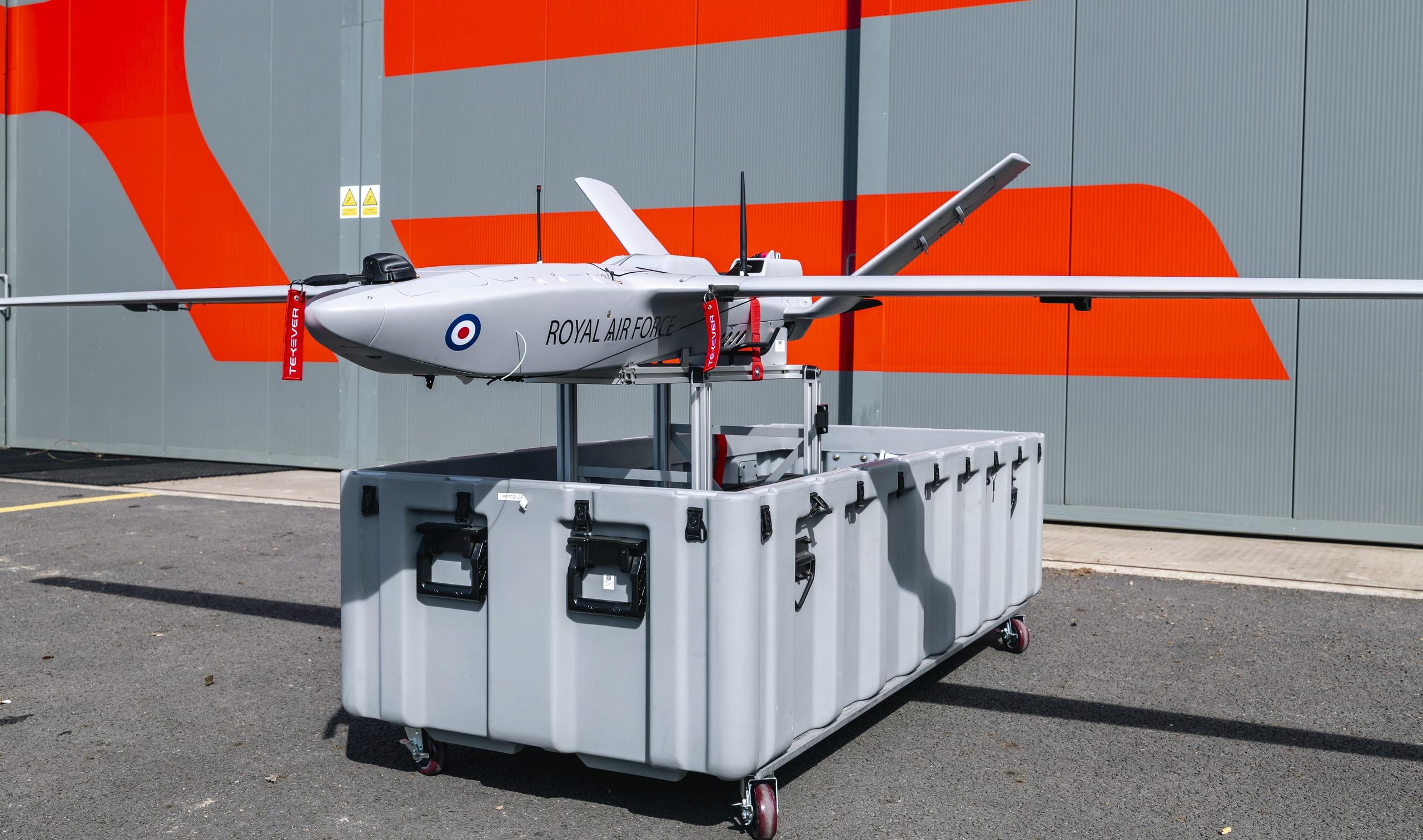
As part of its examination of emerging autonomous technologies, the Bundeswehr has received its first TEKEVER unmanned aerial system (UAS). The heavy-lift platform is intended to help the military assess the capabilities of long-endurance autonomous systems and their potential applications in defense operations.
The evaluation will give German military personnel an opportunity to examine how autonomous aircraft could support future missions, particularly in operational environments that demand greater flexibility and sustained performance.
TEKEVER Expands Its Presence in the German Defense Market
TEKEVER considers Germany a key market in its European growth strategy. The company is already working with the Bundeswehr to explore how autonomous systems could be deployed across different military mission areas.
The newly established German subsidiary will be based in Munich and function as TEKEVER’s regional headquarters for Germany, Austria and Switzerland, a market grouping commonly referred to as the DACH region.
The Munich office will coordinate engineering activities, business development and customer engagement. It will also support closer, long-term partnerships with German companies, research institutions and technology organizations.
Ricardo Mendes, CEO of TEKEVER, said the establishment of the German operation marks a significant development in the company’s European expansion and reinforces its commitment to the country’s defense and technology industries.
He noted that Germany’s strong engineering base, industrial expertise and innovation ecosystem make it an important location for future investment and collaboration. The new subsidiary, he added, will provide a foundation for sustained regional development and closer cooperation with local partners.
Autonomous Systems for Military Logistics and Force Support
TEKEVER also emphasized the importance of its ongoing engagement with the Bundeswehr, highlighting the potential of autonomous technologies to address military logistics and other operational needs.
Mendes said the cooperation had already illustrated how advanced autonomous systems could contribute across multiple mission areas. He added that combining Germany’s industrial capabilities and engineering talent with TEKEVER’s technology could strengthen national defense innovation while contributing to Europe’s broader strategic autonomy.
The Bundeswehr’s evaluation of the heavy-lift UAS forms part of a wider effort to understand how autonomous platforms could complement conventional military capabilities and support future operational requirements.
Ukrainian Counter-Drone Technologies Undergo Testing in the United States
Meanwhile, developments in autonomous systems and counter-drone defense are attracting attention beyond Europe. Ukrainian defense technology companies are also putting their systems through trials in the United States.
According to Militarnyi, electronic warfare equipment developed by Ukrainian company Phantom Defense was tested during Gauntlet II, a major stage of the US Drone Dominance program.
During the trials, Phantom Defense demonstrated an integrated counter-unmanned aerial system designed to identify aerial threats and coordinate defensive responses. The setup combined electronic warfare equipment with the Streamhunter video interception system and a command-and-control (C2) platform.
The integrated network is designed to detect and classify airborne threats, coordinate countermeasures and evaluate their effectiveness. Such capabilities are increasingly important as military forces seek more coordinated approaches to detecting, disrupting and countering unmanned aircraft.
The developments in Germany and the United States highlight the growing emphasis on autonomous platforms, electronic warfare and integrated counter-drone systems as defense organizations explore technologies for increasingly complex operational environments.