Speaking at the recent Navy Leaders event at Combined Naval Event (CNE) 2026, Commander Pierre Van Engeland, Belgian Navy programme manager for the rMCM programme, said the handover of the first two mine countermeasures (MCM) motherships and the initial package of unmanned systems has provided the foundation for the next stage of system testing and crew familiarisation.
Despite this progress, substantial work is still required to bring together the different platforms, sensors, mission systems and personnel that form the backbone of the programme’s stand-off mine warfare approach.
According to Cdr Van Engeland, software integration remains the programme’s most pressing challenge. This includes connecting the software aboard the motherships with the various unmanned tools and ultimately creating a fully integrated operational system. He said the team is working closely with industry and hopes to demonstrate a complete end-to-end MCM capability from the ship before the end of 2026.
The rMCM programme was awarded in 2019 to Belgium Naval & Robotics, a consortium formed by Naval Group and Exail. The contract covers 12 specialised MCM motherships, with six allocated to Belgium and six to the Netherlands, as well as a comprehensive suite of approximately 120 unmanned systems. These systems are intended to detect, classify, identify and neutralise mines while keeping the motherships outside the mine-threat area.
The vessels are being developed and constructed by Kership, a joint venture between Naval Group and Piriou Group. Shipbuilding and assembly activities are taking place at Piriou facilities in Concarneau and Lanester in Brittany, as well as in Romania. Most of the unmanned equipment is being manufactured at Exail’s dedicated MCM production facility in Ostend, Belgium.
The rMCM toolbox incorporates Exail’s UMISOFT mission-management and data-analysis software together with a range of unmanned platforms. These include Inspector 125 unmanned surface vessels (USVs), A18-M autonomous underwater vehicles (AUVs) carrying the UMISAS 120 synthetic aperture sonar, and T18-M towed sonar systems fitted with the UMISAS 240 SAS.
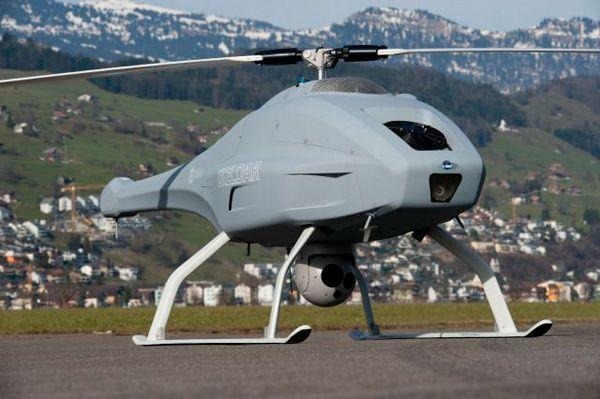
The package also includes mine identification and disposal equipment, including SeaScan Mk 2 and K-ster C remotely operated vehicles, an influence minesweeper incorporating five CTM magnetic modules and a Patria acoustic module, and Saab Skeldar V-200 unmanned aerial systems (UAS).
Programme milestones
The Belgian Navy accepted its first rMCM vessel, Oostende (M940), in November 2025 before formally christening the ship on 24 June 2026. The second vessel, Vlissingen (M840), was delivered to the Royal Netherlands Navy in February 2026.
Nine additional vessels are currently at different stages of construction. First steel for the penultimate ship was cut in May 2026, while construction of the 12th and final vessel is expected to begin before the end of the year.
The first complete toolbox of unmanned MCM equipment was delivered to the Belgian Navy in March 2026, initiating the system integration and commissioning process aboard Oostende. The programme has now entered a phase of developmental testing, evaluation and incremental improvement, with Exail working alongside the Belgian Navy.
Cdr Van Engeland described the relationship as a collaborative process in which naval personnel provide operational feedback while industry specialists support training and development with the equipment.
Current challenges
The adoption of an entirely new concept of operations (CONOPS) has created both opportunities and difficulties. While the approach introduces new capabilities and techniques, naval personnel must simultaneously learn, develop and train for them, making it difficult to determine which elements should receive priority.
Testing of the A18 AUV has produced encouraging results. Cdr Van Engeland highlighted the quality of the first synthetic aperture sonar imagery produced by the system, but said the volume of information generated by the sensor creates a significant data-management challenge.
The Belgian Navy is also continuing to develop its ability to launch and recover the A18 in more demanding sea conditions. While the system is currently operational, crews have not yet achieved the desired capability up to Sea State 4. Full automatic launch and recovery is also still under development. For the time being, an operator remains aboard the USV, while the Navy and industry work together to improve the process.
The two T18 towed sonar systems included in the first toolbox were scheduled for delivery during June. The T18 provides capabilities broadly comparable with the A18, but its tow-cable connection allows near-real-time transmission of sonar data. Its longer sonar antenna also enables it to cover the same area at roughly twice the speed of the A18.
Integration of the Saab Skeldar V-200 UAVs onto the mothership is another area still under development. The Belgian crews are currently conducting land-based training while awaiting qualification for automatic take-off and landing from the ship. Industry-supported trials are expected to take place during the summer.
Cdr Van Engeland said the immediate objective is to incorporate the UAV into the complete rMCM toolbox by the end of 2026. However, integrating an aircraft into a programme originally structured around traditional MCM tools creates additional requirements involving maintenance, certification and operational procedures.
Crew training
Crew preparation aboard Oostende has progressed into Safety and Readiness Check (SARC) 3. At this stage, personnel move beyond pier-side and harbour training and begin preparing for operational readiness at sea. SARC 4 is scheduled to commence in September.
In early June, Oostende completed its first sea trials in Douarnenez Bay, Brittany. The vessel operated with personnel from the MCM Module Group (MMG), with the unmanned toolbox integrated aboard for the first time. The MMG is responsible for operating and maintaining the MCM equipment carried by the ship.
Training is also supported by an rMCM simulator installed at the NATO Mine Warfare Centre of Excellence (Eguermin) in Ostend in late 2024. Programme officials have referred to the simulator as the programme’s “13th ship”.
The eventual simulator is intended to combine tactical training and virtual reality capabilities within a common training scenario. It will also include a multifunction console allowing personnel to operate the MCM equipment virtually as though they were aboard the ship, together with a separate area equipped with dedicated VR pods.
The initial simulator delivered to Eguermin, however, is considerably more limited. It consists of VR pods running discovery software designed primarily to familiarise personnel with the ship’s layout and equipment installations.
Development of the next software version, which is intended to allow crews to train with the new MCM systems, has fallen behind schedule. Consequently, personnel are currently being trained directly on operational equipment before moving to the simulator, reversing the originally planned training sequence.
Cdr Van Engeland said the full-mission simulator cannot yet be completed because its software must first be qualified and integrated with the MCM tools. Once that process is complete, the functionality can be incorporated into the simulator. This delay has forced the programme to adopt a different approach to crew preparation, with live equipment training preceding simulator-based training for the first toolbox.